Cloud Security Validation
Know which cloud exposures an attacker could actually exploit.
Audit AWS, Azure, and Google Cloud, then safely simulate real attacks to prove which misconfigurations and identities are reachable, exploitable, and worth fixing first.
What Is Cloud Security Validation?
Cloud security validation is the practice of safely emulating real attacker behavior against your cloud environment to confirm which misconfigurations and identities can actually be exploited, and what an attacker could reach with them.
Rather than treating every flagged finding as a real risk, it gives you evidence: proof of which exposures are reachable in your environment, and which only look dangerous on paper.
Why it matters?
-
From noise to evidence. Thousands of findings become the few that are truly exploitable.
-
From symptoms to root cause. See which identities can escalate, so you fix policies, not individual alerts.
-
From estates to one view. Validate AWS, Azure, GCP, and Kubernetes together.
-
From point-in-time to current. Proof stays fresh as configs and identities change.
Your cloud generates thousands of findings.
Few of them tell you what an attacker can do.
-
A backlog that resists clearing
Posture tools flag excessive permissions and misconfigurations by the thousand, but cannot say whether an attacker could ever use them.
-
IAM that is hard to reason about
Roles, policies, and entitlements multiply across accounts. Telling a genuinely abusable identity from one that only looks risky is nearly impossible by inspection alone.
-
An environment that changes daily
Identities, policies, and services change constantly. A point-in-time audit is stale almost immediately, leaving windows of unvalidated exposure between checks.
Cloud environments change daily, and shared-responsibility gaps are easy to miss. What looked safe last week may quietly be exploitable now, which leaves more alerts than answers and little certainty about what truly puts the business at risk.
the approach
Put your cloud under real attack, safely and continuously.
Picus Cloud Security Validation, scans core AWS, Azure, and Google Cloud services, then safely simulates real attacks against what it finds. You learn which misconfigurations are reachable, which identities can be abused, and how a single foothold chains into real impact, with clear steps to fix each one.
CLOUD AUDITING
Identify critical cloud misconfigurations
Picus audits your cloud, then safely simulates real attacks to test whether misconfigurations are reachable, whether identities can be abused, and whether exposures chain into real impact. It turns a flat list of findings into evidence of what an attacker could actually do.
Rules cover the exposures that lead to breaches: public access controls, unencrypted storage, dangling key pairs, cross-account access, and more.
attack simulation
Prevent overly permissive IAM policies
If attackers reach your cloud environment, they will likely try to escalate privileges toward critical systems. Picus gathers your cloud identities and runs them through a local policy simulator to reveal which roles, policies, and entitlements can actually be abused.
You see the exploitable targets each identity can reach, so you enforce the principle of least privilege where it matters, and fix policies instead of chasing individual symptoms.
attack paths
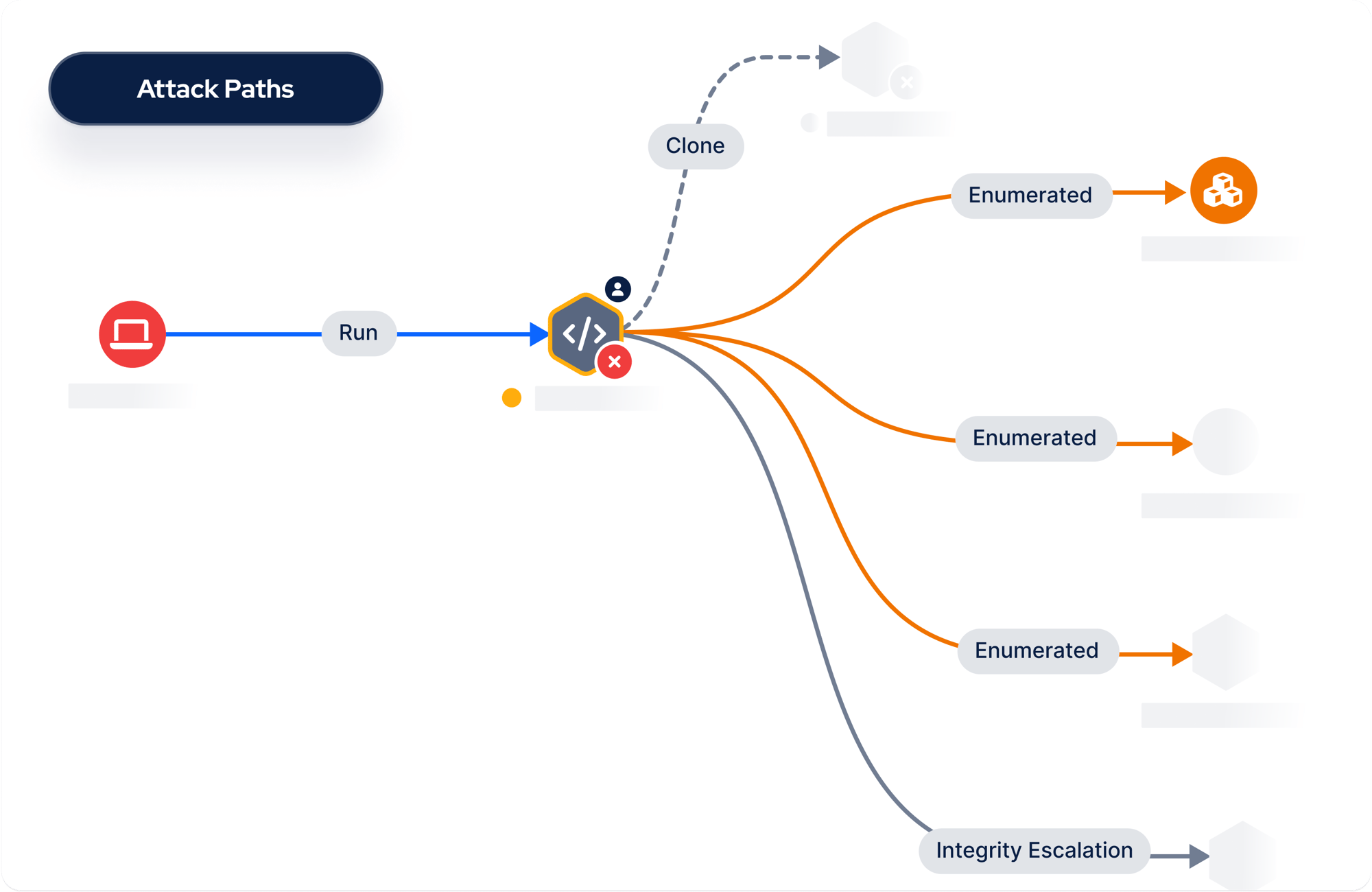
Simulate How an Initial Foothold Becomes a Breach.
Picus simulates how real adversaries chain identities, permissions, and cloud weaknesses together, showing how a single foothold can become access to critical systems and sensitive data, before an attacker finds the same path.
Powered by Attack scenario emulation that walks the chain step by step in your real environment and returns the outcome of each move.
ACTIONABLE INSIGHTS
Validate AWS, Azure, and GCP From One Platform.
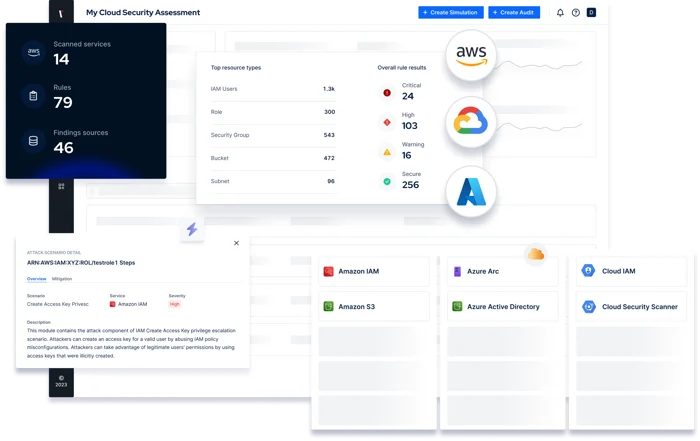
Picus does not just identify cloud risks. Built-in dashboards show scanned services, rules, findings sources, and top resource types at a glance, alongside overall rule results scored from Secure to Critical.
Track your posture over time and prove your maturity, with the severity and mitigation detail your team needs to respond sooner.
Audit, simulate, decide, re-validate
Picus Cloud Security Validation runs a continuous loop across your cloud, so proof keeps pace with how fast the environment actually moves.
-
Step 1:
Cloud
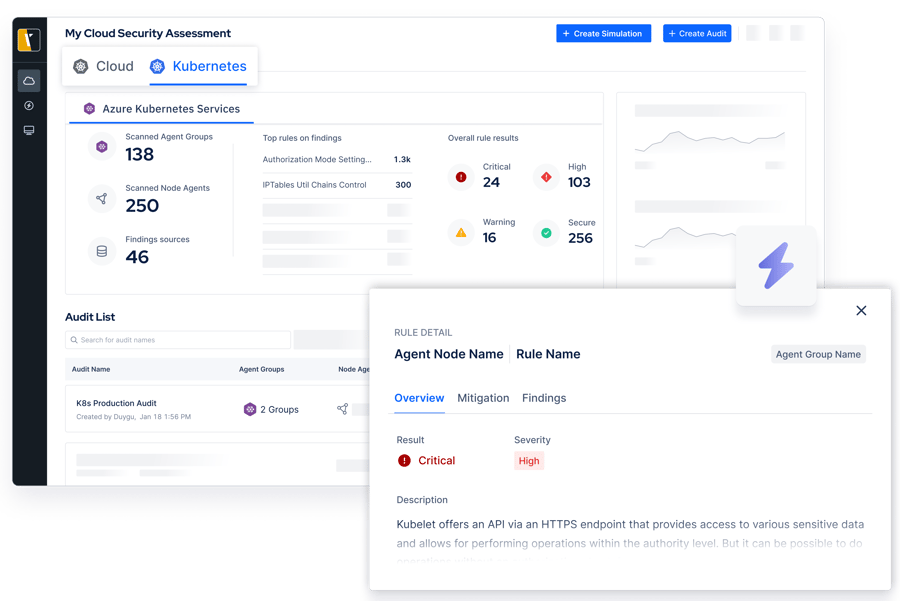
AuditingInspects core cloud and Kubernetes resources against best practice with read-only permissions, scoring every rule and surfacing misconfigurations.
-
Step 2:
Attack
SimulationThe Policy Decision Engine runs gathered identities through a local policy simulator to map possible privilege-escalation techniques.
-
Step 3:
Mitigation
InsightsReturns result, severity, affected resources, and policy-level mitigation guidance, so you fix one policy and close many exposures at once.
-
Step 4:
Re-
ValidationSchedule audits weekly or run them on demand after any change, and track the result timeline to prove your posture is improving.
Value for every team in the cloud
- See which misconfigurations are exploitable, not just flagged
- Fix policies, not endless individual findings
- Harden nodes, pods, and IAM with evidence
-
See real privilege-escalation and access paths
-
Confirm cloud-native controls work as intended
-
Catch new exposure when it appears, not weeks later
-
Prioritize by validated exploitability, not score volume
-
Track posture improvement over time
-
Board-ready proof that controls hold under attack
Works With the Cloud Stack You Already Run.
Picus validates with read-only access and feeds validated exposures into your existing CSPM, CNAPP, and security data tooling, so you act on proof of exploitability instead of fragmenting into separate, inconsistently checked estates.
of cloud security failures through 2025 will be the customer’s fault, mainly cloud resource misconfiguration.
— GartnerBuilt for Evidence, Not Another List of Findings.
Validated cloud findings feed the broader Picus loop, joining exposure, identity, and control-effectiveness data across your whole environment, so cloud risk is measured the same way as everything else you defend.
Trusted by Security Teams, Recognized by the Industry
Customer's Choice
2025 Gartner Peer Insights Voice of the Customer for Adversarial Exposure Validation

Picus is very good attack simulation tool in overall. It shows all security vulnerabilities and guides..
Sr. Information Security & Risk Officer
The implementation was very fast, the platform is easy to integrate and results quite intuitive to be analyzed.
CIO
A very successful platform where we can test the accuracy of our security investments and see their scores.
Manager, IT Security and Risk Management
Picus is one of the best BAS solution on the market today. The threat database it is constantly updated..
ICT Security Engineer
There is a very nice team from which I can get quick support. The application provides us with great convenience and confidence in our work.
Information Security Specialist
With the help of this product we can perform continuosly endpoint attack via latest tactics and techniques which are used by threat actors..
Manager, IT Security and Risk Management
.. It is possible to customise the campaign or schedule the assessment periodically, to test protection measure implemented on network, endpoint and email.
ICT Security Engineer
Picus is such a great product for organizations that are looking to have constant checks and validation on their security posture in the organization.
Cybersecuirty Pre-sales Engineer
Picus is a real safety measurement tool. Ever since we took Picus into our inventory, Security has helped significantly to increase our maturity level.
Cyber Defense Senior Specialist
It strengthened our security perspective and allowed us to follow trend attacks. We can test zeroday malicious threats very early because Picus could add them their attack database quickly.
Security Specialist
One platform validates your whole security program.
Cloud Security Validation is one part of the Picus Platform. Together, these capabilities converge into one continuous validation loop, from attack surface to controls to exploitable exposures.
See the
Picus Security Validation Platform
Request a Demo
Submit a request and we'll share answers to your top security validation and exposure management questions.
Get Threat-ready
Simulate real-world cyber threats in minutes and see a holistic view of your security effectiveness.
RESOURCES
Latest Cloud Security Validation Resources
Frequently Asked Questions
Cloud security validation safely emulates attacker behavior against your cloud environment to confirm which misconfigurations and identity exposures are actually exploitable, and what an attacker could reach with them. Instead of assuming a finding is a risk, it produces evidence of real exploitability.
No. CSPM identifies misconfigurations and policy violations, telling you what might be wrong. Cloud security validation proves which of those findings are actually exploitable given your real controls. Posture management produces a list; validation produces evidence. The two are complementary, posture data is a useful input, and validation tells you which inputs need your attention.
A CNAPP provides broad cloud security coverage, from posture management to workload protection. Cloud Security Validation tells you whether cloud exposures can actually be exploited. Picus complements your CNAPP by validating real-world exploitability and feeding evidence back into prioritization, so teams focus on the exposures that create real risk.
No. CIEM maps and manages cloud entitlements. Cloud Security Validation tests those entitlements against real privilege-escalation and lateral-movement attempts, proving which over-permissioned identities are genuinely abusable. CIEM tells you what permissions exist; validation tells you which ones an attacker could exploit.
Yes. Picus validates cloud configurations, controls, and identity across AWS, Azure, and GCP from a single platform, so multi-cloud environments don't fragment into separate, inconsistently validated estates. It works with read-only permissions to avoid changing your environment.
It's the testing of container and Kubernetes controls, such as cluster configuration, pod policies, and control-plane exposure, against real attacker techniques rather than a static checklist. Picus audits Kubernetes against CIS benchmarks across the control plane, nodes, pods, and policies.
Cloud environments change daily, so point-in-time audits leave windows of unvalidated exposure. Powered by Picus Swarm, validation runs on the affected surface in real time when a configuration or identity policy changes, on signal rather than on a calendar, so it keeps pace with how fast the cloud actually moves.
.png?width=161&height=136&name=gartner-logo-2025%201%20(1).png)
%20(1).png?width=134&height=173&name=frost-radar-leader-badge-2026%20(1)%20(1).png)