What Is the NIST AI RMF?
The NIST AI Risk Management Framework (NIST AI 100-1) is a voluntary guidance document released on January 26, 2023. It gives organizations a common structure for identifying, measuring, and managing AI system risks across the lifecycle [1].
NIST designed the framework to be voluntary, sector-agnostic, and use-case agnostic [1]. There is no certification or audit scheme. Regulators, customers, and auditors use its four functions and 72 subcategories as the reference point when evaluating whether an organization manages AI risk.
NIST also publishes the Risk Management Framework for federal information systems (SP 800-37), usually called the NIST RMF. The two are separate documents with different scopes.
What the Framework Does Not Cover
The AI RMF doesn't prescribe risk tolerance and doesn't tell you which attacks to test against. Each organization sets its own tolerance level and uses the framework to document how it manages risk once that tolerance level exists.
According to Appendix B of AI RMF 1.0, guidance available before NIST AI RMF couldn’t comprehensively address evasion, model extraction, membership inference, availability, and other machine learning attacks, or the attack surface of AI systems [1].
For a security team, the AI RMF asks you to prove your AI systems were tested for security and resilience. OWASP LLM Top 10 and MITRE ATLAS tell you which attacks to test them against.
The Anatomy of the Framework
AI RMF 1.0 is 48 pages long and splits into two parts [1].
Part 1 covers the concepts. It defines what risk means for AI, who the framework is written for, and what makes an AI system trustworthy. Part 2 covers implementation, with the four functions of the Core and the Profiles that adapt them to a specific setting. Three companion resources sit outside the framework document and follow their own update schedule.
The diagram below shows how the pieces fit together.
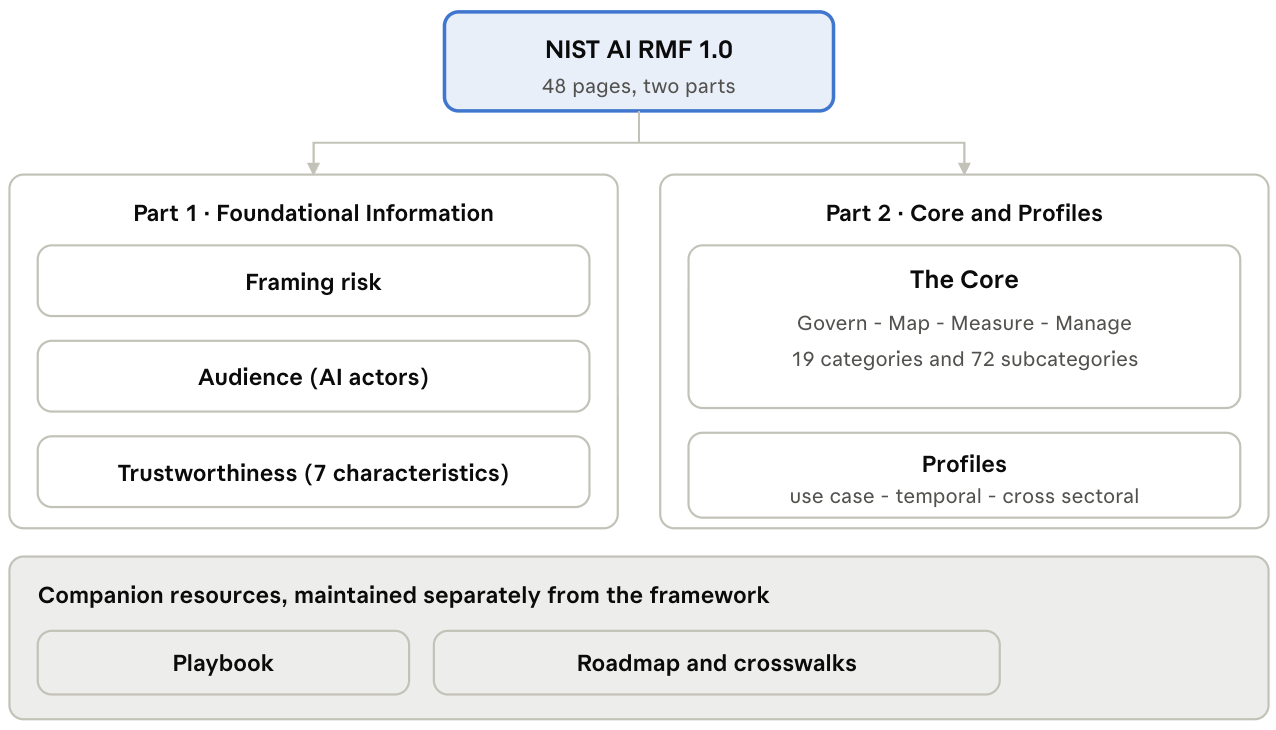
Fig. 1. The structure of NIST AI RMF 1.0
Part 1: Foundational Information
Framing risk
Defines risk as how likely an event is and how bad the consequences would be. NIST sorts harm into three groups:
- Harm to people
- Harm to organizations
- Harm to ecosystems
Then works through four challenges:
- Measurement: Complicated by third-party components, emergent risks, scarce metrics, the gap between lab and production conditions, and inscrutable models
- Risk tolerance: NIST does not prescribe and leaves each organization to define
- Prioritization: NIST states that development and deployment should cease safely if risk is unacceptable, until the risk can be sufficiently managed
- Organizational integration: AI risk should be folded into existing enterprise risk management alongside cybersecurity and privacy
Audience
The primary audience is AI actors, meaning the people and organizations that design, develop, deploy, evaluate, or use AI systems. NIST places them across six lifecycle stages: plan and design, collect and process data, build and use model, verify and validate, deploy and use, operate and monitor.
It separates the people who build models from those who verify and validate them, and adds TEVV, meaning Test, Evaluation, Verification, and Validation, which runs across every stage.
A second audience, including researchers, advocacy groups, civil society organizations, end users, and affected communities, informs the first rather than using the framework directly.
So “informs” means they supply context, norms, and boundary conditions that the primary audience, the people actually building and deploying systems, uses when making decisions. They shape the conditions under which AI risk gets managed.
Trustworthiness
AI RMF 1.0 defines a trustworthy AI system as one that is valid and reliable, safe, secure and resilient, accountable and transparent, explainable and interpretable, privacy-enhanced, and fair, with harmful bias managed [1].
NIST draws Valid and Reliable as the base because it is a necessary condition of trustworthiness. An inaccurate or unreliable system raises risk and lowers trustworthiness, and NIST says trustworthiness is only as strong as its weakest characteristic. Accountable and Transparent run vertically across the stack because they relate to all the other characteristics [1].
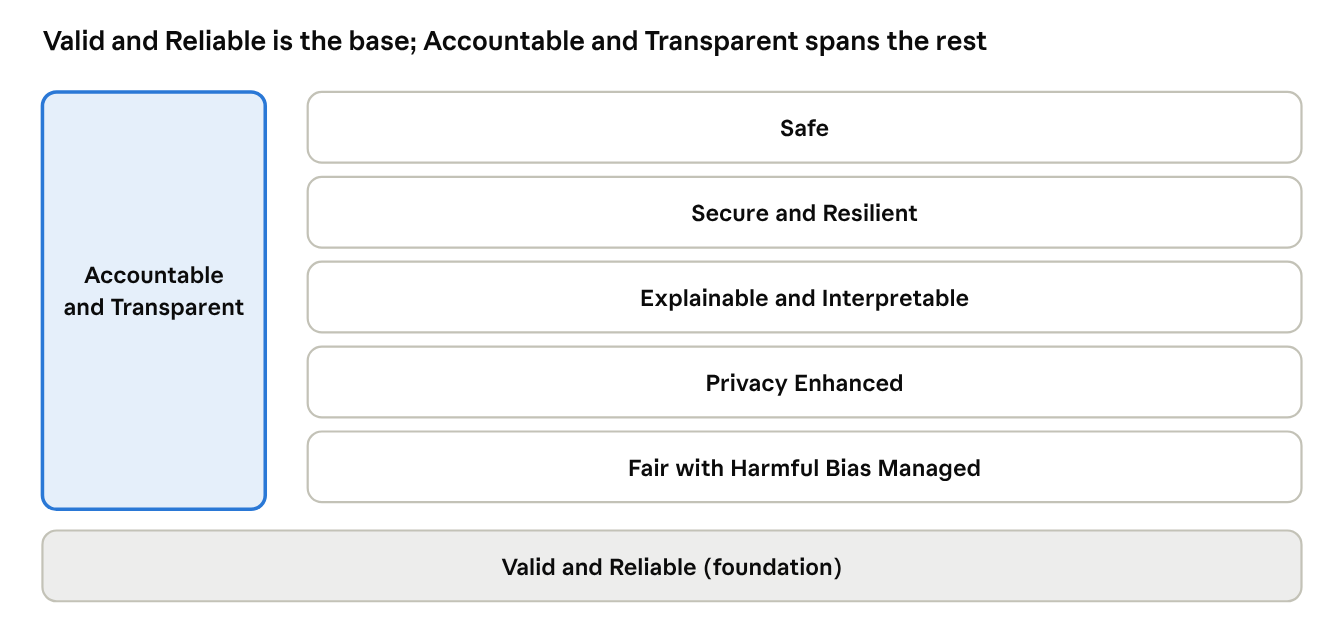
Fig. 2. The seven characteristics of trustworthy AI as drawn in AI RMF 1.0.
|
Characteristic |
What NIST means |
What it looks like for a security team |
|
Valid and Reliable |
The system meets requirements for its intended use (validation) and keeps performing without failure over time and under expected conditions (reliability). Accuracy and robustness are the measurable parts. |
Watch for the model getting worse over time. Test it on data that looks like what it will see in production. A model can score well on every test and still fail when it meets an input nobody planned for. |
|
Accountable and Transparent |
Information about the system and its outputs is available to the people who interact with it. Scope runs from design decisions and training data provenance to who made the deployment decision and when. |
Keep records of who approved the system and when, where the training data came from, and why the main design choices were made. |
|
Safe |
The system does not lead to a state in which human life, health, property, or the environment is endangered. Includes the ability to shut down, modify, or hand control to a human when a system deviates. |
A clear way to shut the system down or change it if it starts behaving in ways it should not. NIST says risks that could cause serious injury or death come first. |
|
Secure and Resilient |
Maintains confidentiality, integrity, and availability through protection mechanisms that prevent unauthorized access and use (secure), and withstands or degrades gracefully under adverse events (resilient). NIST names adversarial examples, data poisoning, and exfiltration of models or training data through endpoints as the common concerns. |
Prove that you tested the system against attacks like prompt injection, data poisoning, and model theft, and that you kept the results. |
|
Explainable and Interpretable |
Explainability covers how the system works. Interpretability covers what an output means in context. Transparency answers what happened, explainability answers how, interpretability answers why. |
Explainable systems support audit and governance because their behavior can be described, debugged, and monitored. |
|
Privacy Enhanced |
Norms and practices that safeguard autonomy, identity and dignity. Covers data minimization, de-identification, and privacy-enhancing technologies, noting that these can reduce accuracy. |
A model can reveal private details about someone even when those details were never in its output, for example by letting an attacker work out whether a person was in the training data. |
|
Fair with Harmful Bias Managed |
Three categories of bias, systemic, computational and statistical, and human cognitive, each of which can occur without discriminatory intent. |
Usually handled by someone other than the security team, but still part of a full AI RMF assessment. |
Table 1. The seven characteristics of trustworthy AI
Per NIST, the characteristics trade off against each other, and addressing them one at a time does not produce a trustworthy system. NIST names three combinations that are all undesirable:
- A highly secure system can still be unfair
- An accurate system can still be opaque and uninterpretable
- A system that is secure, privacy-enhanced, and transparent can still be inaccurate [1]
Each organization should document which tradeoff it accepts. The framework does not make that choice.
Part 2: The Core and Profiles
Part 2 of the framework holds the Core, where the four functions and their subcategories are defined as outcomes organizations need to satisfy. Security teams get asked about the Core, because questionnaires and audits reference its subcategories.
It’s built from four functions, Govern, Map, Measure, and Manage, broken down into 19 categories and then into 72 subcategories.
Each subcategory is written as an outcome rather than a control, so it states a condition that should be true without naming the tool, threshold, or process that gets you there. For example, Govern 1.6 requires mechanisms to inventory AI systems. Measure 2.7 asks that security and resilience be evaluated and documented. How you satisfy either one is left to you.
Govern sits across the other three rather than beside them, because its policies, roles, and inventory are what Map, Measure, and Manage depend on. NIST does not impose an order beyond that, though it notes that most users, once the Govern outcomes are in place, start with Map and continue to Measure or Manage, iterating between them as the system changes [1]. This doesn’t work like a checklist, and the subcategories are not steps to be completed in sequence.
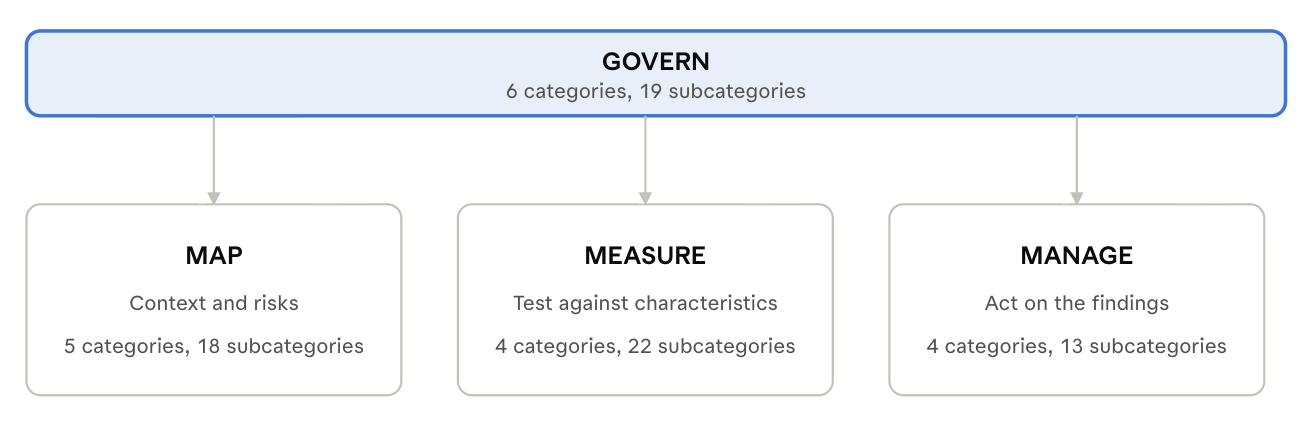
Fig. 3. Structure of the AI RMF Core. Govern sits across the top because it informs the other three functions.
The AI RMF Core has four functions, 19 categories, and 72 subcategories. Each subcategory is written as an outcome, so an organization can show evidence that it was met [1].
- Govern sets up the policies, roles, and inventory that the other three functions depend on.
- Map establishes the context and the risks of a specific system.
- Measure tests the system against the trustworthiness characteristics.
- Manage decides what to do about what Measure found, including when to switch the system off.
The sections below take each function in turn and list its categories.
Govern: Who Owns the Risk and What Is in Scope
The function covers whether policies, accountability, an inventory, and a decommissioning path exist before any system is mapped or measured [1]. A gap here propagates into all three other functions.
|
Category |
What it asks |
|
Govern 1 |
Policies, processes, and procedures for mapping, measuring, and managing AI risk are in place, transparent, and implemented. |
|
Govern 2 |
Accountability structures for AI risk cover roles, responsibilities, and executive ownership. |
|
Govern 3 |
Workforce diversity, equity, inclusion, and accessibility processes are prioritized throughout the lifecycle. |
|
Govern 4 |
A culture that considers and communicates AI risk. |
|
Govern 5 |
Processes for collecting and acting on feedback from people outside the team that built or deployed the system. |
|
Govern 6 |
Policies and procedures covering AI risks from third-party software, data, and supply chain issues. |
Table 2. The six categories of the Govern function
Map: Context and Risks Before You Build
Map establishes the context around a specific system and surfaces the risks Measure and Manage will act on [1]. Without it, there is no basis for deciding what to test or how much testing is enough. Per NIST, most users start here after Govern is in place.
|
Category |
What it asks |
|
Map 1 |
Context for the AI system is established, covering intended purpose, deployment setting, risk tolerance, and system requirements. |
|
Map 2 |
The AI system is categorized by task and method, with knowledge limits, human oversight of outputs, and TEVV considerations documented. |
|
Map 3 |
Capabilities, costs, and benefits are understood, including non-monetary costs, scope, operator proficiency, and human oversight processes. |
|
Map 4 |
Risks and benefits are mapped across all components, including third-party data and software, covering legal, IP, and internal risk controls. |
|
Map 5 |
Impacts to individuals, groups, and society are characterized by likelihood and magnitude, with processes in place to collect and integrate feedback. |
Table 3. The five categories of the Map function
Measure: Test Against the Trustworthiness Characteristics
Measure evaluates a system against the seven trustworthiness characteristics using the risks Map identified, and feeds the results to Manage [1].
Breach and attack simulation programs map most directly to this function, because its subcategories require evidence that specific defenses hold.
|
Category |
What it asks |
|
Measure 1 |
Appropriate methods and metrics for identified risks are selected and applied, with unmeasurable risks documented. |
|
Measure 2 |
The system is evaluated against the seven trustworthiness characteristics, with thirteen subcategories covering security and resilience, safety, privacy, fairness, bias, and validity. |
|
Measure 3 |
Mechanisms are in place to track risks over time, including emergent risks and those that current techniques cannot yet measure. |
|
Measure 4 |
The effectiveness of the measurement approaches themselves is evaluated and assessed. |
Table 4. The four categories of the Measure function
Manage: Act on What You Found
Manage allocates resources to the risks Map and Measure surfaced, and decides what to do about each one (mitigate, transfer, avoid or accept) [1]. Manage also covers incident response and the mechanisms to switch a system off. An organization can complete Govern, Map and Measure and still fail here, if nobody acts on the findings.
|
Category |
What it asks |
|
Manage 1 |
Risks from Map and Measure are prioritized and responded to, with a go/no-go decision on proceeding and residual risk documented. |
|
Manage 2 |
Strategies to maximize benefits and minimize negative impacts, including mechanisms to deactivate a system behaving inconsistently with intended use. |
|
Manage 3 |
Third-party risks and benefits are monitored, including pre-trained models used in development. |
|
Manage 4 |
Risk treatments, incident response, recovery and communication plans are documented, monitored and regularly updated. |
Table 5. The four categories of the Manage function
Profiles
The Core is written for any AI system in any sector, which makes it abstract by design. Organizations can ground that abstraction in a specific setting with Profiles.
NIST defines a profile as an implementation of the functions, categories, and subcategories for a specific setting, based on that organization’s own requirements, risk tolerance, and resources [1]. The framework describes three kinds:
- Use case profiles apply the Core to one application, and NIST’s own examples are a hiring profile and a fair housing profile
- Temporal profiles describe a state rather than an application. They are built in pairs so the two can be compared
- Current Profile recording how AI is managed today
- Target Profile recording where the organization intends to be
- Cross-sectoral profiles cover models or activities that appear across many sectors, and NIST names large language models, cloud-based services, and acquisition.
Comparing a Current and a Target Profile reveals the gaps between them, and those gaps become an action plan with a prioritization order driven by the organization’s own needs [1].
The framework prescribes no template for any of them, which it states is deliberate.
Companion Resources
AI RMF Playbook (Companion)
The Playbook is an online list of suggested actions, documentation prompts, and references for every subcategory. Voluntary, and updated separately from the framework [3].
Roadmap and crosswalks (Companion)
These include priority research topics, plus mappings to other frameworks [2].
The Roadmap lists ten areas NIST considers priorities for advancing the framework, including expanded TEVV work on tools, benchmarks and testbeds, alignment with international standards, and guidance on how organizations can set reasonable risk tolerances [2].
The Crosswalks map the framework to other standards and regulations [3].
NIST also hosts crosswalks submitted by other organizations, including one to ISO/IEC 42001. This way, organizations already aligned to one standard can see where the two overlap.
Test What the Framework Asks You to Document
Picus's AI Security Validation tests the guardrails and controls in front of your AI applications, LLMs, and agents with 70+ attacks across prompt injection, jailbreaks, data leakage, harmful content, and agent tool abuse. Every result maps to NIST AI RMF, the OWASP LLM Top 10, and MITRE ATLAS, showing which attacks were blocked and which reached the model.
How much of your Measure function is documentation, and how much of it has been tested?
You can explore how Picus validates AI security controls or request a demo to watch it run against your own environment.