
Oil and gas operators use Picus to validate their defenses across connected IT and OT environments, simulating ransomware, ICS malware, and adversary techniques so they can protect critical operations, prove compliance, and strengthen resilience without disruption.
Oil and Gas Cybersecurity
Validate Cyber Readiness Across Oil and Gas Operations with Picus
DEMO
How Attackers Pivot From Corporate IT Into OT in Nine Steps
Drennox Midstream Partners (DMP) is a large midstream operator running pipelines, compressor stations, and refineries. With an extensive IT and OT estate, CEP supports critical industrial applications such as SCADA, historians, and engineering workstations alongside its corporate network. The following path shows how a single phishing email can put pipeline control systems within reach.
Key workers involved in this scenario include:

Full Attack Path at Drennox Midstream Partners (DMP)
STEP 1
Phishing Attack:
Diana Kerr opens an attachment from what appears to be a vendor, installing a backdoor on WKSTN16.DMP.LOCAL.
STEP 2
Credential Harvesting:
The attacker dumps process memory on the workstation and recovers cached credentials and password hashes.
STEP 3
Kerberoasting:
Marcus Stein is identified as a Kerberoastable target. A service ticket is requested and cracked offline, exposing his password.
STEP 4
Local Discovery:
The attacker enumerates accounts, file shares, and trust relationships to map the corporate environment.
STEP 5
Lateral Movement:
Using recovered credentials, the attacker moves across corporate file servers over the SMB protocol.
STEP 6
Privilege Escalation:
A misconfigured account grants a path to elevated rights inside the corporate domain.
step 7
Domain Admin:
The attacker compromises a domain controller through Tom Reyes and gains full control of the corporate Active Directory.
STEP 8:
Crossing the IT and OT Boundary:
From a dual-homed jump host, the attacker reaches the segmented OT network that was assumed to be isolated.
STEP 9
Reaching SCADA:
The attacker lands on a historian and an engineering workstation, putting pipeline control systems within reach.
Findings from the Blue Report
In the latest Blue Report, Picus Labs found that oil and gas organizations failed to log 73% and detect 87% of simulated attacks. As a frequent target of cyber threats, oil and gas organizations cannot rely on periodic assessments alone; their defenses must be validated and improved continuously.


USE CASES
Protect Critical Operations
With Evidence-Driven Validation
Validate how your defenses hold up against real-world attacks, like ransomware spreading through corporate IT or adversaries pivoting toward pipeline and refinery control systems. Picus helps you test what matters, where it matters most.
Continuous Threat Exposure Management (CTEM)
Oil and gas networks span corporate IT, remote sites, and legacy OT. CTEM helps identify and validate exposures across these layers continuously, not just during audits.
Breach and
Attack Simulation (BAS)
Attack Simulation (BAS)
Simulate ransomware, ICS malware, and adversary techniques without risk. Validate whether your firewalls, IPS and IDS, segmentation, EDR, and SIEM can stop attacks that pivot from IT to OT.
Automated Penetration Testing
Uncover chained risks like legacy systems + weak identities. Automated pentesting finds attack paths to critical OT systems without requiring manual red teaming.
Adversarial Exposure Validation (AEV)
Reveal attack paths that bridge IT and OT. Automated pentesting uncovers chained risks like weak identities and flat network zones without manual red teaming or operational interruptions.
BENEFITS
Built for the Real World Challenges of Oil and Gas Operators
From ICS malware simulations to validating control effectiveness and generating audit-ready reports, Picus helps energy security teams stay ahead of threats, meet standards like IEC 62443 and TSA pipeline directives, and focus on fixing what truly puts critical operations at risk.
Stay Ahead of Oil & Gas Sector Threats
Simulate ransomware, APTs, and lateral movement tailored to oil and gas environments. Validate readiness across corporate IT, remote sites, and OT before attackers do.
Meet and Maintain Compliance With Confidence
Get audit ready reports aligned with IEC 62443, API 1164, NIST CSF, and TSA pipeline directives, and prove control effectiveness with clear, evidence-based assurance.
Validate Ransomware Readiness for Critical Operations
Simulate end-to-end ransomware attacks to uncover gaps in prevention, detection, and response across the systems that keep production running.
COMPLIANCE FOR OIL AND GAS
Meet IEC 62443 and TSA Requirements With Continuous Security Validation
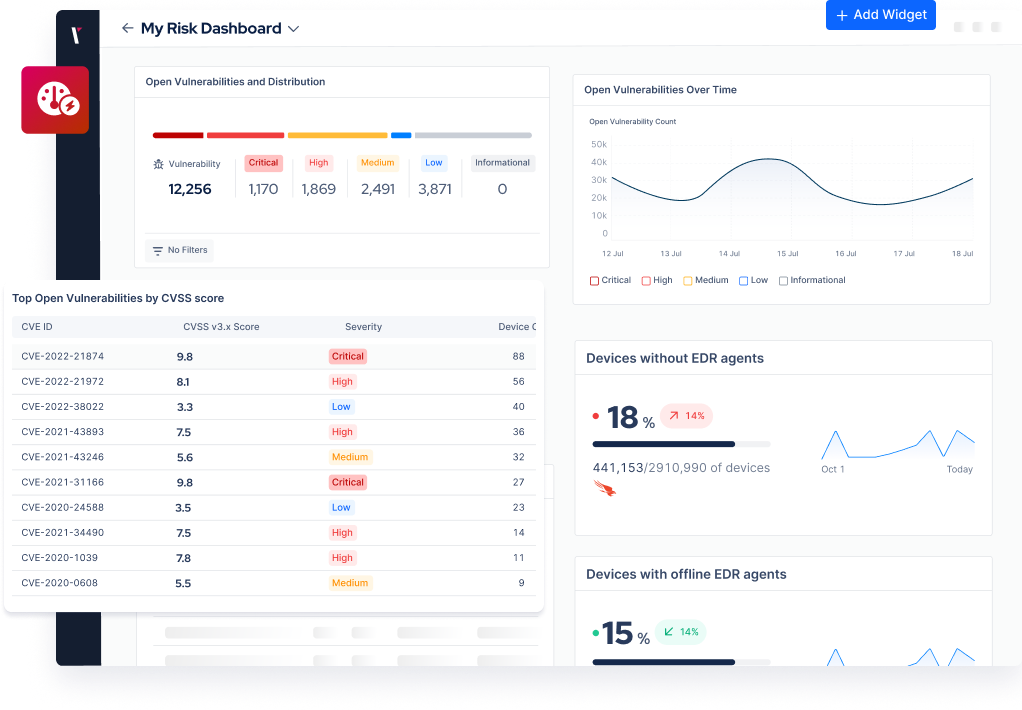
Reduce compliance risk by validating your security controls against real-world threats. Learn how Picus helps oil and gas organizations stay audit-ready and demonstrate cyber resilience with confidence.
OIL AND GAS THREAT TEMPLATES
Simulate Cyber Threats Targeting Oil and Gas
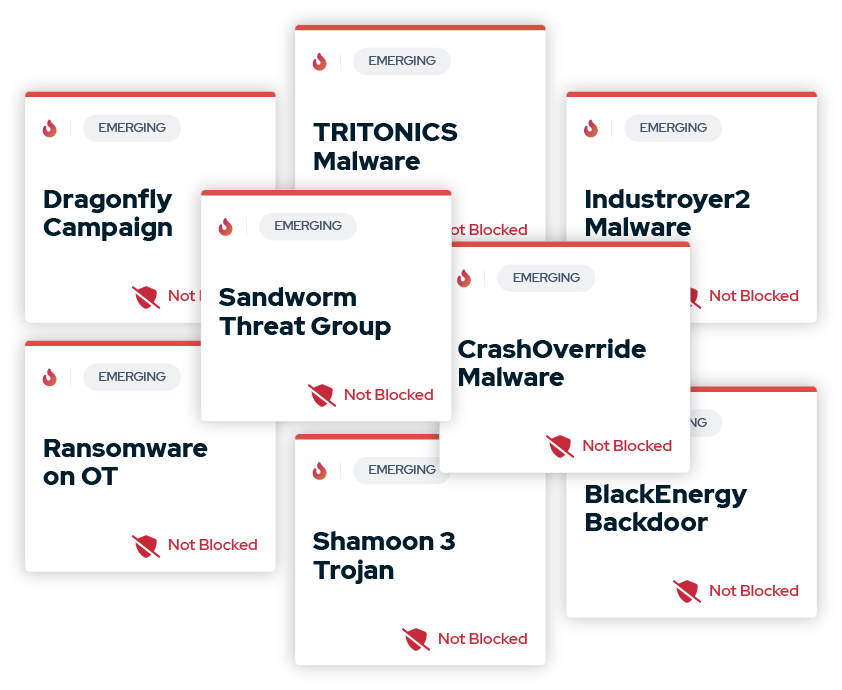
With Picus Threat Templates for Oil and Gas, you can validate your defenses against the latest campaigns targeting pipelines, refineries, and industrial control systems, including Sandworm, TRITON, and Dragonfly.
Simulate real-world attacks on endpoints, networks, and IT and OT boundaries, reveal hidden gaps, and strengthen defenses against sector-specific risks.
Why Oil and Gas Teams Choose Picus
Security leaders across the energy sector trust Picus to validate their security posture safely, continuously, and at scale. Here is how Picus supports key roles across the organization.
-
CISOs: Gain clear visibility into security posture and control effectiveness across IT and OT, enabling them to report measurable risk reduction to executives and boards.
-
SOC Managers: Streamline operations, reduce alert fatigue, and ensure security controls perform reliably against real-world threats.
-
Compliance Officers: Simplify audit preparation with evidence-based reporting aligned with IEC 62443, API 1164, NIST CSF, and TSA pipeline directives.
RESOURCES
Stay Informed with Picus Blogs
.png?width=353&height=200&name=picus-APT-cost-july21%20(1).png)
Article
How Much Does Automated Penetration Testing Cost?
.png?width=353&height=200&name=picus-APT-vs-Red-Teaming-july20%20(1).png)
Article
Automated Pentesting vs Automated Red Teaming: What’s the Difference?
Article
Where Does Automated Pentesting Fit in CTEM?
Article
What Do Your First 90 Days With an Automated Pentesting Tool Look Like?
Article
What questions should you ask a vendor before buying an automated pentesting tool?
Article
Automated Pentesting vs PTaaS: Which Model Actually Keeps Pace With Your Risk?
Article
Automated Pentesting vs BAS: What's the Difference?
Article
Automated vs Manual Penetration Testing: Which Does Your Security Program Actually Need?
Article
Who Uses Automated Penetration Testing?
See the Picus Platform
.png?width=3200&height=323&name=Pattern(1).png)
See Picus run on your environment
In a live demo, watch Picus validate a real exposure end to end, from exploit to fix to re-test.
Discover the Platform
Simulate real-world cyber threats in minutes and see a holistic view of your security effectiveness.
Frequently Asked Questions
Oil and gas organizations face significant cybersecurity threats, including ransomware attacks, advanced persistent threats (APTs), phishing, insider threats, ICS and OT-focused malware, unpatched vulnerabilities in legacy industrial systems, flat or poorly segmented IT and OT networks, cloud misconfigurations, and supply chain exploits. Because attackers can pivot from corporate IT into the operational technology that runs pipelines, compressor stations, and refineries, these risks carry safety, environmental, and production consequences alongside data loss. They must be continuously validated through proactive testing such as Breach and Attack Simulation (BAS) and Automated Penetration Testing. This validation ensures security controls effectively protect against real-world threats.
Ransomware incidents can have devastating effects on oil and gas organizations, halting pipeline and refinery operations, forcing precautionary OT shutdowns, and creating safety and environmental risk on top of severe financial loss. Beyond operational disruption, attackers often demand substantial ransoms and threaten to leak stolen data, while downtime in critical infrastructure can ripple across fuel supply and pricing. Energy sector breaches cost an average of around $4.83 million according to IBM's Cost of a Data Breach report, and the operational impact of an OT incident can far exceed that figure. Continuous validation helps mitigate these impacts by identifying weaknesses before attackers do, ensuring faster response and recovery.
Continuous validation of security controls is critical for oil and gas organizations to maintain compliance with standards and directives such as IEC 62443, API 1164, NIST CSF, and TSA pipeline security directives. Traditional periodic assessments often miss evolving threats and the shifting exposure created by interconnected IT and OT. Leveraging automated and continuous validation platforms like Picus, operators can demonstrate consistent adherence to regulatory requirements and generate audit-ready evidence. By continuously testing defenses and promptly addressing identified gaps, compliance becomes proactive rather than reactive, helping operators meet stringent standards while safeguarding critical operations.
Many SOC teams in the energy sector struggle with overwhelming alert volumes and false positive alerts, often across uneven IT and OT visibility. This leads to alert fatigue, missed threats, and reduced response speed. By continuously validating detection rules and simulating real-world attacks, teams can identify what their tools are catching and what they are missing. Platforms like Picus help optimize SIEM and EDR configurations, reduce false positives, and ensure that analysts are focused on real threats, not noise.
BAS allows oil and gas organizations to safely simulate attacker techniques used in real-world campaigns, such as ransomware, credential theft, lateral movement, and the IT-to-OT pivots that threaten industrial control systems. Unlike one-off assessments, BAS is continuous, automated, tailored to your environment, and runs without disrupting production. It helps validate that security controls are working as expected, identifies prevention and detection gaps across corporate and operational networks, and enables teams to apply mitigation measures with confidence without interrupting critical operations.
Yes. Picus simulates ransomware behaviors from initial infection through lateral movement, encryption, and data exfiltration, allowing oil and gas organizations to assess their defenses across the kill chain. This includes validating endpoint protection, email gateways, network segmentation, IT and OT boundaries, and detection workflows. With visibility into which techniques are detected or blocked, teams can proactively close gaps, reduce dwell time, and strengthen preparedness against high-impact ransomware threats that target critical operations.