

Security Control Validation

Prove exactly what your security controls stop, and what they miss.

Automatically and continuously simulate real-world attacks against your prevention and detection controls to see what they block, what they miss, and how to fix the gaps.

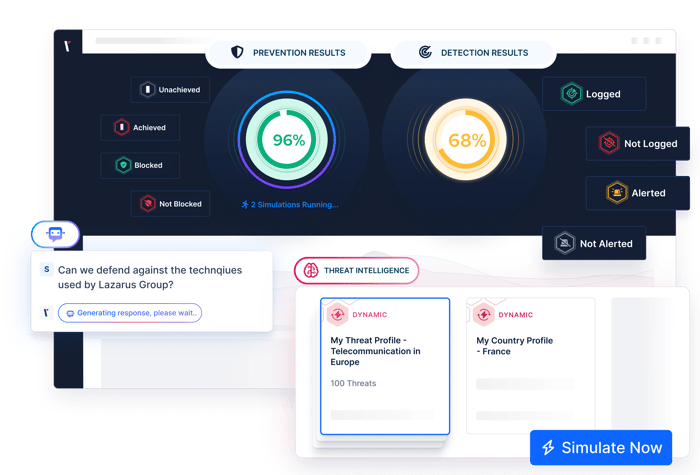
Breach and attack simulation use case UI showcasing security validation capabilities

What is Security Control Validation (SCV)?

SCV is the practice of continuously testing whether your prevention and detection tools (firewall, EDR, SIEM, and others) actually work, by safely running real attacker techniques against them and measuring what each control stops, catches, or misses.

Picus pioneered Breach and Attack Simulation, the technology that powers SCV, and has spent 10+ years defining the category and advancing it.

Why validate your controls?

  • Find the gaps attackers would walk through.

  • Confirm detections fire when they should.

  • Catch silent failures from config drift.

  • Show the value of the tools you've invested.

the problem

You've invested in a full security stack.
You still can't say for sure it works

Frontier AI has collapsed the time between disclosure and attack. Adversaries now weaponize new CVEs in hours, not weeks, and probe your specific environment at machine speed, around the clock, with no human in the loop. A control is deployed once and trusted forever, but environments change every day.

Drift You’ll Never Notice Until It’s Exploited

Configs and detection rules change silently between tests, so a control that passed last quarter may quietly be failing now.

Threats Move Faster Than You Can Test

AI weaponizes new techniques in hours, not quarters. Manual re-checks and once-a-year assessments cannot keep pace with an automated adversary.

No Evidence When Leadership Asks “Are We Safe?”

When the board asks whether you're covered, the honest answer rests on assumptions and scores, not evidence.

Firewalls, EDR, and SIEM aren't effective straight out of the box. They drift as configs change and as new threats appear daily, so what worked last quarter may quietly be failing now.

Why Now · The Post-Mythos Era

Frontier AI has collapsed the time between disclosure and attack.

Adversaries now weaponize new CVEs in hours, not weeks, and probe your specific environment at machine speed, with no human in the loop. The model built for a slower attacker, deploy a control and assume it works, quietly fails against an AI-accelerated one. 

~10 hrs time-to-exploit for a new CVE
~135/day new CVEs, up 40% YoY
<30 min adversary breakout time
the solution

Put your controls under real attack, continuously.

Picus Breach and Attack Simulation, safely runs real-world attacks against your live defenses on a continuous basis, then shows you exactly what got through and how to fix it. It turns "we think we're covered" into "we've proven we are, and here's the evidence."

Detection & Prevention

See exactly what each control blocks, detects, or misses.

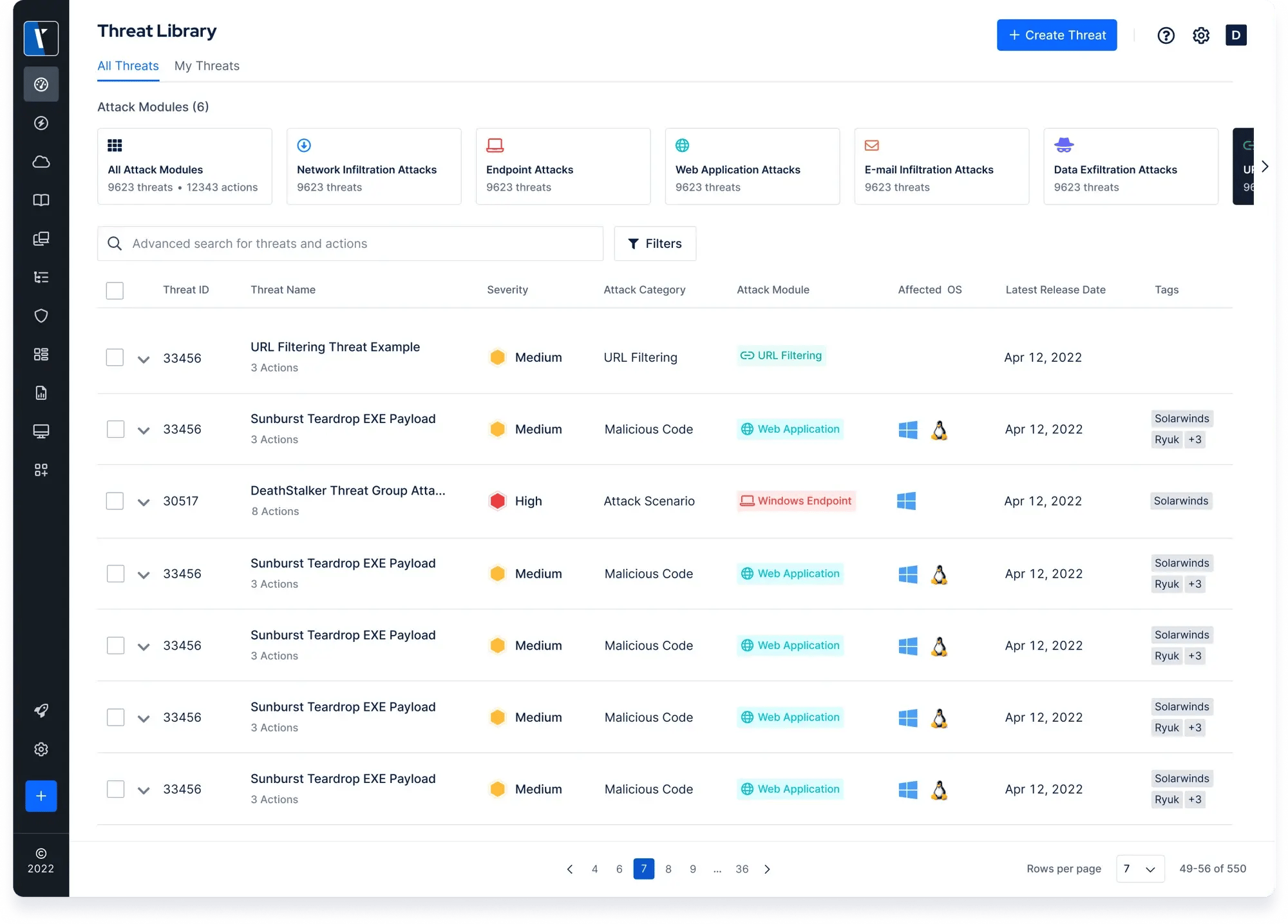
Test your controls against thousands of real-world threats and get a clear, per-technique verdict instead of a hopeful assumption. You move from "the EDR should catch this" to a measured result you can act on the same day.

Powered by the Picus Threat Library, maintained by Picus Labs, with new simulations added within hours of disclosure.
undefined-Jun-12-2026-11-20-53-5348-AM
threat library
Remediation

Close gaps with fixes written for your exact tools.

Every failed test comes with a ready-to-apply mitigation, a vendor-specific prevention signature or detection rule, so you harden the control that missed without researching or writing it from scratch. Then re-run the same attack to confirm the gap is actually closed.

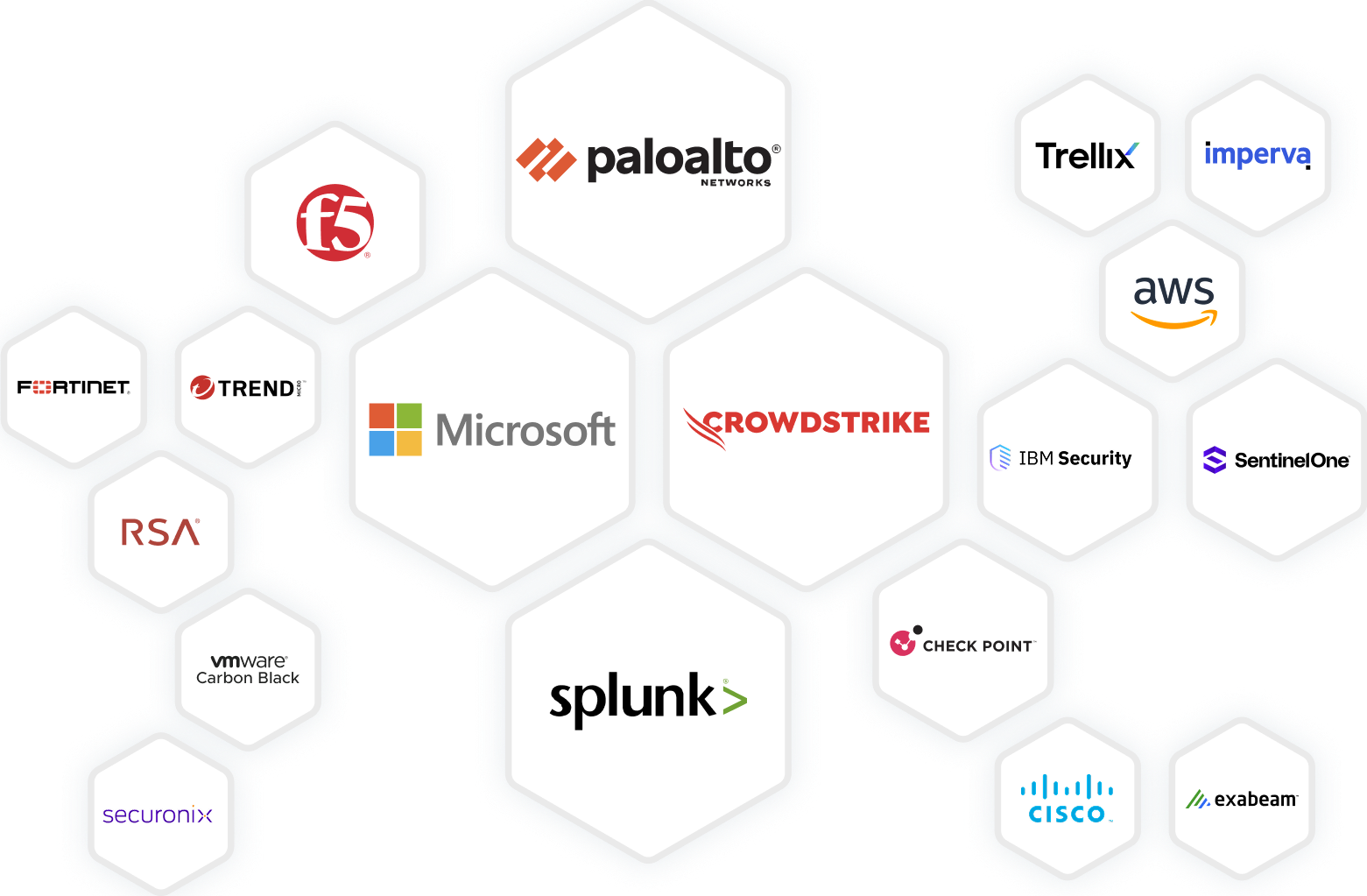
Powered by Picus Mitigation Library, with vendor-specific guidance across 75+ integrations from CrowdStrike and Microsoft to Palo Alto and Splunk.
Exposure coverage

Know your coverage against the techniques attackers actually use.

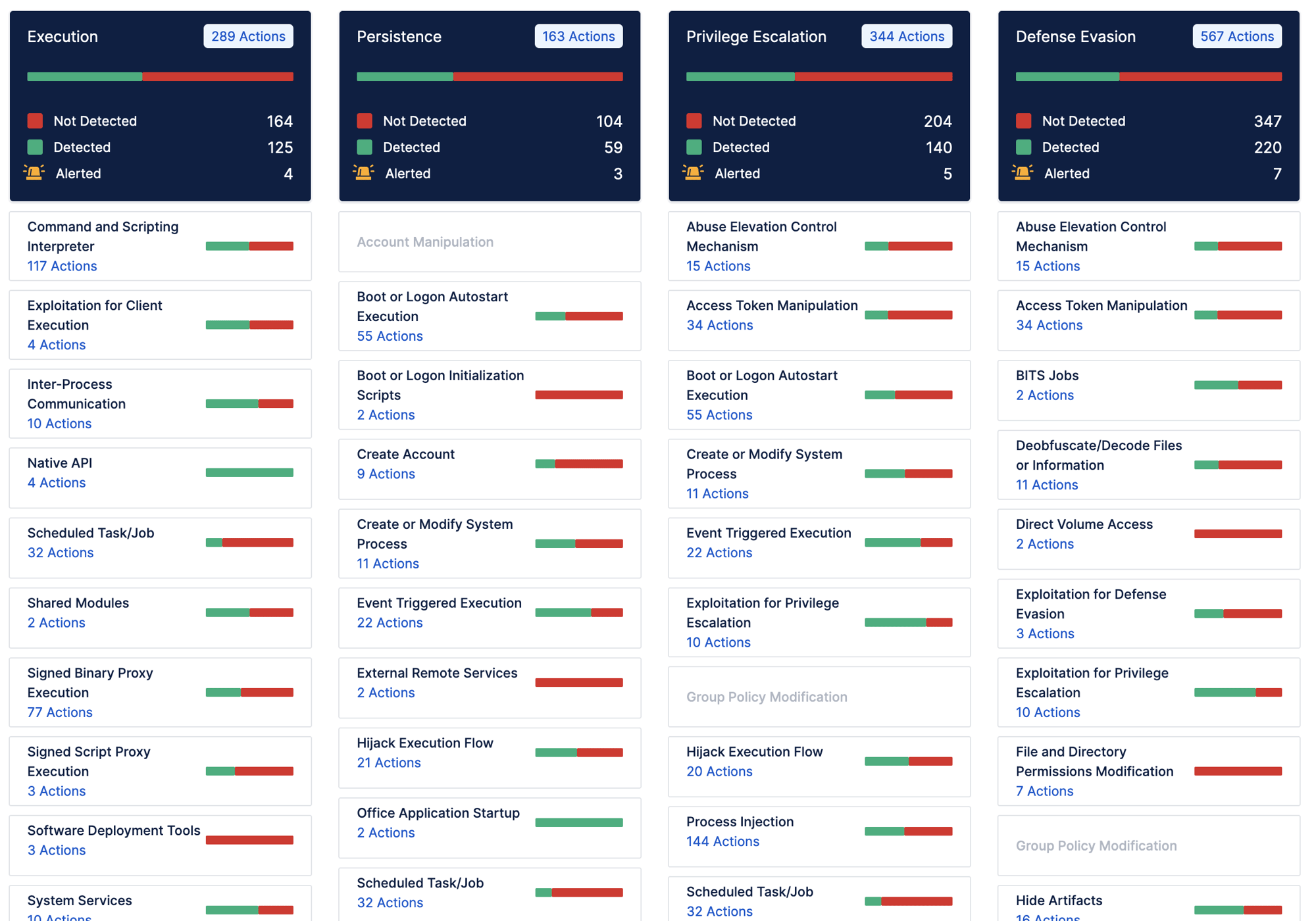
Every result is mapped to MITRE ATT&CK, so you can see coverage at a glance, spot the tactics where you're exposed, and prioritize the techniques that pose the greatest risk, not just a flat list of findings.

Powered by Automatic MITRE ATT&CK mapping across 25,000+ TTPs and 5,700+ threat scenarios at the sub-technique level.
mitre attack picus
Image_1_risklevel
reporting

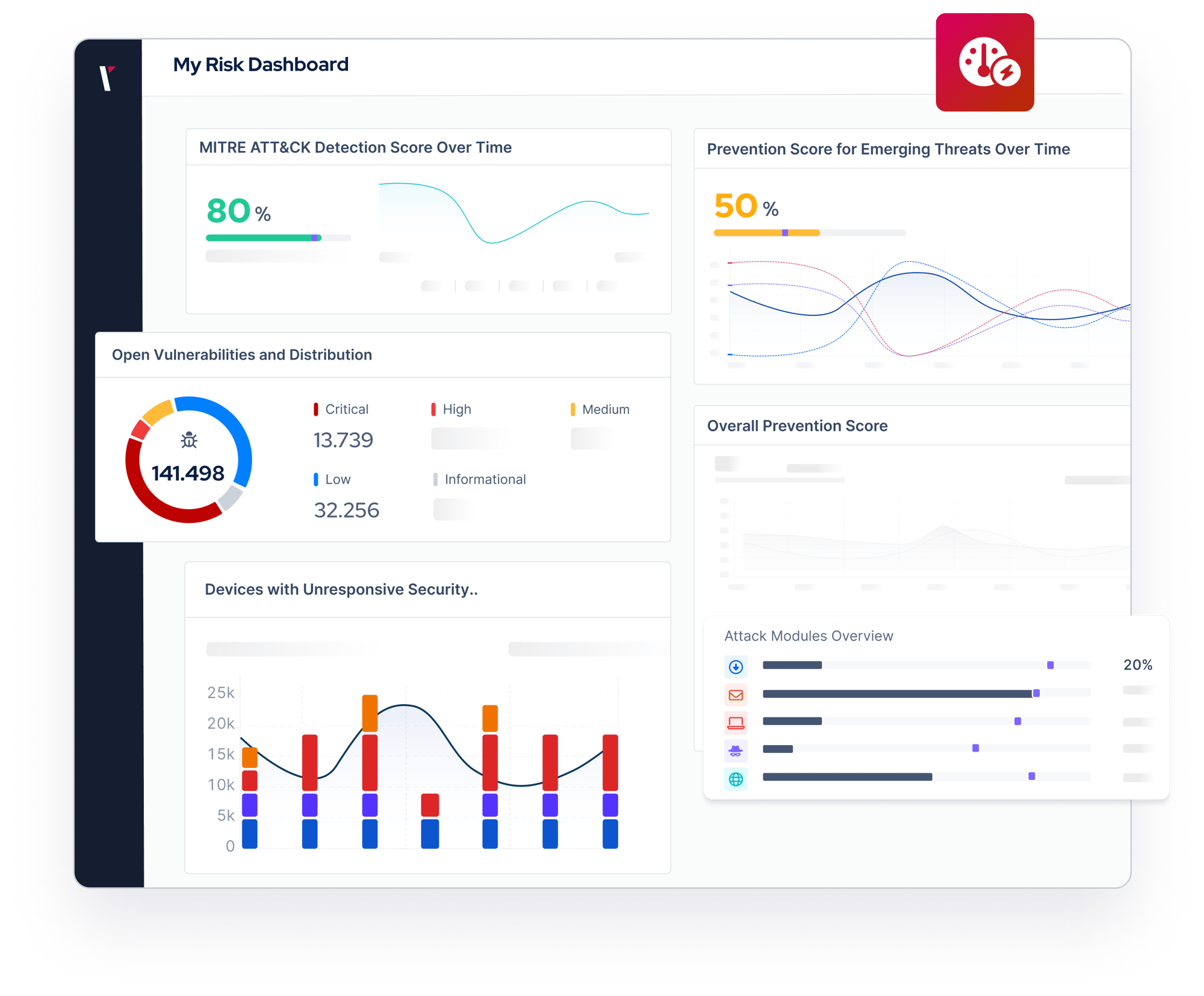
Show effectiveness rising, and prove it to the leadership.

Track control effectiveness as a trend over time, so you can demonstrate progress, defend security spend, and hand leadership an audit-ready answer backed by evidence rather than assertion.

Powered by Picus reports and dashboards, with benchmarking against industry and regional peers.
how it works

Five Steps, Each Driven by a Specific Part of the Platform.

Picus runs production-safe attacks against your real controls, measures what each one did, hands you the fix, then proves it worked, and keeps doing it.

  1. Step 1:
    Threat Library
    Simulate

    The Picus Threat Library launches Labs-maintained techniques safely against your live controls, in production, without disrupting users.

  2. Step 2:
    Assessment Engine
    Validate

    Each attack is scored objectively as prevented, detected, logged, or missed. It is an evidence-based verdict, not an estimate.

  3. Step 3:
    ATT&CK Mapping
    Map

    Results map automatically to MITRE ATT&CK at sub-technique level, surfacing exactly where coverage breaks down.

  4. Step 4:
    Mitigation Library
    Optimize

    For every gap, Picus provides ready-to-apply vendor-specific prevention signatures and detection rules, with no writing them from scratch.

  5. Step 5:
    Re-validation
    Prove

    Re-run the same attack to confirm the control now holds, so closure is proven rather than assumed.

A swarm of AI agents, Picus Swarm, runs this loop continuously and autonomously, so validation keeps pace as threats evolve and your environment changes.

who benefits

Value for Every Team

SOC & Blue Teams
  • Reveal missed detections
  • Sharpen alerting and tuning
  • Stay ready for new TTPs
Security Engineers
  • Catch config drift early
  • Measure control efficacy
  • Deploy vendor-specific fixes
Red Team
  • Continuous, safe coverage
  • ATT&CK-mapped results
  • Custom threats via Threat Builder
CISO / Risk
  • Evidence-based effectiveness
  • Defensible security spend
  • Board- and audit-ready reporting
one platform, every surface

What Picus Can Validate

Security Control Validation is one job on a platform built to validate your defenses end to end. The same evidence-driven loop extends across every surface attackers touch.

Endpoint Security Testing

Run ransomware, malware, and full kill-chain attacks against EDR, XDR, EPP, and AV across Windows, Linux, and macOS to prove what they block and detect.

Network Security Validation

Test NGFW, IPS, and segmentation with realistic malicious traffic, from APT campaigns to ransomware downloads and data exfiltration.

Cloud & Container Security Validation

Surface cloud misconfigurations, over-permissive IAM, and container risks, then validate whether they are truly exploitable in your environment.

Email Security Validation

Send malicious links, attachments, and payloads against your email gateway to confirm phishing and malware are stopped before they reach inboxes.

AI Security Validation

Probe the AI systems and LLM-powered apps you now run for prompt injection, data leakage, and abuse, validating the controls meant to contain them.

Detection Rule Validation

Find SIEM rules that are broken, noisy, or silent, and optimize detection efficacy so alerts fire when they should.

Attack Surface Validation

Map internal and external assets and the exposures they carry, so you see what attackers can reach before they do.

Attack Path Validation

Chain real exposures across hosts, identities, and misconfigurations to your crown jewels, prioritizing by genuine exploitability.

INTEGRATIONS

Works with the stack you already run.

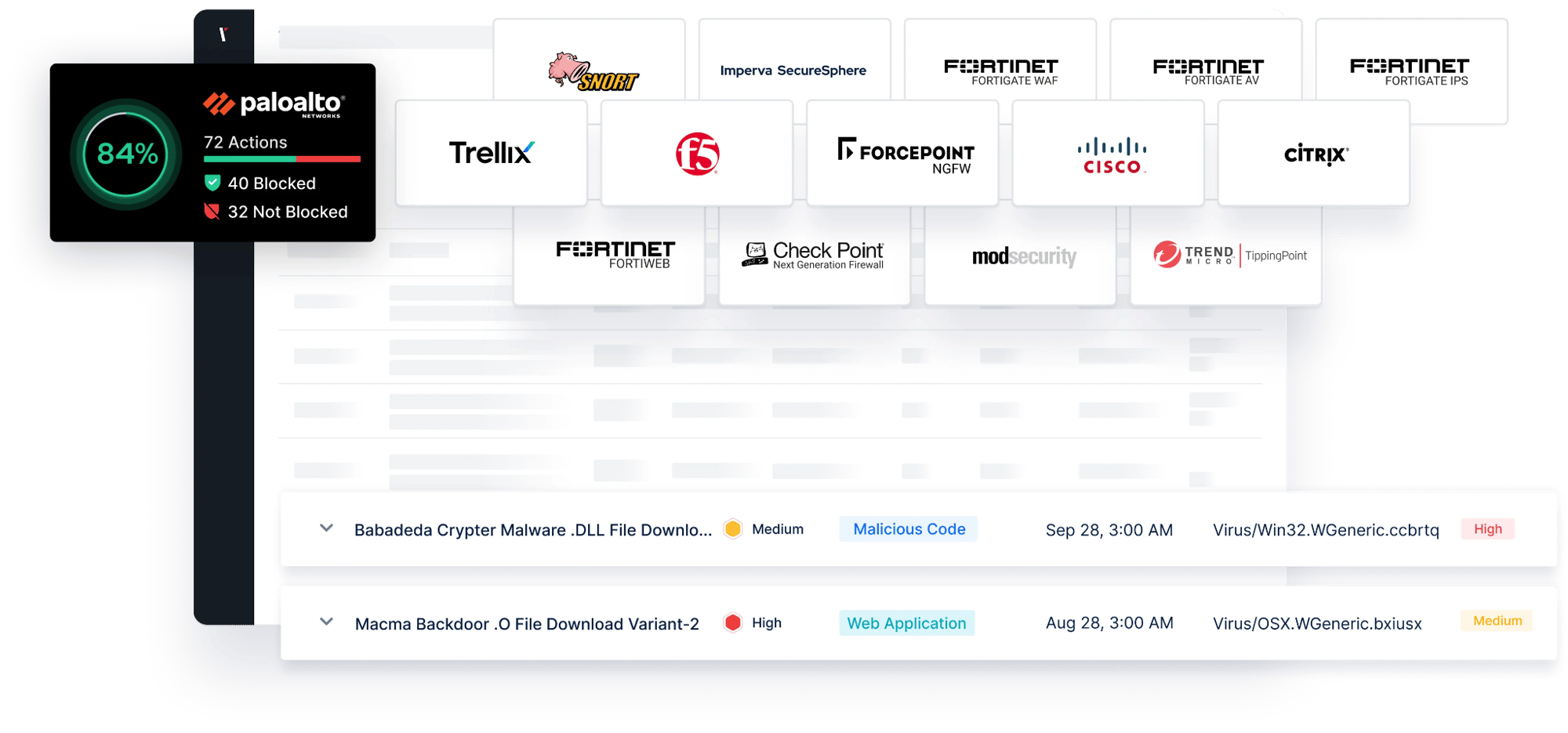
Picus integrates with your SIEM, EDR, NGFW, WAF, and email gateways to simulate attacks in production, reveal the gaps each tool misses, and fine-tune every control, then re-validate that the gap is closed.
Integrations
WHAT OUR CUSTOMERS SAY

Trusted by Security Teams, Recognized by the Industry

mid-strip-gray-mobile mid-strip-gray

gartner-logo-2025 1 (1)

Customer's Choice

Gartner Voice of the Customer for Adversarial Exposure Validation

mid-strip-gray-mobile mid-strip-gray

G2-2026-winter-gartner-2025-badge-dark-blue 2

BAS Category Leader

Ranked #1 by Users on G2

mid-strip-gray-mobile mid-strip-gray

frost-radar-leader-badge-2026 (1) (1)

#1 Leader Frost Radar

Automated Security Validation

what sets picus apart

Built for Evidence, at Machine Speed

AI That Keeps Pace With AI
The Picus AI Threat Builder turns a blog URL, PDF, CVE, or actor name into a runnable, ATT&CK-mapped simulation in about 9 minutes, and Picus Swarm runs the validate, fix, re-validate loop autonomously.
The Pioneer of BAS
Picus invented Breach and Attack Simulation and has spent 10+ years defining the category and advancing it with every release. That depth is why our validation proves control effectiveness with evidence, not configuration guesswork.
Threats Added Within Hours

A 20+ person Picus Red Team hand-builds novel attack vectors under a 24-hour SLA for critical threats, so you validate against this morning's threat, not last quarter's.

Fixes, Not Just Findings
Every failed test ships with a vendor-specific signature or detection rule and a re-validation step, so a gap becomes a closed, proven gap, not another line on a dashboard.
THE PICUS PLATFORM

One platform validates your whole security program.

Breach and Attack Simulation is one part of the Picus Platform. Together, these capabilities converge into one continuous validation loop, from attack surface to controls to exploitable exposures.

Breach and Attack Simulation
Continuously tests what your EDR, SIEM, firewall, WAF, and other security controls actually block and detect against the newest attacker techniques, then ships the fixes and re-validates that the gap closed.
Autonomous Pentesting
Executes real exploit chains in your environment, showing what an attacker can actually reach and do, not what a CVSS or EPSS score predicts. Live validation, run safely in production.
Exposure Validation
Proves exploitability without firing an exploit, covering the restricted assets no live test can touch and the CVEs with no public or safe exploit, for a defensible verdict on day one of disclosure.


RESOURCES

Latest Breach And Attack Simulation Resources

Pattern-mobile Pattern(1)

See the Picus Platform

See Picus run on your environment

In a live demo, watch Picus validate a real exposure end to end, from exploit to fix to re-test.

Discover the Platform

Simulate real-world cyber threats in minutes and see a holistic view of your security effectiveness.

Frequently Asked Questions about Breach and Attack Simulation (BAS)

Security Control Validation is the testing of security controls to confirm they work as intended, so teams can address gaps and get the best protection and value from their investments. Rather than confirming a control is deployed, it safely runs real attack techniques against your firewalls, EDR, email gateways, and SIEM and measures what each one stops, catches, or misses.

It helps security teams identify policy weaknesses that could let attacks go unprevented and undetected. Controls drift as configurations change and as new threats appear daily, so validation ensures defenses stay optimized and that misconfigurations are caught before a breach finds them first.

Breach and Attack Simulation is the technology that safely emulates adversary behavior in a controlled way. Security Control Validation is the outcome of that process: measurable evidence of how your prevention and detection controls perform. Picus uses BAS to power continuous control validation across your environment.

Yes. Picus is designed to validate security controls safely in production without disrupting users, systems, or business operations. You gain evidence of real defensive effectiveness from live environments while maintaining operational stability.

Validation should be driven by threat activity and change rather than a fixed schedule. New vulnerabilities, emerging techniques, and control updates can introduce risk at any time, so Picus ingests fresh threat intelligence in real time and generates new validation scenarios as risks appear, keeping your picture continuous rather than point-in-time.

Vulnerability scanners identify weaknesses that may exist in an environment. Security Control Validation measures whether those weaknesses can actually be exploited despite the controls already in place. One identifies potential exposure; the other provides evidence of actual defensive effectiveness against real attack techniques.

Yes. Every validated gap is mapped to vendor-specific remediation tailored to your environment: actionable prevention signatures and detection rules across 75+ integrations. After applying a fix you can re-run the same attack to confirm the gap is closed.

By continuously testing and improving control effectiveness, Picus helps organizations meet regulations and standards that require regular testing of technical measures, including GDPR, ISO 27001, and PCI DSS, as well as frameworks such as NIST 800-53.