
Key Takeaways
- An insider threat is anyone with authorized access to systems, data, or facilities who uses access to cause harm, including current employees, contractors, vendors, business partners, and former staff with active accounts.
- 83% of organizations reported at least one insider attack in the past year, and 55% of those incidents stem from negligence rather than malicious intent.
- Insider incidents now cost organizations an average of $19.5 million per year, up 20% over two years, with malicious insider breaches averaging $4.92 million per incident.
- Containment speed shapes the financial damage: incidents resolved in under 30 days average $14.2 million, while those taking over 90 days reach $21.9 million, yet the average organization needs 67 days to shut one down.
- Picus Attack Path Validation tests defenses against insider scenarios automatically by starting from a domain-joined account and chaining discovery, credential abuse, lateral movement, and objective validation to map exactly how far an insider could reach.
In March 2025, workforce platform Rippling sued competitor Deel, claiming Deel had planted an employee inside Rippling. The accused insider, a Global Payroll Compliance Manager, accessed confidential data across Slack, Salesforce, and Google Drive for four months before anyone noticed [1].
That's the problem with insider threats. They don't trip your firewall. They don't trigger your EDR. They look like normal work, until they don't.
And they're not rare. 83% of organizations reported at least one insider attack in the past year [2]. Yet most security programs still spend the bulk of their budget keeping outsiders out, while the people already inside walk past every control you've built.
This guide breaks down what an insider threat is, the types you'll face, the risks they create, and how to test your defenses against them with Picus Attack Path Validation.
What Is an Insider Threat?
An insider threat is the potential for someone with authorized access to an organization's systems, data, or facilities to use that access in ways that cause harm. The harm can be intentional, stealing trade secrets, or unintentional, like clicking a phishing link that hands credentials to an external attacker.
The defining word is authorized. External attackers have to break in. Insiders are already there.
CISA defines an insider as anyone who has or had legitimate access to an organization's resources. That includes current employees, contractors, vendors, business partners, and former staff with active accounts [3].
Insider threats aren't always disgruntled employees stealing data on the way out.
According to the 2025 Ponemon Cost of Insider Risks Report, 55% of incidents come from negligence, not malice [4]. The highest-volume risk in most organizations is someone who simply hasn't been trained well enough, or whose credentials have been quietly stolen.
What Are the Types of Insider Threats?
There are five common types of insider threats: negligent insiders who cause incidents through carelessness, malicious insiders who harm the organization on purpose, compromised insiders whose credentials have been stolen, third-party insiders like vendors with delegated access, and collusive insiders who work with external attackers.
Negligent Insiders
Negligent insiders cause damage by mistake. They misconfigure a database, send a file to the wrong person, or fall for phishing.
This is the most common type, accounting for 55% of insider incidents.
Malicious Insiders
Malicious insiders act with intent. They steal intellectual property, sabotage systems, or sell data to competitors.
They're a smaller share of incidents but carry a higher per-incident cost. IBM's 2025 report found malicious insider breaches cost $4.92 million on average, above the $4.44 million global breach average [5].
Compromised Insiders
Compromised insiders are employees whose credentials have been stolen. The person isn't doing anything wrong, but their account is.
Verizon's 2025 DBIR found that stolen credentials were used in 22% of all breaches [6].
Third-Party Insiders
Third-party insiders are contractors, MSPs, and vendors with delegated access. They sit outside your normal HR processes but still hold real privileges in your systems.
Collusive Insiders
Collusive insiders work with external threat actors.
CISA flags this as one of the hardest types to detect because the external partner usually knows how to avoid your monitoring tools.
What Are the Risks of an Insider Threat?
Insider threats create five overlapping risks: direct financial loss, intellectual property theft, regulatory penalties, reputational damage, and operational disruption.
The financial impact alone now averages $19.5 million per year for organizations that experience insider incidents, up 20% over two years [7].
The math gets worse the slower you respond. Incidents that take more than 90 days to contain cost an average of $21.9 million, compared to $14.2 million for those contained in under 30 days. The average organization still needs 67 days to shut an insider incident down, and containment alone runs $247,587 per incident [8].
Regulatory exposure has grown sharper, too. With GDPR, HIPAA, PCI-DSS, and now DORA in play, an insider breach can trigger notification requirements, fines, and class action suits before the forensic team files its first report.
Indicators of Insider Threats
Spotting an insider before they cause damage means watching for technical signals that don't match the user's normal behavior. No single indicator proves anything. The pattern is what matters.
The most reliable technical indicators include:
- Unusual data movement: Spikes that exceed baseline by 200% to 300%, bulk downloads, transfers to personal cloud storage, or large outbound emails.
- Privilege escalation requests without a clear business reason, especially from accounts that have never needed elevated access before.
- Off-hours activity: Logins at 3 a.m., weekend access to production systems, or access to assets outside the user's role.
- Impossible travel: A login from New York followed by one from Singapore two hours later.
- Unauthorized tools: Remote access utilities like AnyDesk or ngrok, file-transfer services, or USB devices on endpoints they shouldn't be on.
- Log tampering: Cleared event logs, disabled audit trails, or attempts to bypass security controls.
- Lateral movement signals: Unexpected SMB, RDP, or WMI activity between systems that normally don't talk to each other.
The hard part is that any one of these can be normal. A developer pulling down a large repo isn't suspicious. Detection works when you correlate three or more indicators and weigh them against the user's baseline.
Real-World Insider Threat Examples
The case files show how varied insider incidents really are. Below, we gave examples of three real-world insider threat attacks:
- Tesla (2023): Two former Tesla employees leaked roughly 100 GB of internal data to a German news outlet [9]. The breach exposed personal information on 75,000 current and former employees, customer bank details, and trade secrets tied to Tesla's Autopilot program.
- Yahoo (2022): Senior research scientist Qian Sang downloaded around 570,000 pages of confidential information about Yahoo's AdLearn product onto personal devices 45 minutes after receiving a job offer from a competitor [10]. Yahoo sued for $5 million.
- Rippling vs. Deel (2025): A Global Payroll Compliance Manager at Rippling allegedly funneled customer lists, pricing data, and competitive intelligence to Deel over several months before being caught [11]. It's one of the most public examples of corporate espionage through a planted insider in recent years.
What unites these cases isn't the motive. It's the access. In every example, the person had legitimate credentials, did things their role allowed, and avoided detection long enough to cause real damage.
How Do You Mitigate Insider Threats?
Mitigating insider threats takes a layered approach. No single control stops an insider, but together they close the gaps each one leaves open.
Here is a practical program:
- Access governance: Apply least privilege, just-in-time access for admin tasks, and aggressive offboarding. Most insider data theft happens around the time someone leaves.
- Identity controls: MFA on every account, privileged access management, and continuous credential monitoring against dark web sources.
- Behavioral monitoring: UEBA platforms that build baselines and flag deviations.
- Data protection: DLP, file classification, and watermarking so sensitive data is traceable wherever it moves.
- Security awareness training: Negligent insiders are the largest category, and most negligence is fixable.
- Continuous validation: Controls drift. Misconfigurations creep in. The only way to know your defenses work is to test them, the way an attacker would, against the attack paths an insider could exploit.
How to Defend Against Insider Threats with Picus Attack Path Validation
Most security validation tools are built for external threats. They simulate an attacker trying to break in from the outside. But insiders don't break in. They're already there, operating with domain-joined access and legitimate credentials.
Picus Attack Path Validation (APV) tests your defenses against insider scenarios from the inside out, the same way a red team would, but continuously, in minutes rather than months.
APV assumes breach, starts from a domain-joined account, and chains together discovery, credential dumping, privilege escalation, and lateral movement to see precisely how far an attacker (or a malicious insider) could realistically reach.
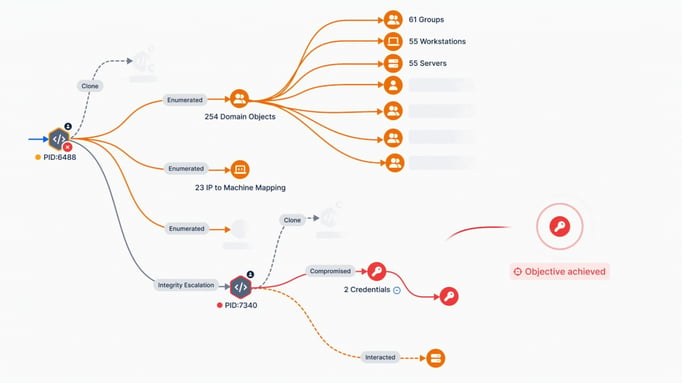
Figure 1. Picus Attack Path Validation (APV) Illustration
How APV Models an Insider Scenario
- Initial access: Starts from any domain-joined account, the same position an employee, contractor, or compromised user would have.
- Discovery: Maps the network, identifies users, finds Kerberoastable service accounts, and locates sensitive assets.
- Credential abuse: Runs credential-based attacks including Kerberoasting and LSASS dumping, then cracks hashes offline to test real-world credential exposure.
- Lateral movement: Chains compromised credentials to pivot across endpoints, escalate privileges, and advance toward critical assets.
- Objective validation: Proves whether the path leads to domain admin or sensitive data, and shows the exact steps required to break the chain.
The result is a precise map of how an insider could move through your environment, and the specific controls required to stop each path before it reaches its objective.
Request a demo and see how Picus APV exposes the insider attack paths your current stack is missing.
References
[1] “Real Insider Incidents That Shaped 2025: What Organizations Can Learn,” Datapatrol. Accessed: Apr. 29, 2026. [Online]. Available: https://datapatrol.com/real-insider-incidents-that-shaped-2025-what-organizations-can-learn/
[2] “What Is an Insider Threat? Definition, Detection & Prevention,” Proofpoint. Accessed: Apr. 29, 2026. [Online]. Available: https://www.proofpoint.com/us/threat-reference/insider-threat
[3] “Defining Insider Threats,” Cybersecurity and Infrastructure Security Agency CISA. Accessed: Apr. 29, 2026. [Online]. Available: https://www.cisa.gov/topics/physical-security/insider-threat-mitigation/defining-insider-threats
[4] K. Roessler, “2025 Cost of Insider Risks: Takeaways From Ponemon’s Largest Insider Threat Study Yet,” DTEX. Accessed: Apr. 29, 2026. [Online]. Available: https://www.dtex.ai/blog/2025-cost-insider-risks-takeaways/
[5] “Cost of a data breach 2025.” Accessed: Apr. 29, 2026. [Online]. Available: https://www.ibm.com/reports/data-breach
[6] Accessed: Apr. 29, 2026. [Online]. Available: https://www.verizon.com/business/resources/T16f/reports/2025-dbir-data-breach-investigations-report.pdf
[7] “2026 Cost of Insider Risks Global Report,” DTEX Systems. Accessed: Apr. 29, 2026. [Online]. Available: https://ponemon.dtex.ai/
[8] M. Zorz, “The $19.5 million insider risk problem,” Help Net Security. Accessed: Apr. 29, 2026. [Online]. Available: https://www.helpnetsecurity.com/2026/02/26/insider-risk-costs-2026/
[9] E. Kovacs, “Tesla Discloses Data Breach Related to Whistleblower Leak,” SecurityWeek. Accessed: Apr. 29, 2026. [Online]. Available: https://www.securityweek.com/tesla-discloses-data-breach-related-to-whistleblower-leak/
[10] K. Jahnavi, “10 Insider Threat Examples: Real Corporate Case Studies.” Accessed: Apr. 29, 2026. [Online]. Available: https://learn.g2.com/insider-threat-examples#Yahoo
[11] J. Swanson, “Insider Risk Revisited: Espionage, Encryption & Economics,” SentinelOne. Accessed: Apr. 29, 2026. [Online]. Available: https://www.sentinelone.com/blog/insider-risk-revisited-espionage-encryption-and-economics/