The Credit Union Cybersecurity Handbook
An evidence-based desk reference on cyber threats, ransomware, NCUA compliance, third-party risk, and security maturity, written for the security leaders, IT leads, executives, and boards responsible for U.S. credit unions.
Two clocks. One is winning.
The handbook sets attacker speed against defender cadence. Only 26 percent of KEV-listed critical vulnerabilities were fully remediated in 2025, down from 38 percent the year before, while the median time to full resolution rose to 43 days from 32.
Attackers move in minutes. Remediation still moves in weeks.
The two figures come from different datasets and are not on one scale. Set side by side, they make the operating mismatch visible.
Written for the people who run credit union security.
Whether you are a CISO, an IT lead with no security staff, a board director, a compliance officer, or a CUSO, the handbook gives you the chapters and instruments for your job.
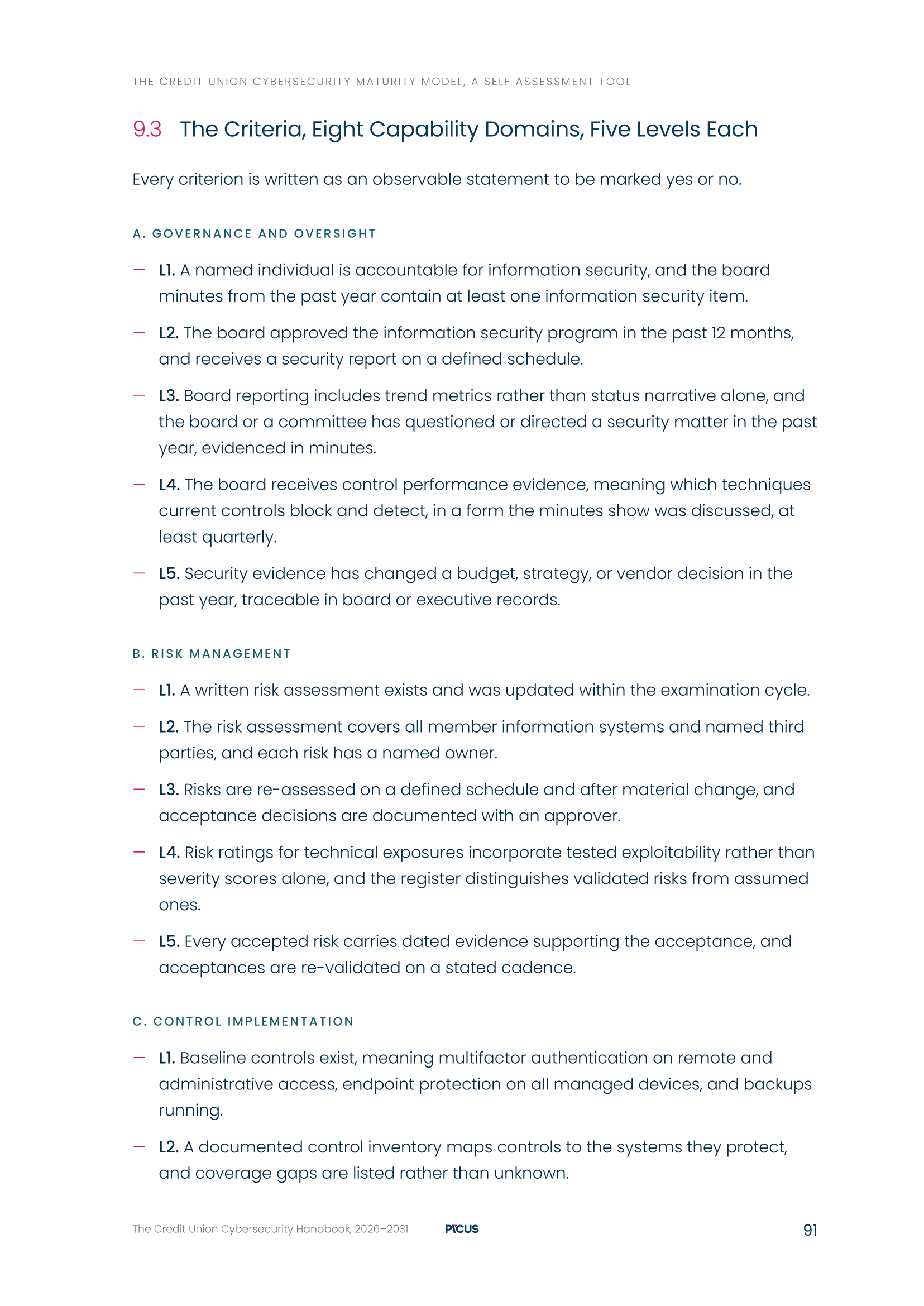
One security standard cannot fit the sector.
The handbook reads every threat, obligation, and remedy through five asset tiers, because what good security looks like differs by tier more than by any other variable: who owns security, the operating model, the examiner posture, and how validation enters.
One security standard cannot fit the sector.
The handbook reads every threat, obligation, and remedy through five asset tiers, because what good security looks like differs by tier more than by any other variable: who owns security, the operating model, the examiner posture, and how validation enters.
A loop, not a project
Appendix D runs the instruction CISA publishes as a six-step operating rhythm rather than a project: scope, select techniques, test, decide, fix, and re-validate. Re-validation proves the fix closed the gap and re-runs on every material change, which is what separates a program from a report.
Choose the format that works for you.
Use the PDF as a desk reference, or take the EPUB version with you on Kindle and compatible e-readers.