
Know Which of Your Detection Rules Would Actually Fire in a Real Attack
Continuously assess every rule in your SIEM for the log source, alert, and performance issues that quietly break detection, see your true MITRE ATT&CK coverage, and get the specific fix for each gap.
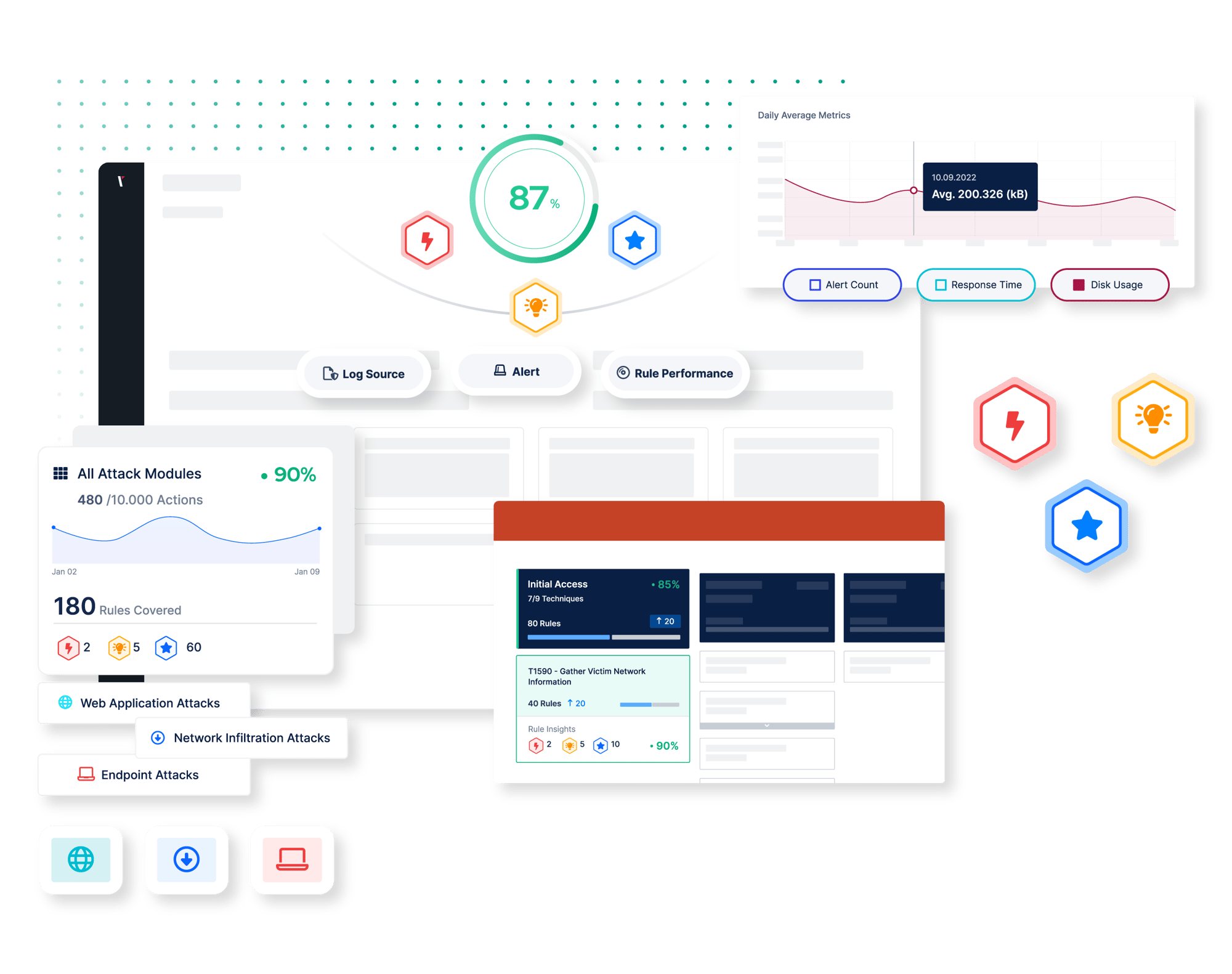
What is Detection Rule Validation (DRV)?
Detection rule validation assesses whether the rules in your SIEM actually work, rather than assuming they do because they are deployed. It inspects the log sources, alerting, and performance behind every rule, maps that coverage to MITRE ATT&CK, and reports which detections would fire, which are degraded, and which techniques remain invisible.
Instead of confirming a rule is enabled, it proves whether the detection still holds against the behavior it was written to catch, and it runs continuously instead of as a once-a-year review.
Why it matters?
-
See which rules are broken, silent, or degraded before an incident finds them
-
Replace a twice-a-year manual review with continuous, automated assessment
-
Focus detection engineering on real gaps, not thousands of raw rules
-
Prove your true MITRE ATT&CK coverage, not the coverage you assume
Your rules are enabled. That is not the same as knowing they would fire.
New threats emerge daily and detection content is written faster than anyone can test it,so a rule that passed review last quarter may quietly be failing right now, with no signal until an attack slips through.
A rule switched on is not a detection that fires.
Log sources go quiet, telemetry shifts, and field mappings drift between reviews. The rule stays enabled, throws no error, and simply stops producing the alert it was built to generate.
Detections drift out of coverage silently.
Telemetry shifts, indexes lag, and macros get disabled long before the next review. Each change chips away at coverage without an alert, so the rulebase looks healthy while blind spots grow.
A deployed rule is not evidence of risk.
Knowing a rule exists tells you nothing about whether the detection still works, whether the alert reaches the analyst, or which MITRE ATT&CK techniques you can no longer see.
Assess every rule, continuously, and prove which ones hold.
Picus Detection Rule Validation, powered by Picus Breach and Attack Simulation, automatically scores your entire rule inventory through three lenses, log source, alert, and performance, then maps coverage to MITRE ATT&CK and hands each gap a specific fix. It turns "the rule is enabled" into "we have proof this detection works, and evidence for the ones that don't."
.png?width=700&height=544&name=Small_image_5%20(1).png)
See exactly which rules are broken, and why.
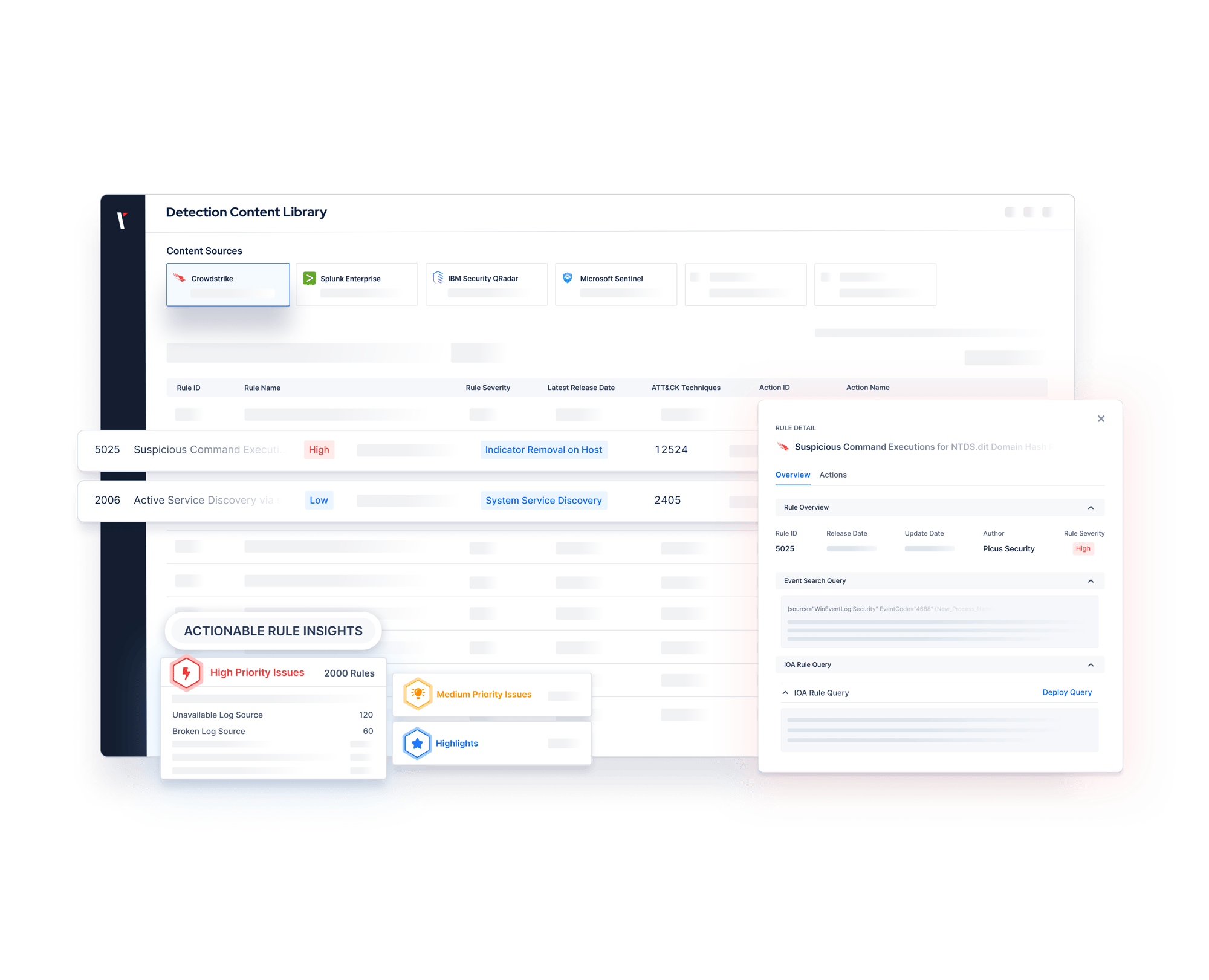
Stop assuming a rule works because it exists. Every rule is scored and grouped into high-priority issues that break detection, medium-priority tuning opportunities, and highlights confirmed to be healthy, so you know where to act first.
Validate log sources, alerts, and performance in one pass.
A detection only works if it receives the right data, fires and reaches the analyst, and runs efficiently. Picus checks all three: whether log sources are feeding the rule, whether the rule runs without failing or being skipped, and whether it scans efficiently instead of bleeding resources and false positives.
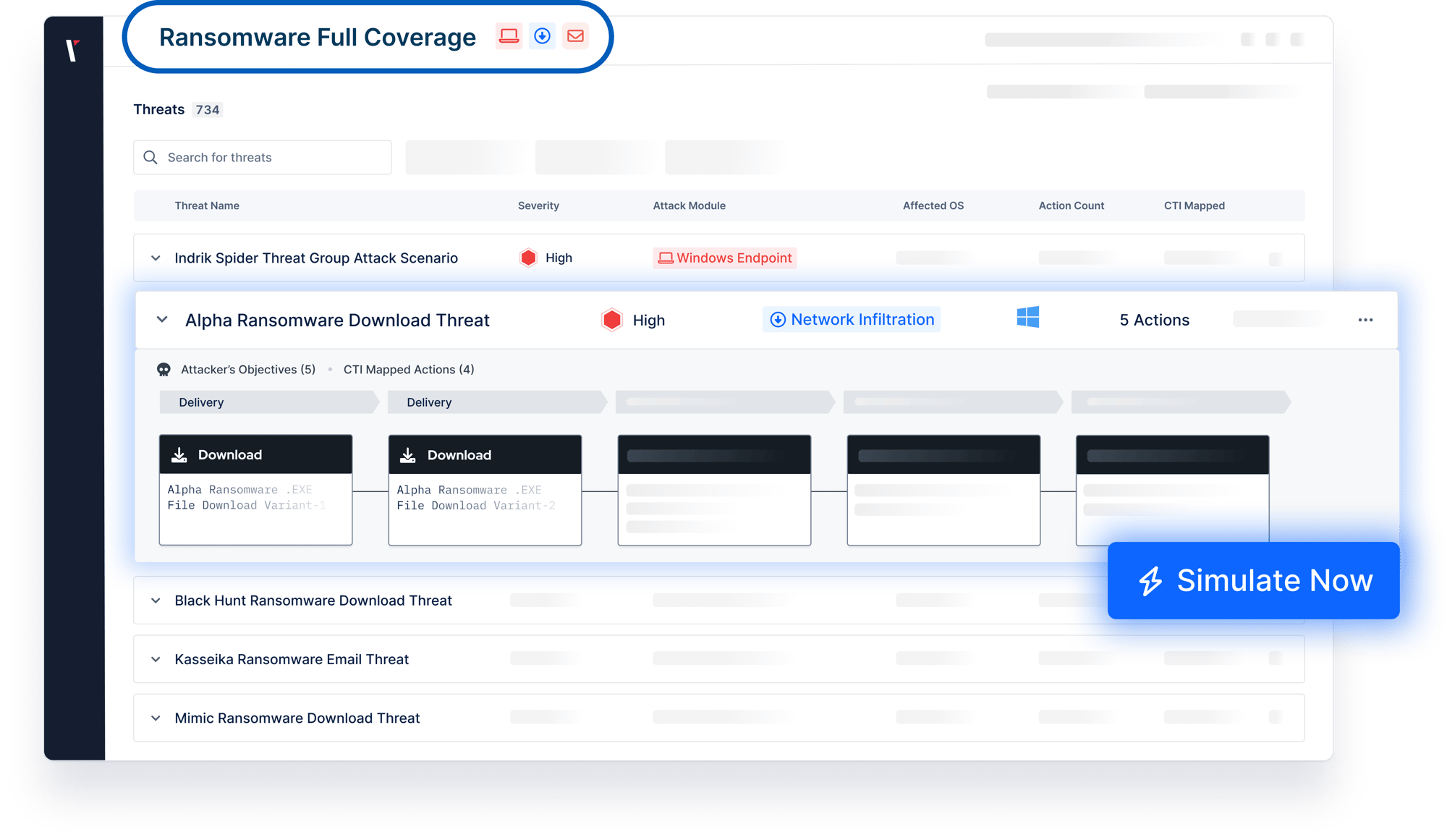
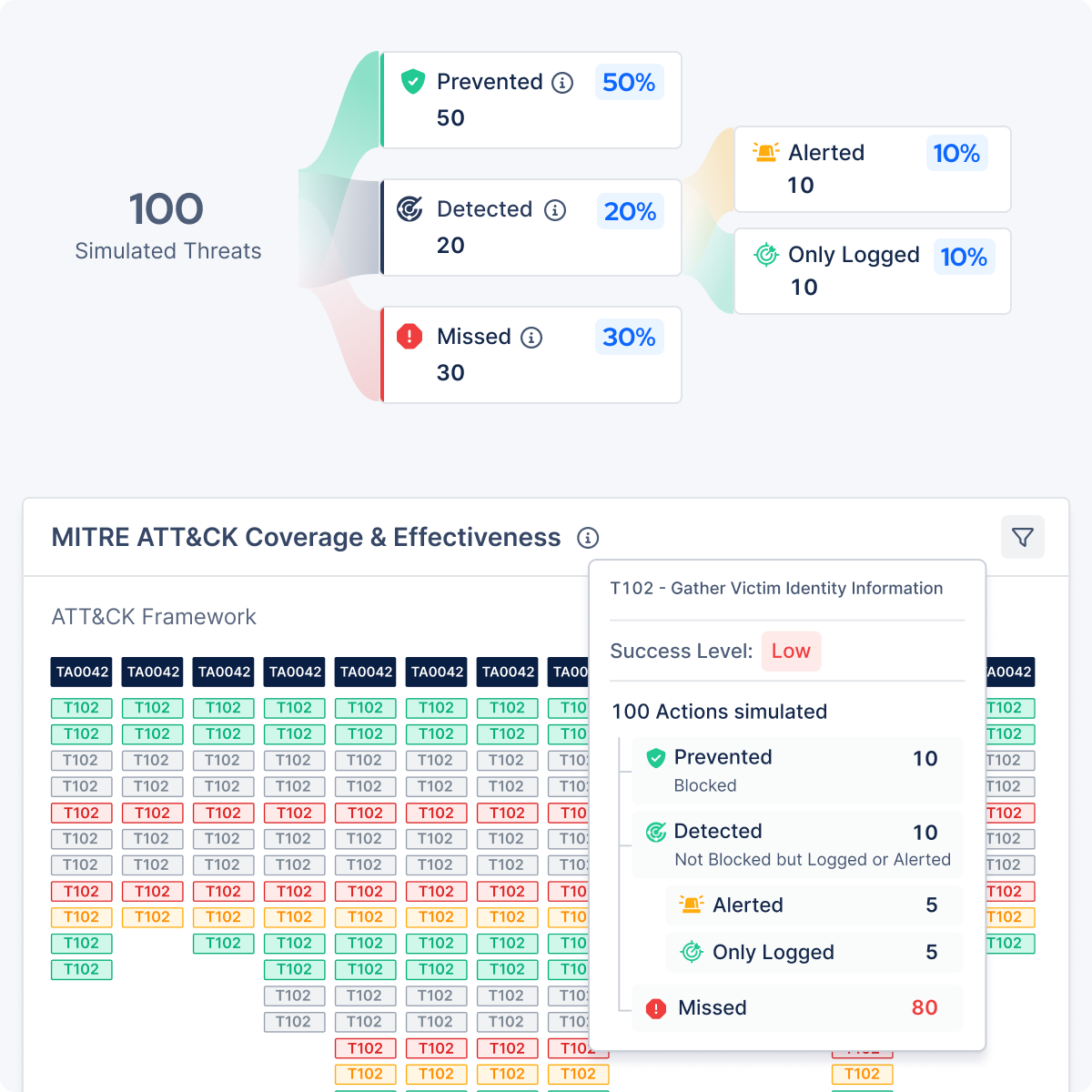
See where your coverage holds and where it breaks.
Picus maps your detection content to MITRE ATT&CK and shades every tactic by validated result. Green means the mapped rules are clean, red means a high-priority issue is hiding inside coverage you thought you had, and grey marks a true blind spot with no rule at all.
Open any rule and get the fix, then prove it worked.
Every rule opens to its full story: each insight explained in plain language, the alert count and response time tracked over seven days, the query and the log sources feeding it, and precise guidance to close the gap. Then confirm the improvement in the next assessment.
Five steps, each driven by a specific part of the platform.
Simulate, measure, pinpoint, optimize, and re-validate, run continuously to prove your SIEM catches real attacks.
-
Step 1:
SIEM / EDR IntegrateAn integration agent connects to Splunk, Microsoft Sentinel, or IBM Security QRadar and fetches your live rule inventory automatically.
-
Step 2:
Assessment Scope ScopeFilter by rule app, severity, owner, or status to set exactly which rules each assessment covers, from a single app to the full baseline.
-
Step 3:
Interval Run AssessRun on demand or on a schedule, scoring every rule across log source, alert, and performance in one automated pass.
-
Step 4:
Insights & ATT&CK AnalyzeReview results by insight category, MITRE ATT&CK, and the Picus Threat Library, and prioritize the high-impact gaps first.
-
Step 5:
Detection Guidance OptimizeApply the specific fix for each broken or degraded rule, then watch the improvement land in the next assessment.
Value across the SOC.
SOC & Detection Engineers
- See which rules fire before shipping them to production.
- Fix the exact logic, log source, or mapping that failed.
- Automate the rule review you cannot run manually at scale.
SOC Managers
- Track an automated coverage score across the full rule baseline.
- Prioritize the gaps that leave real techniques uncovered.
- Replace one manual review a year with continuous validation.
CISO / Risk
- Show board-ready evidence that detections actually work.
- Prove the realized value of the SIEM and EDR already on the books.
- Shrink the window where detection silently degrades.
Works With the SIEM and EDR You Already Run.
Picus connects through an integration agent with read-only access, fetches your live rule inventory, and validates it, so you act on proof of what detects instead of guessing across separate, inconsistently reviewed rule sets.
One platform validates your whole security program.
Detection rule validation is one use case of the Picus Platform. Together, these capabilities converge into one continuous validation loop, from attack surface to controls to exploitable exposures.
Built for Proof, Not Just a Rule Count.
Every broken rule comes with the performance and hygiene insight to correct it, then a re-validation step, so a gap becomes a closed, proven gap rather than another line on a dashboard.
Scheduled assessments keep your coverage score current as log sources, content, and threats change, instead of a review that ages the day it ends.
Detection validation runs alongside control validation, exposure validation, and autonomous pentesting, so a single finding carries through to a fix and a re-test.
See the Picus Platform
.png?width=3200&height=323&name=Pattern(1).png)
See Picus run on your environment
In a live demo, watch Picus validate a real exposure end to end, from exploit to fix to re-test.
Discover the Platform
Simulate real-world cyber threats in minutes and see a holistic view of your security effectiveness.
Frequently Asked Questions
Detection Rule Validation analyzes the detection rules in your SIEM to identify quality and performance issues, then proves whether each rule fires against a real attack. It helps SOC teams automate detection-engineering review, develop and correct rules, and manage log sources so the right alerts trigger for the right events.
Picus integrates with leading SIEM platforms, and integrations are expanded regularly. Contact us for the current list and to confirm coverage for your stack.
Most SOC teams manage thousands of rules but can only run a manual review once or twice a year, so new rules ship untested and existing ones drift out of coverage. Continuous validation keeps the baseline trustworthy between those reviews and catches broken rules before an attacker finds them.
Continuously. The best practice is to run the first assessment, prioritize the improvement insights by category, correct the rules, confirm the improvement in the next assessment, and repeat, so the baseline stays current as rules, log sources, and threats change.