Automated penetration testing is offensive software that behaves like a real attacker inside your environment, on its own. It starts from an assumed foothold, then discovers assets, exploits vulnerabilities, escalates privileges, dumps credentials, moves laterally, and chains those steps into a proven attack path toward high-value targets (like domain admin accounts, or databases), all without a human tester driving each move. It does in an automated, continuous, and repeatable way what an internal penetration tester does by hand, which means you get attacker-validated proof of what is exploitable far more often and in a wider scope than an annual engagement can deliver, and at a fraction of the cost.
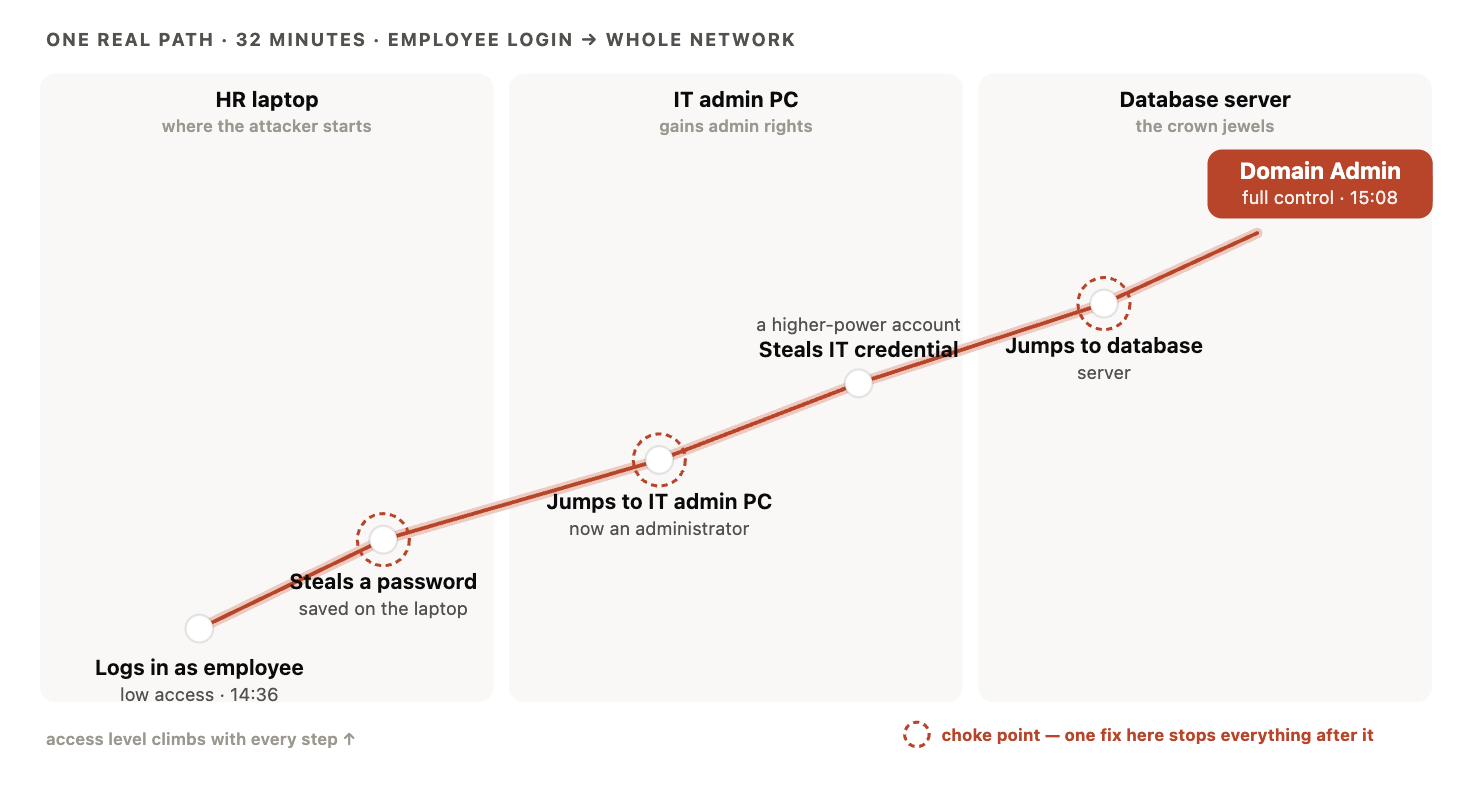
Figure 1. Automated Pentesting Chains Attack Techniques
That single shift, from a point-in-time report to continuous attacker-validated evidence, is why security teams are rebuilding their validation programs around it. But "automated penetration testing" is also one of the most overloaded terms in security. It gets confused with vulnerability scanning, with breach and attack simulation, with PTaaS, with red teaming, and increasingly with autonomous pentesting. This guide walks through what it actually is, how it works under the hood, what it finds, where it fits in a modern exposure management program, what it costs, how to buy it, and where the technology is heading next.
Each section links out to a deeper standalone article so you can go as far down any branch as you need.
What Makes a Pentest "Automated"?
"Automated" does not mean a script replaying a fixed attack sequence: the tool carries a real decision engine, rule-based logic, decision trees, heuristics, and conditional flows authored by engineers in advance, which selects each next technique from the result of the last one, pivots to another node when an exploit fails, and re-runs discovery from every new foothold, so the attack chain assembles itself as the run unfolds.
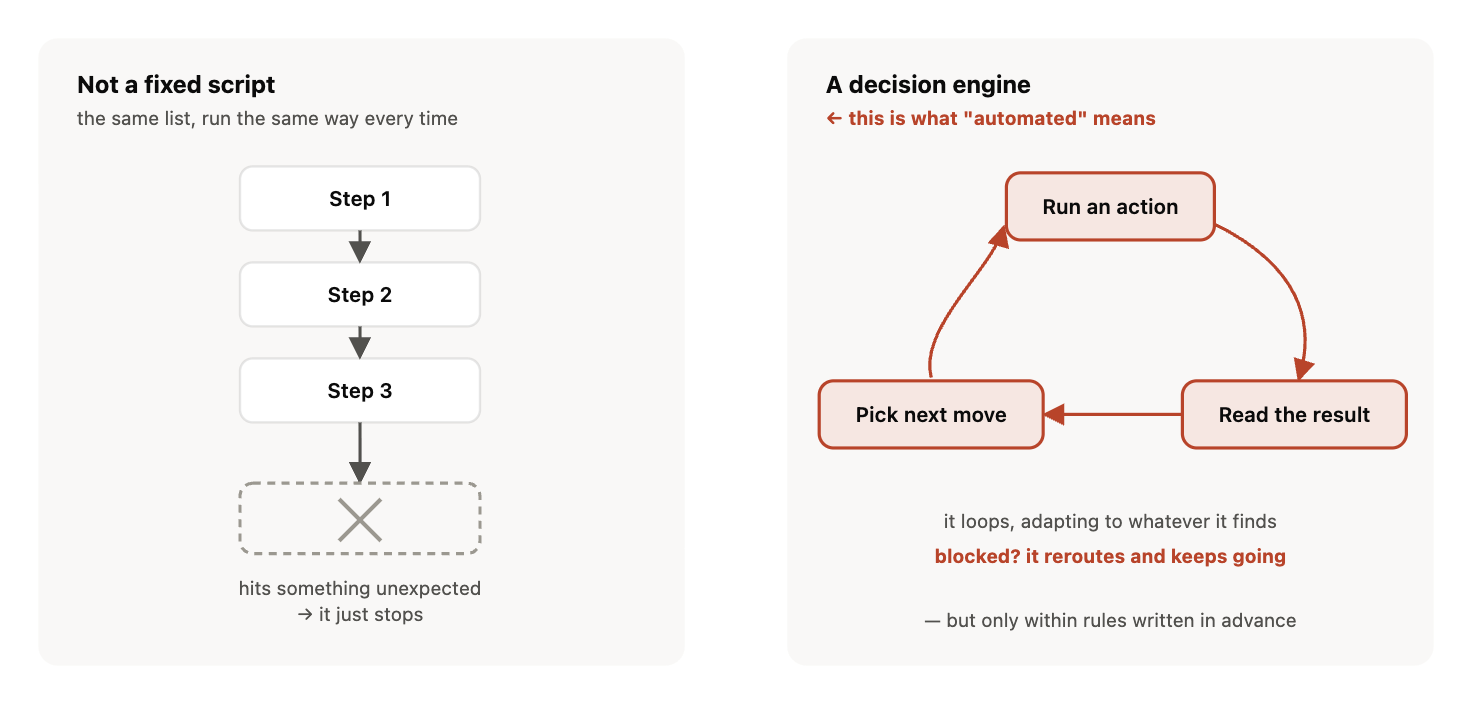
Figure 2. Automated penetration testing decision engine vs fixed script comparison
The tradeoff is depth. Automated tools excel at finding known vulnerabilities and chaining them into real attack paths, while human testers are still better at uncovering novel, logic-based, or environment-specific weaknesses. The right mental model is a force multiplier, not a replacement. We break down exactly what makes a pentest "automated," how it compares to a human tester, and how often you should run it in our foundational explainer on what automated penetration testing is.
To see why that force-multiplier framing holds, look at what the software is actually standing in for: the manual testing loop. Traditional penetration testing is a human effort, a skilled tester plans an engagement, runs tools by hand, interprets what comes back, decides the next move, and writes it all up. Automated penetration testing compresses that entire loop into code. The decisions it makes mid-run are real, and often sophisticated, but they were authored in advance by the engineers who wrote the rules, which is exactly why it multiplies a team's reach without replacing the human's judgment.
Running without a human operator also changes the testing calendar. Because no engagement needs to be scheduled or staffed, the same environment can be tested this week, next week, and the week after, and cadence is where the value compounds. A single annual test is a photograph; continuous automated testing is closer to a live feed, catching the new domain admin someone created last Tuesday, the service account whose password never rotated, the freshly deployed host that quietly opened a new path to your crown jewels. Most teams settle on a layered cadence: continuous or frequent broad runs to catch drift, plus deeper targeted runs around major changes like a migration, a merger, or a new segmentation project.
How Is Automated Pentesting Different From Vulnerability Scanning and BAS?
Vulnerability scanning finds what is exposed, breach and attack simulation validates whether your controls catch a known technique, and automated penetration testing proves whether an attacker can chain weaknesses into a full breach. They answer three different questions and belong together, not in competition.
Vulnerability scanning identifies known CVEs and misconfigurations but never attempts exploitation. It flags that a weakness exists; it cannot tell you whether your controls would actually block it. Breach and attack simulation tests whether your deployed controls, EDR, firewall, and SIEM, detect and block known attack techniques, and it is safe to run continuously. It tells you if your defenses work, not what happens when an attacker slips past them. Automated penetration testing assumes controls can be bypassed and actively exploits that assumption, running real credential dumping, lateral movement, and privilege escalation against your actual infrastructure to prove whether a full breach path exists.
Put simply: the scanner finds what is exposed, BAS validates whether controls catch an exploitation attempt, and automated pentesting proves whether an attacker can chain it all into a breach. The BAS comparison in particular deserves its own treatment because the two are constantly conflated; we lay out the atomic-action-versus-chained-path distinction in detail in our breakdown of automated pentesting versus BAS.
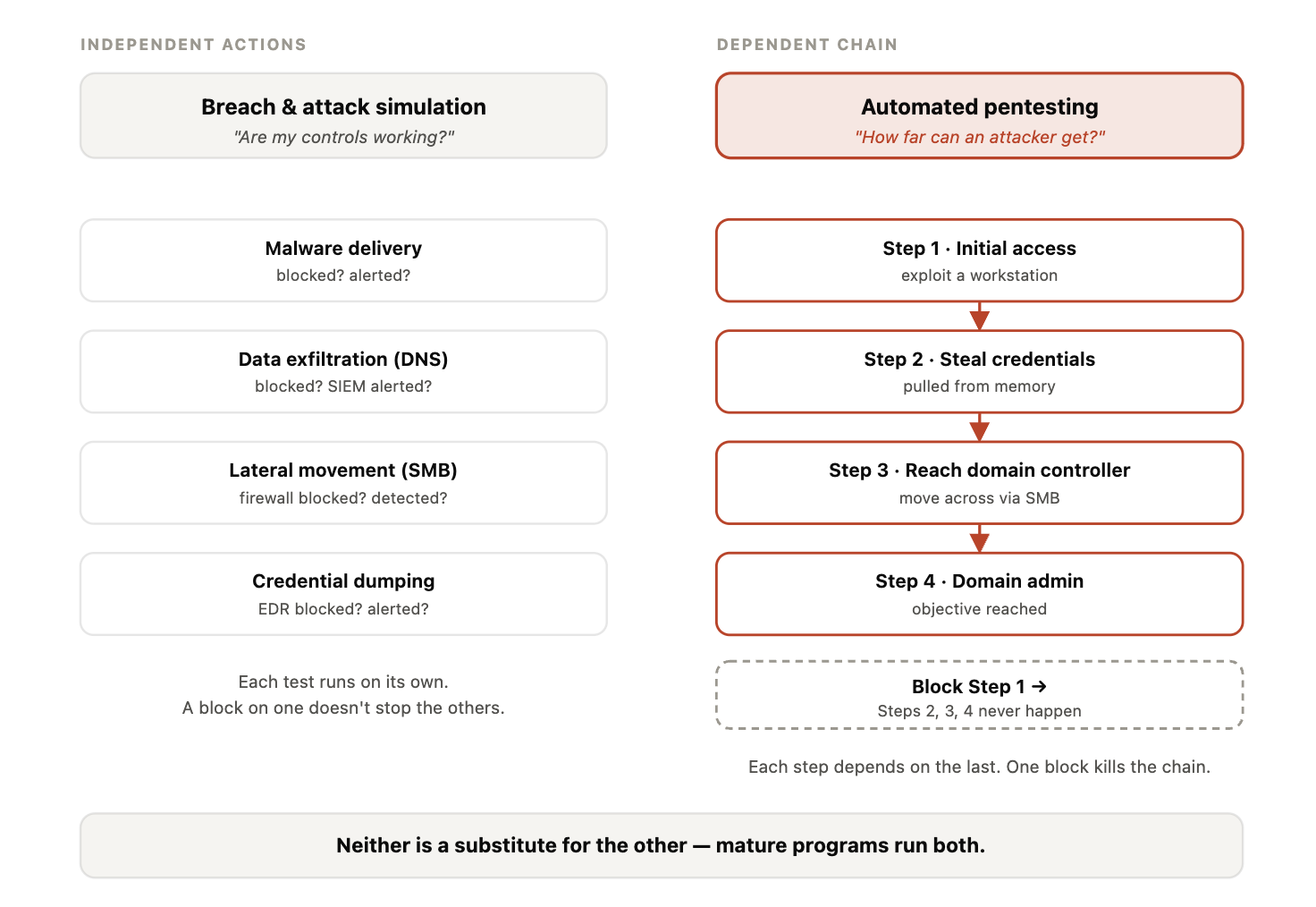
Figure 3. Comparison of breach and attack simulation versus automated penetration testing showing independent tests versus a dependent attack chain
The reason the distinction matters commercially, not just technically, is that these three categories are often sold as substitutes when they are complements. A vulnerability scanner produces a long inventory of possibilities; without exploitation it cannot tell you which of those thousands of findings an attacker could actually reach. BAS, meanwhile, answers a question neither of the others touches: when a known technique fires, does your EDR catch it, does your SIEM alert, does your firewall drop it. If you buy only one and assume it covers the others, you end up with blind spots you cannot see, an inventory with no proof of exploitability, or exploitability proof with no control validation. Understanding which question each tool answers is the first step to building a validation program that does not leave gaps.
How Does an Automated Penetration Testing Tool Actually Work?
An automated pentest starts from an initial access point, a planted foothold on a domain-joined machine or a compromised user, and then works outward: it discovers assets, decides whether to exploit what it finds, harvests credentials, and pivots deeper, building a kill chain step by step. It does not just identify weaknesses the way a scanner does; it exploits them for real to prove they are reachable and chainable.
Inside an Active Directory environment, the tool begins at the initial access point and moves through the domain the way an attacker would, emulating techniques like credential dumping, Kerberoasting, and pass-the-hash while favoring stealth over brute force so it stays safe and quiet. It pivots from each new foothold, re-enumerates, and reprioritizes based on what it just learned. Threat intelligence feeds into which techniques it selects, and the output is not a CVE list but an executed attack path with evidence at each step. For the full mechanics, including how pivoting works, whether the tool needs credentials to start, and what the output looks like, see our deep dive on how an automated penetration testing tool works.
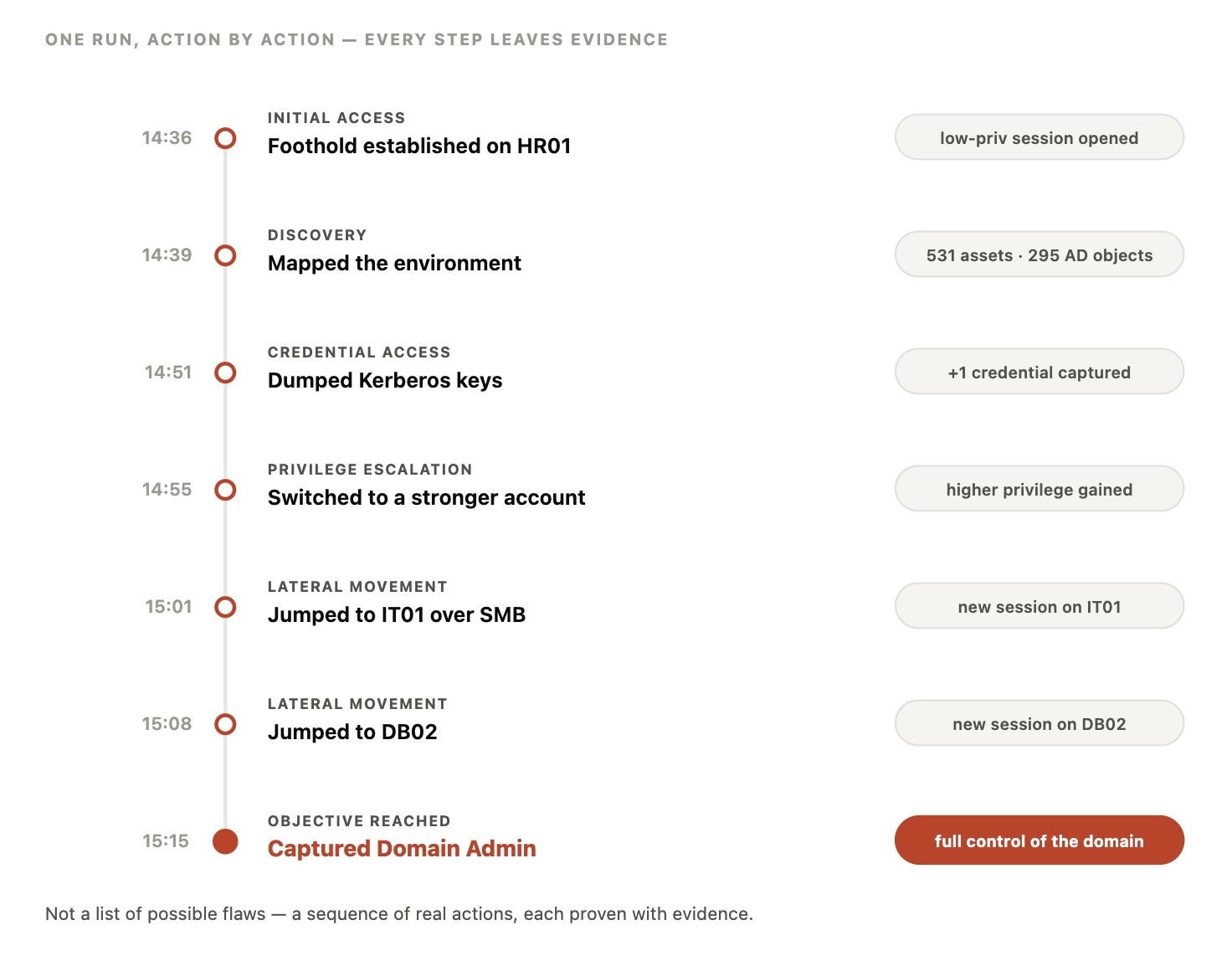
Figure 4. Timeline of an automated penetration test run showing each executed action and the evidence it captured, from initial foothold to Domain Admin
Every weakness the tool encounters is treated as a possible next step: it asks whether it can be exploited from where the tool currently stands, and if so, what that exploitation yields, a credential, a new session, a route to another machine, that feeds the following step. That is why the output reads like a story rather than a spreadsheet: the tool is not enumerating flaws, it is demonstrating consequences.
Two practical questions come up immediately once teams understand the mechanics: what do I have to deploy, and is any of this safe against production. On infrastructure, the honest answer is that you do not install agents on every host; a typical run needs one or more footholds with the right network reachability, and there are clear prerequisites around access and privileges, which we itemize in our guide to infrastructure you need to run an automated pentest. The footprint is deliberately light: rather than blanketing the estate with agents, the tool works from a small number of well-placed footholds and reaches outward the way an attacker with that same access would, which is both operationally simpler and a more faithful model of a real intrusion.
Is Automated Penetration Testing Safe to Run in Production?
Yes, when the platform is built for it. A well-designed automated pentesting tool exploits real weaknesses without crashing production systems, because it uses safe exploitation techniques, avoids destructive payloads, and preserves evidence rather than causing damage. The concern is legitimate, running real attacks against live infrastructure sounds dangerous, but production safety is an engineering property of the tool, not an afterthought.
The questions that actually matter are whether a run can crash a server, whether it will set off your EDR and flood the SOC with alerts, how ransomware impact is tested without detonating real ransomware, and how evidence is preserved for forensics and legal review. Each of those has a concrete answer, and we work through all of them in our article on whether automated penetration testing is safe to run in production. The short version: safety comes from how the tool executes, and mature platforms are designed to run against the environments you care about most, not just a lab copy.
What Are the Key Stages of an Automated Penetration Test?
An automated pentest moves through the same phases a human engagement does, discovery, exploitation, privilege escalation, credential access, lateral movement, and post-exploitation, but it runs them continuously and maps cleanly to MITRE ATT&CK tactics. Understanding the stages matters because it tells you what happens when the tool hits a wall at any given phase, and how long a full run takes.
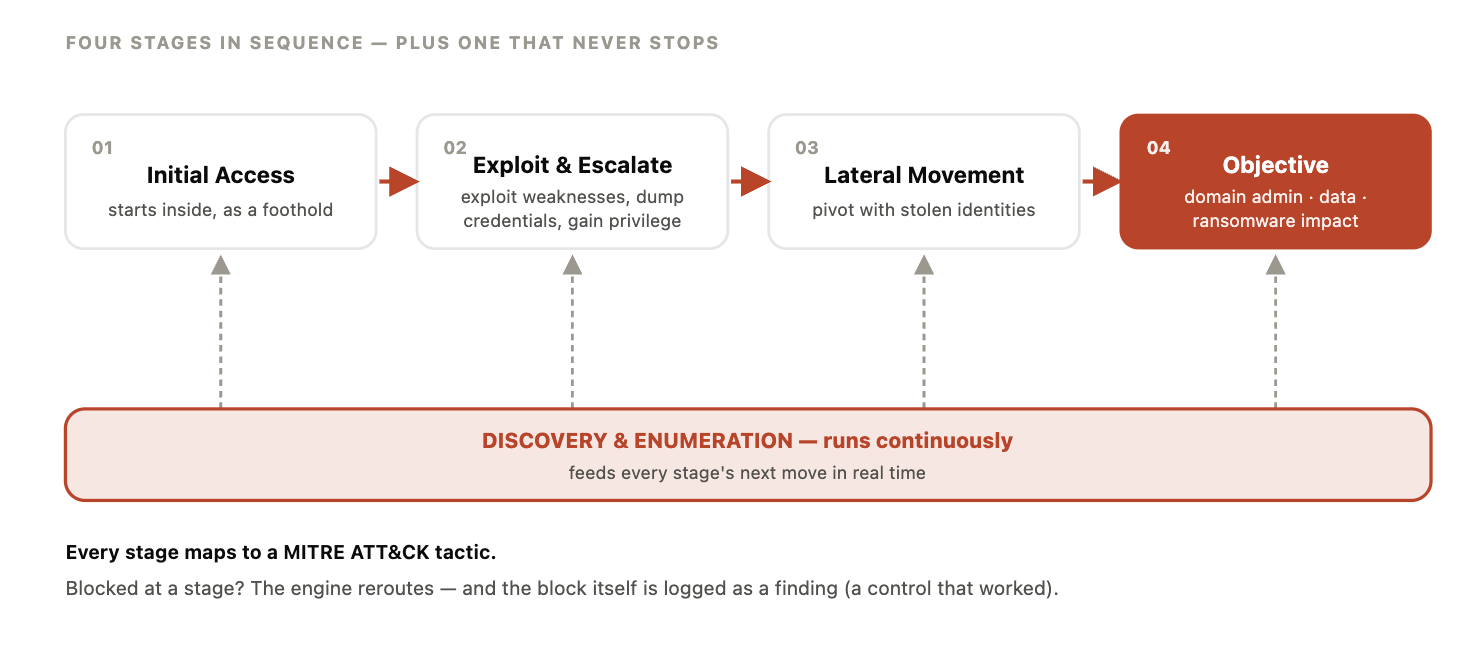
Figure 5. Diagram of automated penetration testing stages: initial access, exploitation and escalation, lateral movement, and objective, with discovery running continuously
Most automated pentests operate on an assume-breach model, skipping external reconnaissance and chaining internal tactics outward from the foothold described above. If the run fails at one stage, say an exploit is blocked, that outcome is itself a finding, because it proves a control worked. We walk through each stage, how it maps to ATT&CK, how lateral movement and privilege escalation are handled without a human, and what post-exploitation looks like, in our breakdown of key stages of automated penetration testing.
What Does Automated Penetration Testing Actually Find?
The headline output of an automated pentest is not a list of vulnerabilities, it is a proven attack path: the specific sequence of steps that carries an attacker from a low-privilege foothold to a high-value target like Domain Admin. A scanner tells you a weakness exists; an automated pentest shows you which weaknesses actually chain together into a breach in your environment.
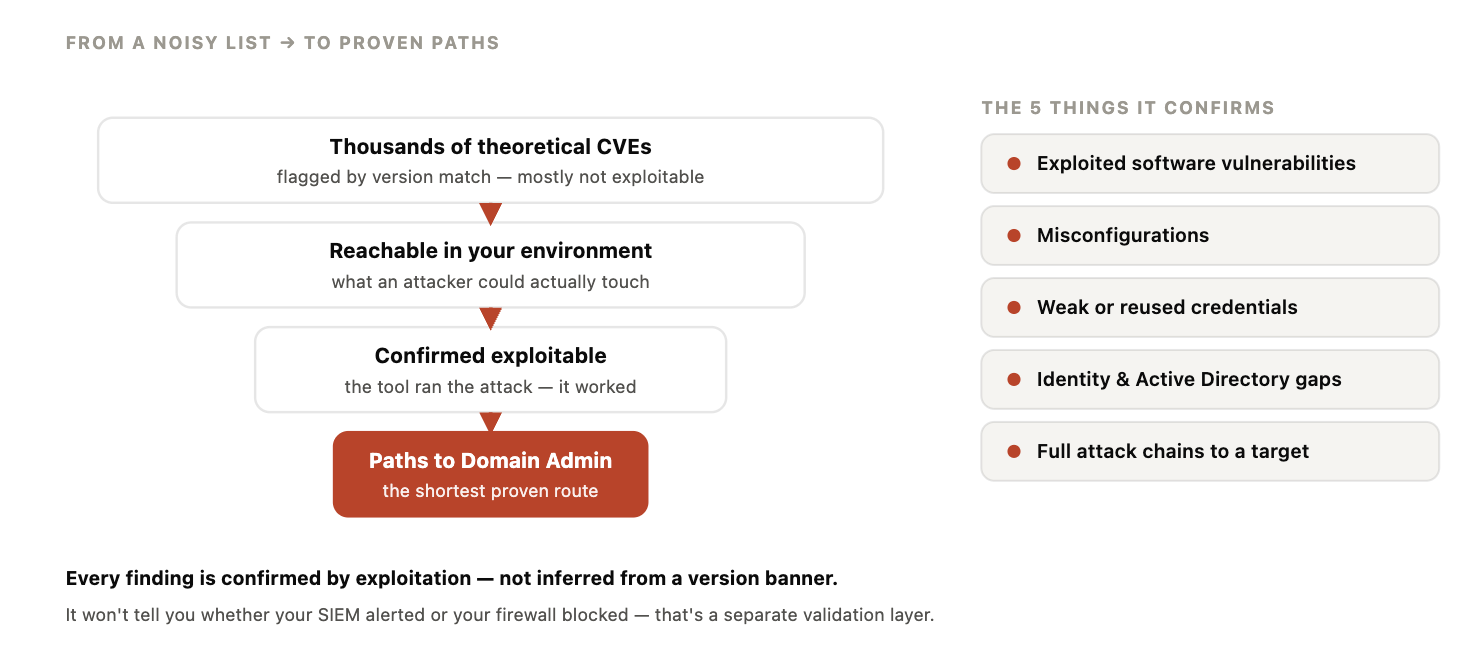
Figure 6. Funnel showing automated penetration testing narrowing thousands of theoretical CVEs down to confirmed, exploited attack paths to Domain Admin
That distinction is everything. Automated pentesting typically surfaces fewer findings than a vulnerability scanner, and that is a feature, not a bug: it is reporting only what is genuinely exploitable and reachable, not every theoretical CVE. It generally will not find true zero-days, and it has limits around business-logic flaws and some API authorization issues, but the most valuable thing it produces, the chained, validated attack path, is precisely what a scanner can never give you. We cover what it finds, what it misses, how consistent results are run to run, and how to manage false positives in our article on what automated penetration testing actually finds.
There is a subtle point about consistency worth flagging, because it surprises teams new to the category. The same automated pentest will not always find exactly the same things on every run, and that is expected rather than alarming. The environment changes between runs, and because the architecture is chain-dependent, a step that succeeds one week may be blocked the next after a patch or a config change, which reroutes everything downstream. Read correctly, that variability is signal: it tells you which of your fixes actually closed a path and which merely moved it.
Why the Attack Path Is the Defining Output
An attack path is the ordered chain of exploited weaknesses that connects an attacker's starting foothold to their objective, and it is the single most important artifact automated pentesting produces. A vulnerability is a static fact; an attack path is a proof of consequence.
Attack paths differ from vulnerabilities in a way that changes how you remediate. A weak credential, a misconfigured service, and an unpatched host might each look minor in isolation, but the path shows how an adversary sequences them into material damage. The starting foothold matters because it determines what is reachable, and most paths converge on a small number of shared weaknesses called choke points. We explain footholds, choke points, whether every path really ends at Domain Admin, and how paths get validated in our explainer on what an attack path is in automated pentesting.
Chained Exploitability and Chain-Dependent Architecture
Chained exploitability is the proof that several individually minor weaknesses combine into one working path to a high-value target. Chain-dependent architecture is the design that makes it happen: each step depends on the success of the one before it, so Step B cannot run unless Step A succeeds. This is the engine behind the attack path, and it is also the source of automated pentesting's biggest strength and its most-cited limitation.
The strength is remediation leverage: because paths share choke points, fixing a single choke point can collapse dozens of downstream paths at once. The limitation is coverage: if one step is blocked, every technique that depended on it goes untested in that run, which is why multiple runs are often necessary. That tradeoff is exactly where autonomous approaches try to improve on automated ones. We unpack the mechanism, its strengths, and its limits in our article on chain-dependent architecture in automated pentesting.
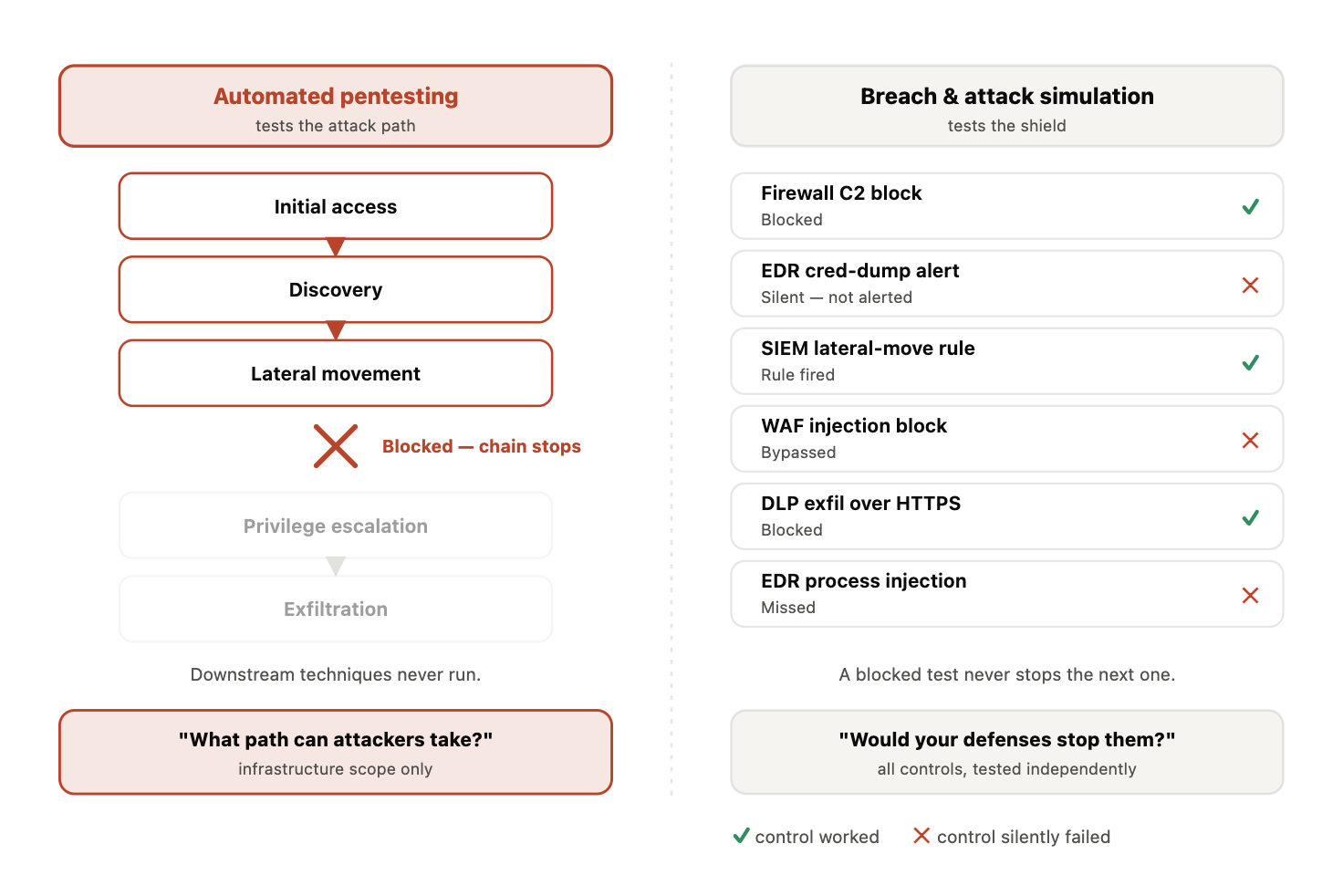
Figure 7. Automated pentesting attack chain stopping when blocked versus breach and attack simulation testing each security control independently with pass or fail results
What a Real Attack Path Looks Like
In one real automated pentest, the tool went from a low-privilege HR user to Domain Admin on a database server in 32 minutes: 12 steps, 3 machines, 5 captured credentials, and 3 choke points that each could have stopped the chain. Nothing in it was theoretical; every action was executed against a live environment and confirmed by successful exploitation.
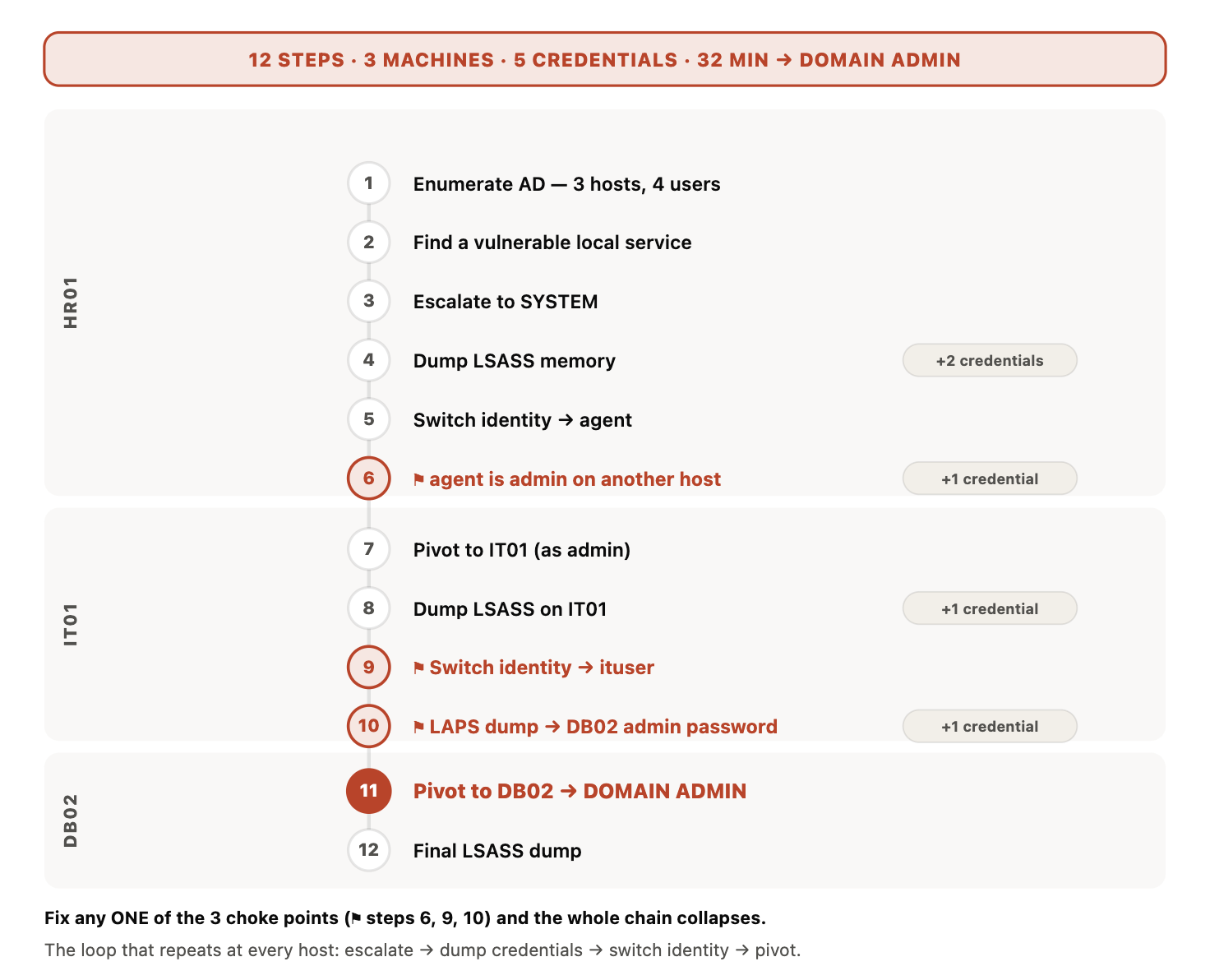
Figure 8. Twelve-step automated penetration test attack path from an HR user to Domain Admin across three machines, with five captured credentials and three choke points flagged
The value of walking through a concrete path is that it shows precisely where the chain could have been broken and which single mitigations would have closed it, the kind of insight a vulnerability inventory can never provide. We narrate the full run, step by step from patient-zero foothold to domain compromise, and mark every choke point, in our 2026 automated pentesting attack path case study.
Automated vs Manual Penetration Testing: Which Do You Need?
You almost certainly need both, but in different proportions than five years ago. Automated pentesting handles breadth, frequency, and scale; manual testing handles depth, creativity, and business-logic judgment. The old model of one or two manual pentests a year, with months of blindness in between, no longer matches the pace at which environments change.
Automated pentesting is also structurally cheaper, the economics are covered in the cost section below, and it closes the visibility gap between manual cycles. What it will not replace is the human tester's ability to reason about novel logic flaws or chase the creative, context-specific attack no rule anticipated. The practical answer for most programs is continuous automated pentesting as the default, with manual engagements reserved for deep, targeted assessments. We put the two side by side, on cost, cadence, accuracy, and coverage, in our comparison of automated versus manual penetration testing.
The accuracy question deserves nuance, because "automated versus manual" is often framed as a contest over who finds more, when the honest answer is that they find different things. A skilled manual tester will out-find automation on the weird stuff: the business-logic flaw where a negative quantity in a shopping cart produces a refund, the chained authorization bug unique to your custom application, the social-engineering angle no tool models. Automation, in turn, out-finds humans on breadth and repeatability: it will not get tired on host four hundred, it does not skip the boring subnet, and it produces the same rigor every run. Reframing the decision from "which is better" to "which covers which risk, and how often" is what leads most programs to run automation continuously and reserve human depth for where it genuinely pays off, rather than treating one as a cheaper substitute for the other.
How Does Automated Pentesting Compare to BAS, PTaaS, and Red Teaming?
Each of these is a different validation model, and the confusion between them is the single biggest source of buying mistakes in this category. BAS tests known techniques as atomic actions; automated pentesting chains techniques into paths; PTaaS wraps human testing in a platform-delivered service; red teaming pursues objectives against a full detection-and-response stack. Getting the distinctions right tells you which tool answers which question.
Against BAS, the core difference is the one drawn earlier: atomic actions versus chained attack paths. The two are complementary, and most mature programs run both; the full comparison, including how much of MITRE ATT&CK each covers and which to deploy first, is in automated pentesting versus BAS.
Against PTaaS (penetration testing as a service), the question is whether a service-delivery model or a software platform keeps better pace with your risk. PTaaS modernizes how human testing is scheduled and reported, but it is still fundamentally human-paced; automated pentesting runs on demand. There are cases where each makes more sense, and they can be combined. We compare cost, cadence, and reporting in automated pentesting versus PTaaS.
Against red teaming, the difference is scope and intent: red teaming pursues a specific objective while evading detection and testing your blue team's response, whereas automated pentesting maps and proves exploitable paths comprehensively. We compare the two, and clarify how automated red teaming differs from both, in automated pentesting versus red teaming.
Where Does Automated Pentesting Fit in CTEM?
Automated pentesting is the live-execution engine of the Validation stage in Continuous Threat Exposure Management. It launches real attacks against reachable assets and chains them into paths, proving which prioritized exposures an attacker can actually reach and compromise. CTEM is Gartner's five-stage program, scoping, discovery, prioritization, validation, and mobilization, for continuously reducing the exposure that matters, and validation is where automated pentesting earns its place.
But automated pentesting alone does not complete the Validation stage. It typically covers only the 10 to 15 percent of an environment where live exploits can run safely, and it provides limited or no validation for business-critical, restricted, or air-gapped systems, for CVEs without working exploits, and for day-one disclosures. That is why Gartner's adversarial exposure validation (AEV) category combines automated pentesting with breach and attack simulation, and why a complete program adds exposure validation to cover the remaining gaps. We explain the full picture, including how AEV converges these techniques into one continuous loop, in our article on where automated pentesting fits in CTEM.
This coverage ceiling is the point most vendors gloss over, and it is worth sitting with, because it reframes what "validation" should mean in a mature program. If automated pentesting safely exercises live exploits across only a slice of the estate, then relying on it alone leaves the majority of your environment validated by inference rather than by proof.
BAS fills part of that gap by exercising techniques safely against controls where live exploitation would be too risky, and exposure validation extends coverage to the assets a live exploit can never touch, the domain controller you will not let anyone dump credentials from, the air-gapped OT segment, the day-one CVE with no public exploit yet.
The strategic takeaway is that CTEM's Validation stage is not a single tool but a loop of complementary techniques, and automated pentesting is the sharpest instrument in that loop for the part of the environment where you can afford to let it swing. Knowing where that boundary sits, and what covers the rest, is what separates a validation program that produces confidence from one that produces a false sense of it.
Who Uses Automated Penetration Testing, and Why?
You do not need an in-house red team to get value from automated penetration testing. Blue teams, SOC analysts, CISOs, SMBs, enterprises, and MSSPs all use it, each for a different reason, because attacker-validated evidence is useful to anyone who has to defend, prioritize, or report on risk. The tool democratizes offensive validation that used to require scarce, expensive specialists.
Blue teams and SOC analysts use it to see whether their controls actually catch real techniques; CISOs use it to turn a wall of vulnerabilities into a defensible narrative of what is genuinely exploitable; SMBs use it to get continuous testing they could never afford manually; and MSSPs and MSPs use it to deliver validation across many clients. There is also a real skill in presenting attack-path findings to a non-technical board, which is often what unlocks budget. We cover every persona, the industries that get the most value, and how to make the business case in our guide to who uses automated penetration testing and why.
How Much Does Automated Penetration Testing Cost?
Automated penetration testing is sold as an annual subscription rather than per engagement, so you pay once a year and run tests on demand. Pricing is usually quote-based and scoped by host or asset count, employee count, or enabled modules, ranging from the low five figures for a small environment to six figures for a large enterprise, and still typically below the cost of stacking manual pentests at the same coverage. Because pricing is scoped rather than list-based, understanding the models is what keeps you from overpaying.
Vendors use several pricing structures, per-asset, per-active-IP, modular bundles, consumption credits, and flat unlimited subscriptions, and each scales differently as your environment grows. There is also a real total-cost-of-ownership picture beyond the license, including indirect costs and cost offsets, plus a genuine ROI story when you compare it to one or two annual manual tests. We break down every pricing model, TCO, ROI levers, and what free trials and POCs typically include in our guide to how much automated penetration testing costs.
How Do You Choose and Roll Out an Automated Pentesting Tool?
Buying well comes down to asking vendors the right technical, integration, and commercial questions before you sign, and then having a deliberate rollout plan for the first 90 days. The category is full of marketing gimmicks, so the questions you ask during procurement are your best defense against buying a scanner dressed up as a pentesting platform.
On the buying side, you want to settle what you are actually trying to validate, probe the depth of the tool's exploitation and safety claims, confirm the integrations you need, set clear proof-of-value criteria for the POC, and understand pricing and SLA terms before procurement. We assemble the full question set, including the red flags that signal marketing over substance, in our guide to the questions to ask a security validation vendor.
On the rollout side, the value curve depends on doing a few things early: capturing baseline metrics before the first run, building a remediation workflow before findings arrive, scoping the first pentest sensibly, and avoiding alert fatigue when the first reports land. We map the whole ramp, from week one to month-three maturity to when the platform starts delivering compounding value, in our walkthrough of your first 90 days with an automated pentesting tool.
The most common failure mode in a rollout is not technical, it is organizational: the tool starts producing attacker-validated paths faster than the team has a process to fix them, and the reports pile up unactioned. That is why baselining and a remediation workflow before the first run matter more than the run itself. If you know your starting metrics, mean time to remediate a choke point, the number of paths to a crown-jewel asset, the percentage of critical systems reachable from a standard user, then each subsequent run tells a progress story rather than just restating problems. Scope narrow to begin with, prove the loop from finding to fix on a contained slice of the environment, and expand once the workflow holds. Handled that way, the platform compounds: the same choke-point fix that closes one path this month closes the dozen new paths that would otherwise have formed around it next month.
Why Is Automated Pentesting Evolving Into Autonomous Pentesting?
Because attackers stopped moving at human speed. AI-powered attacks now run the full lifecycle on their own, at machine speed and massive parallel scale, and rule-based automated pentesting, frozen at the boundary of what its authors anticipated, cannot keep pace with an adversary that reasons in real time. This is the pressure reshaping the entire category, and it is why "automated" is giving way to "autonomous."
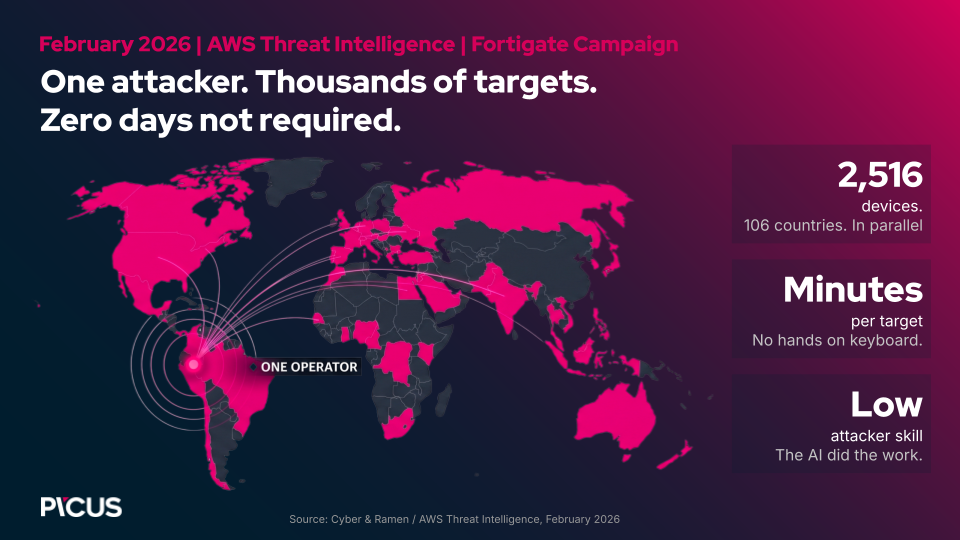
Figure 9. February 2026 FortiGate Campaign
The threat is no longer theoretical. In a February 2026 campaign, an AI-powered attack chain compromised thousands of devices across more than a hundred countries simultaneously, running autonomously from initial access through credential dumping to exfiltration, with humans only reviewing results afterward.
The speed shows up earlier in the lifecycle too. Mean time-to-exploit (TTE) is the window from a vulnerability's public disclosure to a working, weaponized exploit. It has collapsed year over year:
- 2018: 2.3 years
- 2022: 8.6 months
- 2024: 53 days
- 2025: 22 days
- 2026: roughly 24 hours
These figures come from an analysis of +3,500 CVE-exploit pairs across CISA KEV, VulnCheck KEV, and ExploitDB. By 2025, most exploits were already weaponized before public disclosure.
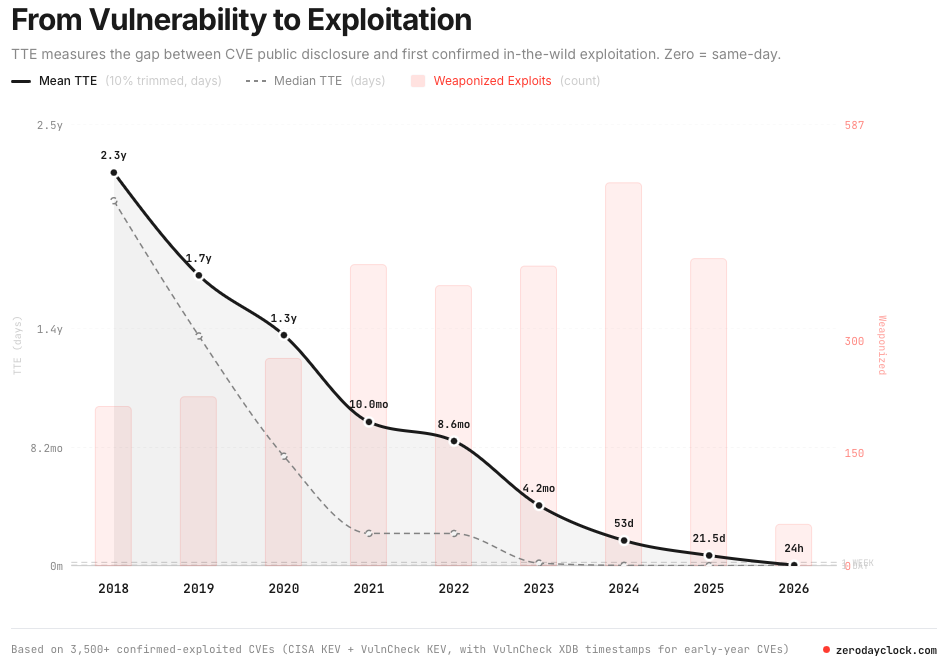
Figure 10. The disclosure-to-weaponization window has shrunk to 24 hours in 2026, by Zero Day Clock
When an attacker can move from foothold to exfiltration in minutes, human-paced validation simply cannot catch up. We document the campaigns, the collapsing exploit timelines, and what machine-speed defense actually requires in our article on AI-powered cyberattacks.
Automated vs Autonomous Pentesting: The Core Difference
Automated pentesting picks its next move from rules engineers wrote in advance; autonomous pentesting decides in real time with an AI agent. Inside its encoded rules, an automated tool adapts; at the edge of them, it stops, while an autonomous agent reasons past that edge the way a human attacker would. The two run the same underlying offensive work, discovery, exploitation, credential abuse, lateral movement. What changes is the decision layer and the trigger.
Automated tools have real, often sophisticated decision logic, but it is rule-based: decision trees and conditional flows authored ahead of time. The moment the tool reaches a situation the rules do not cover, it stops, not because it decided to, but because there is no branch left to consult. Autonomous pentesting replaces that rule engine with an agent that reasons about why a step failed, weighs alternatives, and adapts, turning a blocked path into an input for the next decision rather than a dead end. It also changes the trigger, from a schedule to a signal such as a new threat or an environment change. We put the two architectures side by side in our comparison of automated versus autonomous pentesting.
What Makes a Pentest Autonomous, and What Is an Autonomous Platform?
A pentest is autonomous when an AI agent, not a pre-authored rule set, decides what to test next and works past failures on its own, typically through a multi-agent architecture where a lead agent coordinates specialist sub-agents with every decision auditable. This is where agentic pentesting comes in, and where the difference between "automated with AI marketing" and genuinely autonomous gets real.
The structural limits of automated pentesting, the ones baked into chain-dependent architecture, are exactly what an autonomous platform is built to overcome: when an exploit fails, an autonomous system reasons about alternatives instead of abandoning the branch. We explain what makes a pentest autonomous, how multi-agent architecture works, and the difference between agentic and autonomous in our explainer on what autonomous penetration testing is, and we cover where automated pentesting structurally breaks down, how outputs differ, and how to migrate in our guide to what an autonomous penetration testing platform is.
How Autonomous Pentesting Relates to BAS and Red Teaming
Autonomous pentesting does not remove the need for BAS or red teaming; it changes how they are delivered and where the boundaries fall. Because the terminology multiplies fast, autonomous pentesting, autonomous red teaming, agentic red teaming, it is worth settling the distinctions before they cost you a purchasing decision.
Autonomous pentesting and BAS differ the same way their automated counterparts do, atomic actions versus chained, reasoned attack paths, but the autonomous layer sharpens the contrast; we cover it in autonomous pentesting versus BAS. Autonomous pentesting and autonomous red teaming share an engine but differ in trigger and intent, one maps exploitable paths, the other pursues an objective against your detection-and-response stack; we compare them, and clarify agentic red teaming, in autonomous pentesting versus autonomous red teaming. Whether automated pentesting itself is becoming legacy is a fair question, and we address it directly in our platform explainer above.
From Automated Pentesting to One Validation Loop
Automated penetration testing solved a real and urgent problem: it replaced the annual, point-in-time pentest with continuous, attacker-validated proof of what is exploitable, at a scale and cost that manual engagements could never reach. It proves attack paths instead of listing vulnerabilities, it surfaces the choke points that collapse many paths at once, and it fits cleanly into the Validation stage of a modern CTEM program.
Its limits are equally real, and this guide has been honest about them: chain-dependent architecture leaves techniques untested when a step is blocked, live exploitation can only ever safely cover a slice of the environment, and rules written in advance cannot anticipate everything a reasoning adversary will try. Automated pentesting is a necessary part of a validation program. It is not, on its own, a complete one.
How Picus Runs Your Whole Validation Program as One Loop
Finding the exposure was never the hard part. Proving the right call, patch, mitigate, monitor, or accept, is the gap, and across a CTEM program that gap is the entire Validation stage. Picus is built to own it. Point tools each answer a fragment: scan, or simulate, or pentest. Picus converges all three validation techniques into one continuous loop, so you stop stitching disconnected outputs together and start working from a single, re-validated exploitability finding.
-
Where live exploitation can safely run, Picus Autonomous Penetration Testing runs it: real exploit chains fired against reachable assets, with guardrails you control, compressing weeks of work into minutes and re-validating the exact path you fixed the moment the fix ships. Where live exploitation cannot run, Picus goes anyway.
-
For the business-critical, restricted, and air-gapped assets a live exploit can never safely touch, and for CVEs with no working exploit or on day one of disclosure, Picus Exposure Validation proves exploitability without firing a live exploit, mapping each CVE to the TTP chain its exploitation requires and validating that chain against your deployed controls.
-
And Picus Breach and Attack Simulation keeps every decision defensible as the environment changes, continuously testing what your controls block and detect.
Three disciplines converge into one exploitability finding, re-validated over time: validate, decide, fix, re-validate. The moat is the loop, not any single tool inside it.
It fits CTEM by design: Picus is open, ingesting assets, vulnerabilities, and business context from scanners like Tenable, Wiz, and Snyk, plus your existing PTaaS or manual pentest reports, then re-ranking the backlog by validated exploitability for the Prioritization stage. For Mobilization, it pushes findings into Jira or ServiceNow with evidence attached across 75+ integrations, and closes a finding only when re-validation proves the chain is broken.
The outcomes follow:
- control effectiveness roughly doubling within three months,
- an 89% reduction in mean time to remediate emerging threats, and
- 92% fewer SLA violations on high and critical vulnerabilities.
Picus holds a 95% recommendation rate, 4.9 on G2, 4.8 on Gartner Peer Insights as a 2025 Customers' Choice, and the #1 Leader spot on Frost Radar for Automated Security Validation.
Stop choosing between the depth of a human test and the currency of an automated one, then discovering both missed the assets that mattered. Automated pentesting is how you prove what is exploitable where live exploits can run. Picus is how you run the whole Validation stage, across the whole environment, as one loop.
Get your free demo to see which attacks would actually succeed across your environment, and turn every exposure into a defensible decision.


.png?width=353&height=200&name=picus-APT-cost-july21%20(1).png)
.png?width=353&height=200&name=picus-APT-vs-Red-Teaming-july20%20(1).png)