
Key Findings
- What are the 6 security validation surfaces? Network and endpoint controls, detection and response stack, infrastructure and application attack paths, identity and privilege, cloud and container environments, and AI and emerging technology.
- How many surfaces does automated pentesting fully cover? Zero. It lives primarily in infrastructure attack paths (Surface 3), gets partial coverage on three others, and has no coverage on detection/response and AI security.
- What does BAS cover that automated pentesting doesn't? BAS validates whether prevention and detection controls actually block and alert on threats (Surfaces 1 and 2). It extends into Kubernetes and AI guardrail testing. It doesn't chain vulnerabilities into proven attack paths, that's automated pentesting's job.
- Why is CVSS not enough to prioritize findings? CVSS doesn't know whether your firewall blocks the exploit path or whether a compensating control works. Control-validated prioritization reduces false urgency by over 80%.
- What is an exposure validation and prioritization layer? The cross-cutting intelligence layer that validates findings against real controls, deduplicates across tools, and produces a single prioritized action queue based on actual exploitability in your environment.
- How do you audit your own validation coverage? Three dimensions: breadth (is the surface tested at all), depth (control-level testing vs. surface scanning), and scope (what percentage of the real environment is covered).
Ask any security team whether their environment has been validated, and you'll likely hear "yes." But ask which surfaces were validated, at what depth, and with what scope, and the answer gets quieter. Most organizations don't have an honest map of what actually requires validation. They have a tool that tests one or two layers and a report that implies the rest.
Before evaluating any vendor or renewing any contract, practitioners need a diagnostic framework that's independent of what they currently own. Not a vendor pitch. A mirror.
Why a Validation Surface Map Comes Before Any Tool Decision
Gartner's Continuous Threat Exposure Management (CTEM) framework stresses that exposure assessment should extend well beyond traditional devices and applications to cover cloud environments, identity systems, AI tools, and more.
The 6 Validation Surfaces framework takes that principle and makes it concrete: six real, tangible layers of your environment, each representing something you can point to and ask, "has this been tested?"
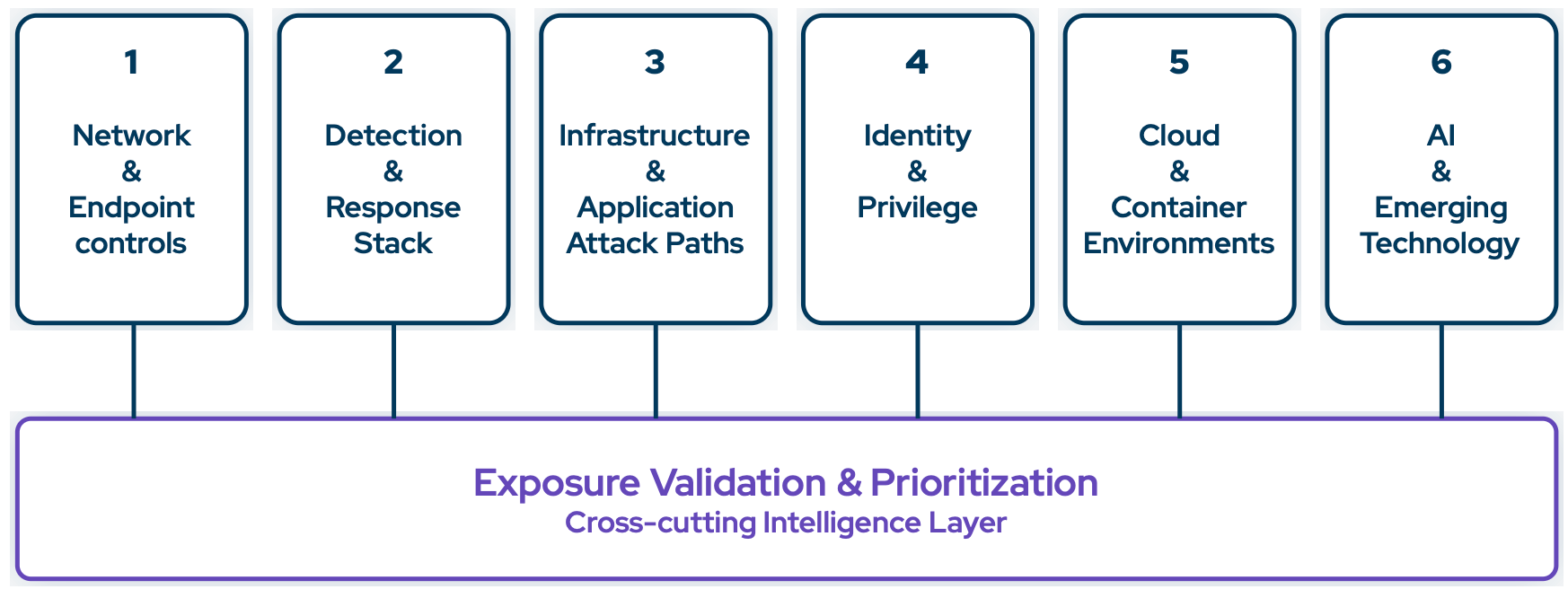
Figure 1. Six Layers You Should be Validating
Most teams who run this exercise honestly discover one or two surfaces with reasonable coverage, two or three with partial or assumed coverage, and at least one with no active validation whatsoever. That map becomes the foundation for every tool, budget, and architecture conversation that follows.
What Are the 6 Validation Surfaces?
1. Network and Endpoint Controls
This layer covers whether your firewalls, WAFs, IPS, DLP, EDR/EPP, and email gateways actually block and detect the threats they're configured to stop. "Deployed" and "configured" are not the same as effective.
Without validation: controls fail silently, blocking some threats, missing others, with no feedback loop. The Picus Blue Report 2025 shows how widespread this is: prevention effectiveness sits at just 62%, log visibility at 54%, and only 14% of logged adversarial activity generates an alert. Data exfiltration prevention succeeds just 3% of the time.
Organizations assume their deployed controls are working. Continuous simulation reveals they're not.
2. Detection and Response Stack
This layer covers whether your SIEM rules, EDR detection logic, alerting pipelines, and response playbooks work under real attack conditions. Not "can we detect this in theory" but "will our actual alerting rules fire on this specific threat behavior?"
Without validation: detection coverage is assumed, not measured. Threats pass through undetected until an actual incident exposes the gap. The causes of failure are mundane but devastating: log source gaps, parsing errors, schema changes after platform upgrades, and rule logic drift that accumulated unnoticed over months.
Organizations running dedicated detection validation for the first time frequently discover that a significant portion of their SIEM rules fail to fire as expected.
3. Infrastructure and Application Attack Paths
This is the offensive layer. It validates whether vulnerabilities across infrastructure and application environments can be chained into proven, exploitable paths from initial access through lateral movement to critical assets. Think Kerberoasting in Active Directory, privilege escalation through mismanaged identity systems, or lateral movement via stolen hashes to a domain controller.
Without validation: unknown routes, including application-layer attack chains, stay open and available to adversaries. The organization has no evidence of which paths an attacker could realistically walk to reach its most critical assets.
4. Identity and Privilege
This layer validates whether IAM policies, Active Directory configurations, cloud identity controls, and privilege boundaries resist escalation, credential theft, and lateral movement. Identity is increasingly the primary attack vector in modern breaches.
Blue Report 2025 data shows credential-based access succeeding 98% of the time. From the automated pentesting side, the downstream consequences are severe: 22% of organizations have an open, unvalidated attack path straight to Domain Admin.
Without validation: identity gets tested only where an attacker or a tool happens to traverse it, never systematically. Misconfigurations in AD delegation, excessive cloud IAM permissions, or weak service account hygiene stay invisible until exploited.
5. Cloud and Container Environments
This layer validates whether cloud security controls, Kubernetes policies, and IAM configurations prevent misconfiguration, drift, and unauthorized access across dynamic environments. Container orchestration introduces unique attack vectors requiring dedicated validation.
Without validation: cloud and container environments are assumed secure based on initial configuration, never re-validated as threats evolve and configurations drift. The gap between initial setup and current state widens silently.
6. AI and Emerging Technology
The fastest-growing attack surface in enterprise environments. This layer validates whether guardrails on internal LLMs, AI agents, and emerging tool integrations resist jailbreaks, prompt injection, and adversarial manipulation.
Without validation: the newest and least understood part of the environment goes completely untested. Organizations deploying AI tools at speed are creating attack surfaces at a pace their validation programs haven't caught up with.
How Do You Audit Your Own Validation Coverage?
Take a minute and map your organization across all six surfaces. For each one, apply three diagnostic dimensions. These cut through vendor positioning faster than any feature comparison.
Breadth: Is this surface being validated at all?
Or is it assumed safe because nothing has visibly failed? A surface with no active validation isn't a risk you've accepted. It's a blind spot you haven't found yet.
Depth: Is the validation testing controls or just scanning?
There's a meaningful difference between deep control-level testing and surface-level scanning. A SIEM detection rule validator that fires real attack telemetry and checks whether the rule triggers is not the same as a port scanner that confirms the SIEM is reachable. Both technically "cover" the detection surface. Only one tells you whether it works.
Scope: What percentage of the real environment is actually being tested?
No security team exposes all 50,000 IPs to any single tool. Business resilience, performance constraints, and technology limitations make full-scope runs impractical. So even within a well-covered surface, you may be testing a representative subset and calling it coverage. The gap between "what we tested" and "what we own" is frequently larger than teams expect.
Most teams find the map uncomfortable. That discomfort is the point.
How Do Current Validation Tools Map Against the 6 Surfaces?
Here's where the framework becomes diagnostic. Map your existing validation tools against the six surfaces and you'll see where coverage concentrates and where it drops off.
What does automated pentesting cover?
Automated pentesting lives primarily in Surface 3 (infrastructure and application attack paths). That's what it was built to do, and within that surface, it delivers real value. It chains vulnerabilities the way a real attacker would, proving that specific exploit paths exist. But infrastructure paths are the ceiling for most tools. Application-layer coverage varies significantly by vendor, and several haven't shipped it as production-ready yet.
Surfaces 1, 4, and 5 (network/endpoint controls, identity, and cloud) get partial coverage at best. Identity gets validated only where an attack path happens to traverse it. Cloud gets tested only to the extent the tool's scope reaches it. Prevention controls along the path are traversed but never independently verified.
Surfaces 2 and 6 (detection/response and AI security) get no coverage. The tool operates as the attacker. It has no visibility into whether the SIEM fired, whether the EDR caught a technique, or whether a response playbook triggered.
Automated pentesting tools prove the path exists. It cannot observe whether the defender saw it.

Figure 2. Which Security Layers Automated Pentesting Tools Miss
What does BAS cover differently compared to automated pentesting?
BAS covers the other side. Surfaces 1 and 2 are its core strength, with continuous, independent testing of each prevention and detection control against known threat behaviors. BAS tools extend into Surfaces 5 and 6 through Kubernetes validation and AI guardrail testing.
But BAS doesn't chain real vulnerabilities into proven attack paths. That's Surface 3, and it's the job of automated pentesting.
How many surfaces does any single validation tool fully cover?
Zero. Two technologies together cover significantly more ground, but only if both are present and only if their findings are unified.
Why Do Validated Findings Still Get Lost Without an Intelligence Layer?
Even if you validate all six surfaces, disconnected findings from disconnected tools create noise, not signal. The pentesting tool returns around 100 validated exploits. The vulnerability scanner returns 50,000 theoretical CVEs. BAS returns control gap findings.
Three outputs, no shared data model, no unified priority.
Why is CVSS not enough to prioritize validated findings?
Without a layer that normalizes across tools, teams default to CVSS scores. CVSS doesn't know whether your firewall blocks the exploit path. It doesn't know whether a compensating control actually compensates. A Critical CVE behind a validated WAF rule is not the same risk as a High CVE on an unprotected segment. CVSS treats them as if they were.
When organizations apply control-validated prioritization instead, initial classifications that rate over 60% of findings as high or critical drop to roughly 10% confirmed as truly critical. That's a reduction in false urgency of over 80%, turning tens of thousands of theoretical findings into a focused set of confirmed exploitable exposures.
What does an exposure validation and prioritization layer actually do?
Three things no individual validation surface can do on its own. It validates exposures against your real controls, so a "Critical" CVE behind a working firewall gets deprioritized while an unprotected Medium-severity finding gets elevated. It normalizes and deduplicates across tools, so the same vulnerability found by three different tools shows up once, enriched with context from every source. And it produces a single prioritized queue ordered by actual exploitability in your specific environment.
Without it, you've got data. With it, you've got a plan.
Three Questions That Expose Coverage Gaps in Any Vendor Conversation
1. Which of my six validation surfaces does your tool cover, and at what scope within each? If the vendor can't walk through specific surfaces and own up to where coverage is partial or absent, the implied coverage is broader than the real coverage.
2. How does your platform distinguish exploitable vulnerabilities from theoretical ones, specifically using my live security control performance data? If the answer is CVSS or generic risk scores, the tool is prioritizing on theory, not on your actual environment.
3. How does your platform normalize findings from my other tools into a single, deduplicated, prioritized view?If the answer involves exporting CSVs or manual cross-referencing, the normalization gap is where findings go to die and backlogs grow.
The Bottom Line
Your attack surface has six distinct layers. Each one represents a real part of your environment that adversaries will test whether you do or not. The gap between what you validate and what you report as validated is the gap between preparedness and exposure.
Start with the six surfaces. Score your own coverage. Make any gaps a deliberate, documented choice rather than an invisible default. There's a meaningful difference between "we chose not to validate this surface this quarter" and "we didn't realize it wasn't being validated." The first is risk management. The second is a blind spot.
Not sure which surfaces you're actually covering? See it in your environment. Get your free demo.