
|
Disclaimer: Picus does not endorse, promote, or facilitate access to any dark web marketplaces. The information provided is for educational and informational purposes only. Users must exercise extreme caution and comply with all applicable laws, as engaging in illegal activities on these platforms is a criminal offense. |
A dark web shopping center is an online marketplace that operates on encrypted, anonymous networks beyond the reach of standard search engines and conventional law enforcement.
These platforms function like any e-commerce site, complete with product listings, seller ratings, customer reviews, and payment processing, except every product is illegal.
Stolen credentials, malware, hacking tools, and compromised network access are the inventory. Cryptocurrency is the currency. Anonymity is the business model.
Why Cybercriminals Use Dark Web Marketplaces
Cybercriminals use dark web marketplaces for three reasons: anonymity, low risk, and easy access to tools and information they couldn't obtain themselves.
They create accounts, but those accounts are pseudonymous. There's a username and a transaction history, but nothing that connects back to a real person. No bank is involved. No record that ties a purchase to an identity.
The risk is also low compared to traditional crime. They don't need to meet anyone in person. They just need a Tor browser and some cryptocurrency.
And for buyers who aren't technical, these marketplaces solve a real problem. They don't have to know how to build malware or breach a network. Someone else already did that. They just buy the result.
Understanding How Dark Web Marketplaces Work
Dark web marketplaces run on three core systems: anonymous routing, untraceable payments, and escrow-based trust. Each one solves a specific problem that criminals need solved to do business safely.
Anonymity Through Tor
Tor (The Onion Router) is a free, open-source network that hides your identity and location by routing your internet traffic through a series of encrypted relays.
Most dark web marketplaces operate on the Tor network. Tor routes the traffic through multiple encrypted relays, masking the IP address and location.
Instead of connecting directly to a website, traffic bounces through three relays: a guard node, a middle node, and an exit node.
Before sending data, the Tor client wraps it in three layers of encryption, one for each relay. Each relay peels off one layer, reads only enough to know where to send the packet next, then passes it along. (By the way, that is why websites on Tor use .onion addresses.)
No single relay knows both who you are and where you're going. This makes it extremely difficult for law enforcement to trace activity back to specific users.
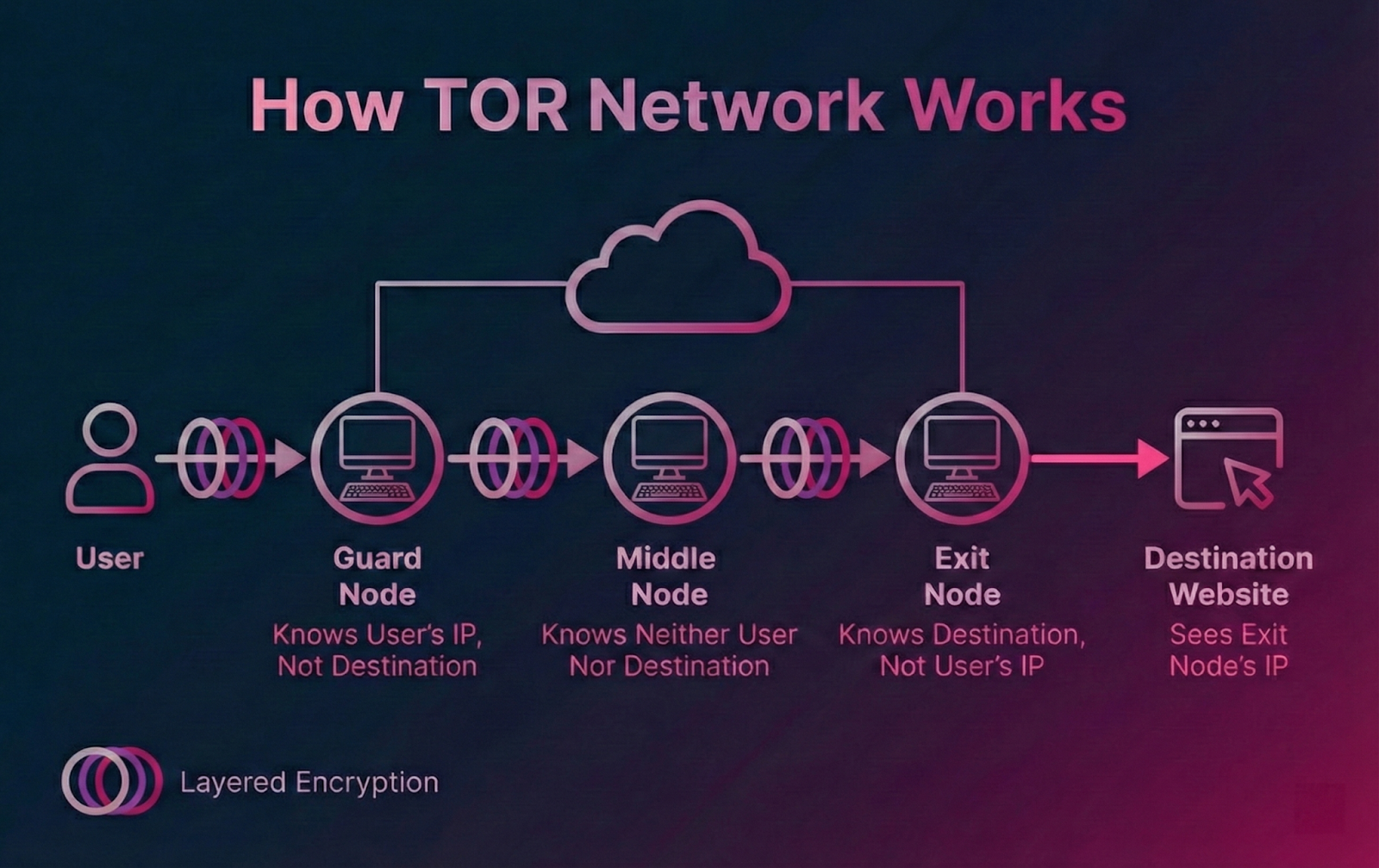
Figure 1. Illustration of how the TOR Network works
Cryptocurrency Transactions
Cryptocurrency is digital money that operates without banks or governments. Dark web marketplaces rely on it because transactions do not require names, addresses, or identity verification.
Most dark web marketplaces use Bitcoin or Monero. Bitcoin transactions are recorded on a public blockchain, making them traceable. Monero is built for privacy, with transactions that are untraceable by design.
A real-world example makes this impossible to ignore.
IntelBroker, one of the most active cybercriminals on the dark web, always demanded Monero for payments. But in January 2023, an undercover FBI agent convinced him to accept $250 worth of Bitcoin for stolen data. That one lapse was enough. Investigators traced the payment back to his real identity, and he was arrested in France in February 2025 [1].
Escrow Services
Escrow is a payment system where a third party holds funds until both sides of a transaction fulfill their obligations.
Escrow solves the trust problem on the dark web. When both parties are anonymous, and neither can take legal action, someone needs to hold the money in the middle. The buyer's payment goes into escrow held by the marketplace. The seller only gets paid once the buyer confirms the goods arrived.
But the system has a flaw. Escrow operators control the wallet. If operators decide to take the money and disappear, neither party can do anything about it. No regulator, no bank, no legal system. This is called an exit scam, and it happens regularly.
Some marketplaces introduced multi-signature escrow to reduce this risk. With multisig, releasing funds requires sign-off from two out of three parties: the buyer, the seller, and the marketplace. That means the marketplace alone can't touch the money. It's a safer setup, but it's not foolproof.
Consequently, on the dark web, trust is always fragile. There's no protector. That's the price of operating outside the law.
Four Cybercrime Services Sold on Dark Web Marketplaces
Dark web marketplaces operate like regular online stores. You can buy ready-made attack tools without writing any code. Criminals sell a wide variety of illegal services to anyone willing to pay.
Initial Access Brokers (IABs)
Initial Access Brokers (IABs) are cybercriminals who sell stolen credentials and backdoor access to corporate networks on dark web marketplaces. They do the hard work of breaking into a system. Once inside, they advertise their foothold to the highest bidder.
Buyers are usually ransomware gangs or data extortionists looking for an easy entry point. You might find listings for VPN logins, remote desktop credentials, or compromised server access.
Buying this access saves attackers a lot of time. It also lowers their risk of getting caught during the early stages of a breach.
Ransomware-as-a-Service (RaaS)
Ransomware-as-a-Service (RaaS) is a subscription model where developers lease malicious encryption software to affiliates in exchange for a cut of the ransom payments. This setup completely lowers the barrier to entry for cybercrime.
An attacker does not need coding skills to launch a major attack. They just sign up, pay a fee, and get access to a functional ransomware payload.
The RaaS operators handle the technical side. They manage the payment portals and provide the decryption keys. The affiliates focus entirely on infecting targets and demanding money.
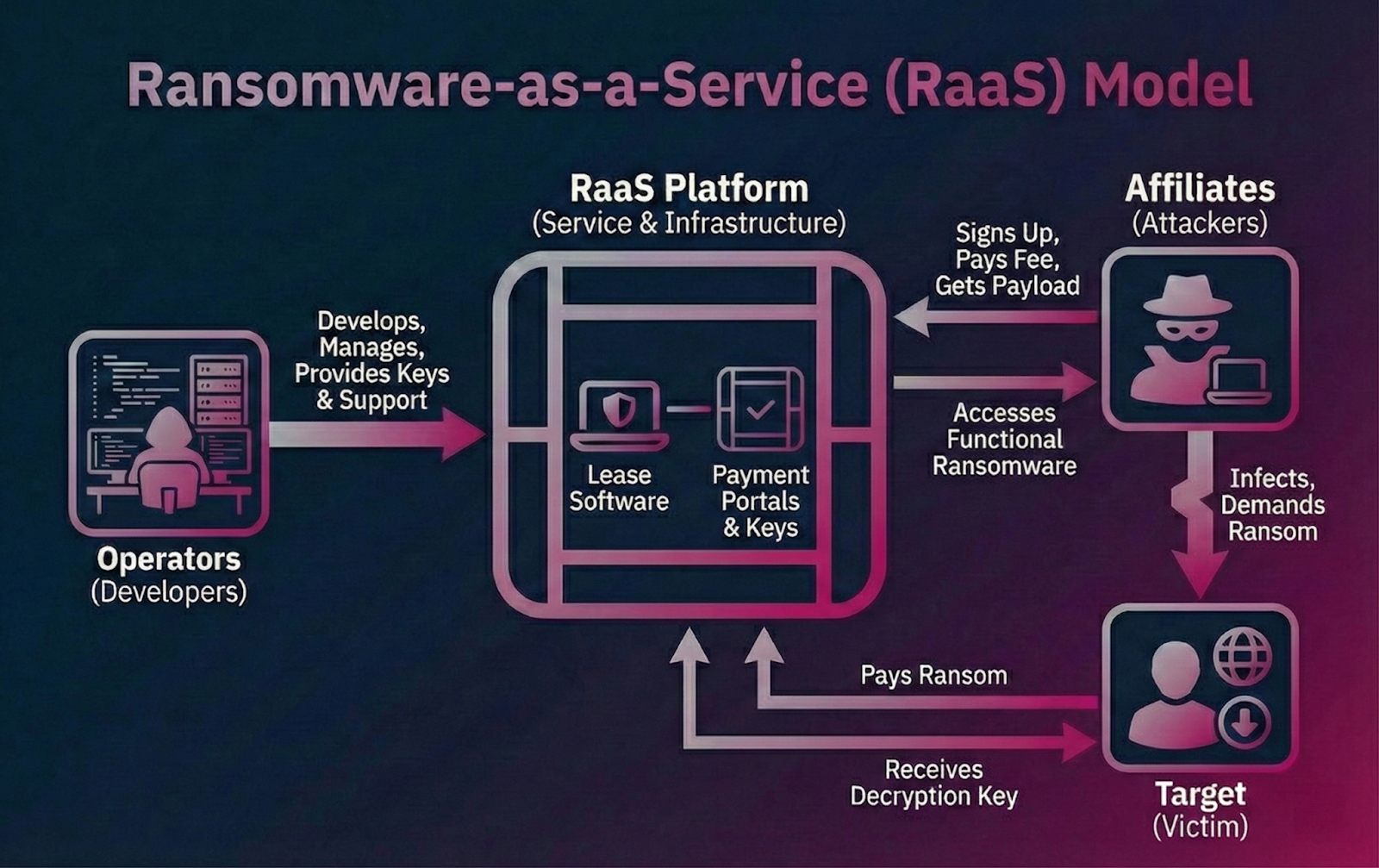
Figure 2. Illustration of how the RaaS Model works
DDoS-as-a-Service
DDoS-as-a-Service allows anyone to hire a botnet to overwhelm a target website or network with fake traffic until it crashes. Threat actors can rent these attack tools on dark web marketplaces for very little money.
Cybercriminals use this service to extort businesses, disrupt competitors, or create a distraction while they steal data. It is a cheap and effective way to cause massive downtime.
Infostealer Logs
Infostealer logs are massive files containing usernames, passwords, and session cookies scraped from infected computers. Malware operators infect personal and corporate devices to silently harvest this data. They bundle the stolen information into logs and sell them to other criminals.
Buyers search these logs for access to bank accounts, email providers, or corporate portals. Session cookies are especially valuable right now. They allow attackers to bypass multi-factor authentication entirely.
How Picus Stops Dark Web Threats
Cybercriminals actively trade malware, exploits, and compromised network access on dark web marketplaces. Attackers buy these tools and use them to launch real attacks against organizations.
The critical question for security teams is simple: Will your defenses actually stop these threats?
Picus provides that answer.
Picus Security Control Validation, powered by Breach and Attack Simulation (BAS), safely replicates the attack techniques and tools commonly sold on underground markets. Instead of guessing whether your security controls will stop a new threat, Picus continuously tests them in your own environment. These simulations safely run against your systems to identify which attacks are blocked, detected, or missed.
This capability is powered by the Picus Threat Library. The library is continuously updated with the latest attacker techniques, malware samples, and threat actor TTPs observed in real-world campaigns, including tools and exploits actively circulating on dark web marketplaces.
As a result, your defenses are validated against both known and emerging threats, not outdated or theoretical scenarios.
When Picus identifies gaps in your defenses, it doesn’t stop at detection. It also shows you how to fix them.
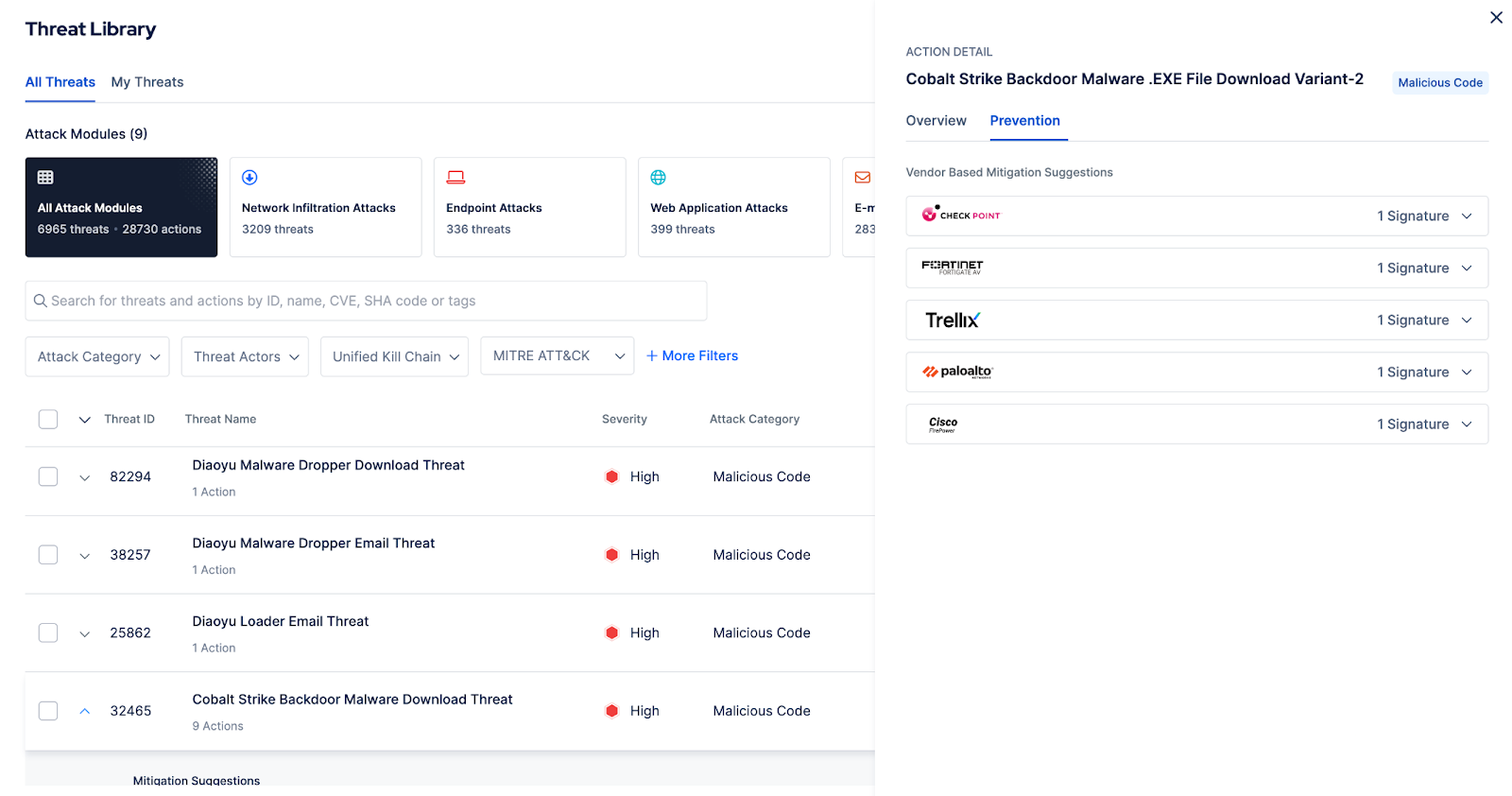
Figure 3. Picus Threat Library and Mitigation Library
The Picus Mitigation Library delivers vendor-specific prevention signatures and configuration recommendations mapped directly to each identified gap. It supports a wide range of security technologies, including firewalls, endpoint detection platforms, and SIEM solutions. Instead of spending hours researching fixes, your team receives ready-to-use remediation guidance and can apply it immediately.
Together, the Threat Library and Mitigation Library create a continuous loop of test → validate → remediate → retest, helping organizations close security gaps before attackers exploit them.
Get your free demo now, find your gaps against emerging threats, and get quick & effective fixes for your security controls.
Key Takeaways
- Dark web marketplaces are online shopping centers operating on encrypted networks to facilitate the buying and selling of illegal products like malware, hacking tools, and stolen credentials.
- These platforms run safely for criminals by relying on three core systems: anonymous routing through the Tor network, untraceable cryptocurrency payments, and escrow services.
- Buyers without technical skills use these platforms to purchase ready-made attack results, which significantly lowers the barrier to entry for cybercrime.
- Common cybercrime services sold on these networks include Ransomware as a Service, DDoS as a Service, Infostealer logs, and corporate network access provided by Initial Access Brokers.
- Picus Security Control Validation simulates real dark web threats against your defenses. When Picus identifies gaps, Picus Mitigation Library provides vendor-specific signatures and configuration recommendations for firewalls, endpoint detection tools, and SIEMs, so your team closes vulnerabilities fast.
References
[1] “The IntelBroker Takedown: Following the Bitcoin Trail,” Chainalysis. Accessed: Feb. 20, 2026. [Online]. Available: https://www.chainalysis.com/blog/breachforum-intelbroker-takedown-french-cybercrime-unit-july-2025/





.png?width=353&height=200&name=picus-cyber-fundamentals-6surfaces-validation-preview-april8%20(4).png)