Vulnerability prioritization is the process of ranking discovered vulnerabilities by the actual risk each one poses to your specific environment, using exploitability, exposure, asset criticality, and business context to decide what to fix first, instead of patching by raw severity.
Here is the problem it solves. The average enterprise remediates about 15% of its open vulnerabilities in a given month, while roughly 135 new CVEs land every day. You will never patch everything, so the job is not patching faster. It is knowing which handful of findings an attacker could actually use against you and fixing those first. Everything else is noise dressed up as urgency.
Why isn't a CVSS score enough to prioritize vulnerabilities?
A CVSS score is not enough because it rates a vulnerability's severity in the abstract, not whether it is exploitable, reachable, or sitting on an asset that matters in your environment. It is assigned by the publisher before anyone looks at your network, your controls, or your business.
That gap shows up in the numbers. Most teams patch top-down from "Critical," yet they are often working backwards:
- Vulnerabilities with a high probability of exploitation (EPSS above 0.7) take an average of 109 days to fix, while low-probability ones get closed in about 76.
- Mean time to remediate already sits at 55 to 72 days, and during that window another 7,000 to 9,000 CVEs get published.
- Sorting by severity alone keeps teams busy on flaws nobody will exploit while the genuinely dangerous ones age in the backlog.
- It is why PCI DSS 4.0.1 now requires a risk-based approach, and why NIST is explicit that CVSS measures technical severity, not risk.
Severity is an input. Priority is a decision.
Do EPSS and KEV solve vulnerability prioritization?
They help, but no. EPSS and KEV sharpen your view of global exploitation trends without telling you whether a vulnerability is exploitable in your environment.
EPSS estimates the probability a CVE gets exploited in the next 30 days. KEV confirms it is already under active attack in the wild. Layer them onto CVSS and you have cut a lot of noise: these are real improvements. But all three answer the same kind of question ("how dangerous is this vulnerability in general?"), not the one that actually drives remediation: would this work against us, right now, given the firewall, EDR, and segmentation we already run? A flaw that is trivially exploitable everywhere else may be blocked cold in your environment. A "medium" on an exposed, business-critical asset may be the one that gets you breached. A score without your context cannot tell the two apart.
What causes false positives in enterprise vulnerability assessment tools?
False positives happen when a scanner reports a vulnerability that is not actually exploitable in your environment. The usual culprits are banner and version-matching errors (a backported or vendor-patched package still advertises the old version), unauthenticated checks that fall back to guesses when the scan lacks credentials, asset misidentification, and (the big one) no visibility into compensating controls. A scanner sees that vulnerable software exists; it cannot see that segmentation, an IPS rule, or a disabled module already makes the flaw unreachable. Shared-library findings pile on: detecting a vulnerable version does not mean the running application ever calls the affected code.
This is why raw scanner output is a shaky foundation for prioritization. Feed unvalidated findings into a ranking and you get confidently sorted noise. The answer is not a better score; it is evidence. Confirm whether the exposure is real before it burns a remediation cycle.
Why do vulnerability scanners miss real exploitable security risks?
Scanners tell you a vulnerability exists, not whether an attacker could actually use it against your defenses, or how it chains into a path that reaches something worth protecting. That's where real risk hides. A scanner reports findings one at a time, in isolation. It doesn't know that a low-severity issue here, plus a misconfiguration there, plus a reachable credential, add up to a clean path to your most critical systems.
Automated penetration testing is what proves whether that path actually exists. In the Picus Blue Report 2025, automated pentesting simulations found a viable attack path to full domain admin in 22% of tested environments (down from 40% a year earlier), with nearly a quarter still exposing exploitable privilege-escalation paths. And in 46% of those simulations, attackers cracked at least one dumped password hash into valid credentials, often enough to trigger a chain of lateral movement that reached far beyond the initial foothold. A scanner sees none of that chaining.
Nor does a scanner know whether your defenses would catch the attack as it moves. It doesn't know whether your EDR would flag the lateral movement, or whether the detection rule meant to fire actually does, and that gap is wider than most teams assume. Across more than 160 million real-world attack simulations, the Blue Report 2025 found that while 54% of attacker activity gets logged, only 14% of it ever generates an alert. Seeing a vulnerability is not the same as knowing it would be stopped. Visibility is not proof.
How do you know which vulnerabilities are actually exploitable in your environment?
You prove it, by testing each finding against your live security controls to see whether the exploit actually works, instead of inferring risk from a score. This is the step that turns prioritization from educated guessing into evidence.
Run the real attack technique against your own defenses and every finding resolves into one of three states. Blocked: a working control stops the exploit, so it drops behind exposures that have no defense (a CVSS 9.8 behind a control that holds matters less than a 6.5 with nothing in front of it). Exploitable: nothing stops it, so it goes to the top of the queue with proof attached, not just a number. Silent failure: the control exists but never actually fires, the blind spot that makes "we have EDR" a dangerous assumption. The payoff is not a longer list. It is a much shorter one, because most findings turn out to be already-defended noise you can set down with confidence.
What are the most common vulnerability prioritization mistakes?
- Treating CVSS as the whole answer. Severity is one input; exploitability, exposure, and whether your controls hold are the rest.
- Trusting scores over evidence. A high EPSS number is a reason to look, not proof the flaw works against you.
- Assuming deployed controls are effective. Configured isn't working. Rules go stale and configs drift, silently.
- Ranking findings in isolation. Attackers chain weaknesses into paths — your prioritization should account for what connects to what.
- Prioritizing once. A quiet CVE can hit KEV overnight and your environment changes daily. This is a real-time job, not a quarterly one.
How do scanner results feed exploitability validation and prioritized remediation?
Scanner findings feed an exposure validation layer that matches each one against live control performance and real attack paths, deprioritizing what's already blocked or unreachable, and elevating what's confirmed exploitable and undetected. The output is a single ranked remediation queue, not a 50,000-line CVSS list.
For every scanner finding, the validation layer asks the questions CVSS can't: does a control block this exploit path, does the EDR catch the technique, is there a compensating control in that segment, and is there an actual exploitable path to a critical asset? Findings that are blocked or unreachable drop down the queue; findings that are confirmed exploitable, especially undetected ones, rise to the top. The layer also normalizes and deduplicates across tools, so the same vulnerability flagged by a scanner, a pentest, and a cloud scanner becomes one enriched ticket rather than three.
Each item arrives with remediation guidance attached, and after the fix the platform re-validates to confirm the gap is actually closed. The payoff is measurable: programs that apply control-validated prioritization routinely see high- and critical-rated findings fall from over 60% to roughly 10% (an 80%-plus cut in false urgency) so teams spend their effort on the exposures that can actually be used against them.
How do BAS and automated pentesting validate exploitability?
BAS and automated pentesting answer the question a scanner can't: not "does this vulnerability exist?" but "can an attacker actually use it here?" BAS tests whether your prevention and detection controls block and catch the threat behavior tied to the vulnerability; automated pentesting exploits it for real and chains it into an attack path to prove how far an attacker could get. Together they turn a theoretical finding into confirmed, or disproven, exploitability.
BAS executes the real attack actions associated with a finding against your live controls and measures the response: does the IPS block the exploit, does the EDR catch the follow-on technique, does the SIEM fire an alert? The result is control effectiveness—proof of whether that behavior is actually stopped in your environment, not just on paper.
Automated pentesting goes the other way. It exploits the vulnerability and chains it—credential theft, lateral movement, privilege escalation—to see whether it leads to something worth protecting and which choke point breaks the path. The result is proof of a viable route to critical assets (or proof there isn't one). So a "Critical" CVE from a scanner might be fully blocked by a validated control and barely matter, or it might chain into a clean path to domain admin and top your list. Validation is what tells the two apart.
How does Picus help you prioritize vulnerabilities that actually matter?
Most prioritization debates are really arguments about scores. Picus takes a different position: a score is a starting point, not a verdict.
The Picus Platform validates what is genuinely exploitable by running real attack techniques against your live controls, network and endpoint, detection and response, infrastructure and application, identity and privilege, cloud and container, and AI stacks, then expresses the result as the Picus Exposure Score: CVSS, EPSS, and KEV combined with real-world exploitability proof and your own asset and business context.
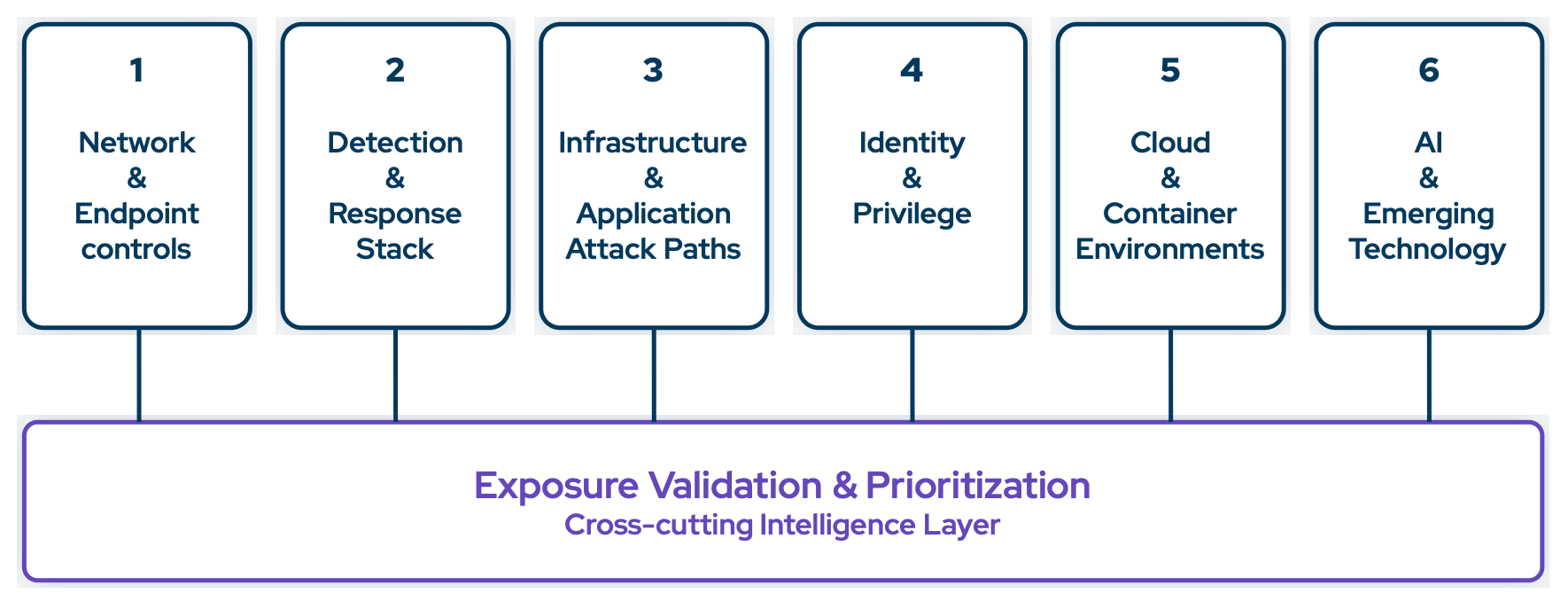
Figure 1. 6 Layers of Organizations’ Attack Surface
The goal is not to relabel more findings "critical" and grow your backlog; it is to give you defensible evidence of the few exposures that genuinely threaten the business so you can safely set the theoretical noise down.
Picus Swarm runs this loop in the background, discovering, validating, and routing fixes within guardrails you set, with every action traceable, so there are no black-box ratings or invented attack paths. Teams working this way report up to a 98% smaller critical-ticket backlog, 89% lower mean time to remediate, and 92% fewer SLA breaches on high and critical vulnerabilities.
Picus will not make you resilient on its own, but it will tell you, with evidence, which vulnerabilities are worth your team's time and which ones are not.
If you want to see which exposures in your environment are real, not just rated, request your free Picus demo.


-3.png?width=353&height=200&name=image%20(79)-3.png)
.png?width=353&height=200&name=what-is-exposure-assessment-blog-preview%20(1).png)