
Validate Cyber Readiness Across Credit Union Operations with Picus
Credit unions use Picus to prove which attacks their defenses stop and which exposures an attacker could actually exploit, including core banking systems too critical to test live, so their teams can cut the backlog to what is real, protect member services, and answer every examiner question with evidence.
Know Which Weaknesses Can Reach Your Members.
Credit unions reported 588 cyber incidents between May 2025 and April 2026, according to the NCUA.
For security teams, the bigger question is which weaknesses can turn an attack into service disruption, member-data exposure, or access through a trusted connection.
Ransomware & Service Disruption
A single intrusion can take online banking and core member services offline, leaving members locked out while the credit union rebuilds.
Can your controls stop and detect the techniques behind ransomware before member services go down?
Member-Data Theft
Services can look normal to members while an attacker quietly moves through your network toward the systems that hold their data.
From a foothold, could an attacker reach member data and move it out undetected?
Third-Party Exposure
Credit unions depend on providers that hold data and connect into core systems. One provider incident can reach many institutions at once.
If a trusted connection is compromised, what could an attacker reach inside your environment?
Each of These Risks Has Already Hit Credit Unions.
2+weeks
without essential banking systems after a ransomware attack, affecting about 500,000 members.
240,742people
affected in a separate data breach, even though online banking and core processing continued to operate.
60credit unions
disrupted by a single provider attack, with about 93,000 members operationally affected.
An attack does not have to take your whole environment down to cause serious harm. And it does not have to start inside your credit union.
Source: Regulator and breach-notification records.
Find the Gaps That Let These Attacks Succeed
However an attacker gets in, two things decide the damage: whether your controls block and detect the techniques in play, and how far an attacker could chain from a foothold toward member data and your core systems.
Picus Platform closes the gap end to end:
It simulates real attacker techniques against your endpoint, email, network, cloud, and identity controls, and shows what each one stops, detects, or misses.
From a foothold, it safely chains real exploits to show how far an attacker could move toward member data and your core systems.
For the systems too critical to test live, or a CVE with no working exploit, it returns a per-asset verdict judged against your own controls, no exploit fired.
It ranks gaps by exploitability and control effectiveness, closes them with ready-to-deploy fixes, and re-tests to confirm each gap is closed.
From Assumption to Assurance
This handbook is a desk reference for credit union leaders to move from assumption to assurance. It provides an evidence-based framework to validate your security posture against real-world threats and meet evolving NCUA compliance demands.
Simulate the Threats Targeting Credit Unions, Updated as They Emerge
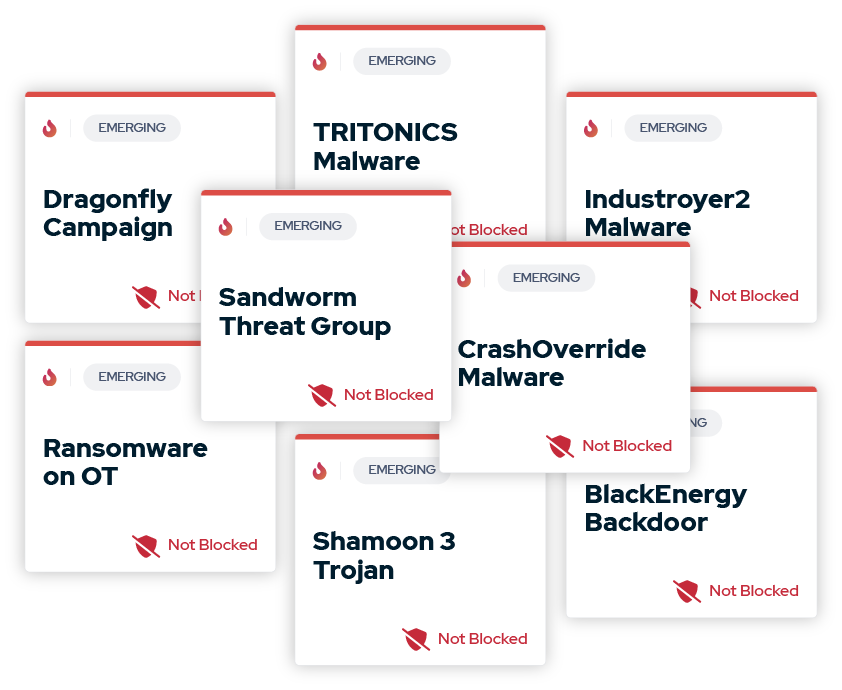
The Picus Credit Union Threat Template bundles the ransomware families and group campaigns targeting financial institutions, the malware they deliver, and the exploitation attacks landing on shared provider infrastructure. It runs safely in Picus Breach and Attack Simulation, mapped to MITRE ATT&CK, and shows what was blocked, detected, or missed.
With disclosure-to-exploitation down to about eight hours, Picus Labs doesn't wait for a quarterly refresh. It turns each new CISA advisory, FS-ISAC alert, or incident report into a runnable simulation in roughly nine minutes, inside a 24-hour SLA.
Findings from the Blue Report
In the Blue Report 2026, Picus Labs found that banking, financial services and insurance organizations failed to alert on 84% of simulated attacks, even though 65% were logged somewhere in their telemetry. Fewer than one in six attacks reached a security team. Prevention effectiveness in the sector fell from 76% to 67% in a single year, placing it among the industries that led in 2025 and gave ground in 2026.
Strong performance is rented, not owned; controls validated once drift, and only continuous validation shows where.
USE CASES
Protect Member Services With Evidence-Driven Validation
Validate how your defenses hold up against the attacks aimed at credit unions, like ransomware reaching core banking through a shared provider, or a CVE exploited before a patch exists. Picus tests what matters, where it matters most, including the systems too critical to test live, and runs on signal rather than on a calendar.
Credit union estates span core banking, member channels, cloud, and a long chain of CUSOs and processors. CTEM identifies and validates exposures across all of them continuously, not just before an exam, and gives every finding a disposition: patch, mitigate, monitor, or accept with evidence.
Get a per-asset exploitability verdict for every exposure, on the day of disclosure, including the restricted and air-gapped systems like core banking that no live exploit can safely reach, and CVEs with no working exploit. Prioritize by what is truly exploitable in your environment, not by what a severity score says.
Chain real exploits across reachable hosts and identities into complete attack paths to member data and domain admin, safely, in production. Every successful path returns proof of compromise, ranked by blast radius, continuously and without a maintenance window, so there's no manual red team to schedule and nothing to wait for.
Simulate the ransomware, credential theft, and CISA-flagged techniques targeting credit unions, safely in production, and see what your endpoint, email, network, cloud, and identity controls block, detect, or miss. Close every gap with a vendor-specific, ready-to-deploy rule, then re-run the simulation to prove it holds.


Built for the Real-World Challenges of Credit Union Security Teams
From simulating the campaigns targeting member-owned institutions to proving exploitability on systems too critical to test live and generating examiner-ready evidence, Picus helps credit union security teams stay ahead of threats, meet NCUA Part 748 and GLBA expectations, and fix what actually puts member services at risk.
Simulate the ransomware, credential theft, and provider-borne exploitation chains aimed at credit unions, and prove which exposures an attacker could actually reach, including core banking and member data platforms no live test should touch. Validate readiness while the advisory is still an advisory.
The FFIEC CAT sunset in August 2025 left examiners, boards, and insurers choosing among its successors. Picus produces evidence aligned with NCUA Part 748 and ISE, GLBA Safeguards, NIST CSF 2.0, and the CRI Profile from the same tests, so one validation run answers every reviewer.
At smaller institutions the security program and the security person are often the same thing. Picus produces evidence by machine, every time something changes, with your team at the decision gates and every action recorded. What an examiner expects to see doesn't leave when someone does.
Why Credit Union Teams Choose Picus
Security leaders across the credit union system trust Picus to validate their security posture safely, continuously, and at scale. Here is how Picus supports key roles across the institution.
- CISOs and IT Leads: Gain clear visibility into control effectiveness and real exploitability across core banking, member channels, cloud, and identity, and report measurable risk reduction to the board with evidence rather than assumptions.
- Boards and CEOs: Meet the NCUA's expectation that boards actively oversee cybersecurity with answers a board can read: what blocks, what alerts, what an attacker could actually reach, and how that changes over time.
- Compliance and Risk Officers: Simplify examination preparation with evidence-based reporting aligned with NCUA Part 748 and ISE, GLBA Safeguards, NIST CSF 2.0, and the CRI Profile.
RESOURCES
Stay Informed with Picus Finance Blogs






See the Picus Platform


See Picus run on your environment
In a live demo, watch Picus validate a real exposure end to end, from exploit to fix to re-test.
Discover the Platform
Simulate real-world cyber threats in minutes and see a holistic view of your security effectiveness.
Frequently Asked Questions
Third-party provider compromises, ransomware, business email compromise, and ATM jackpotting are the categories credit unions report to the NCUA, and seven out of ten reported incidents involved a vendor or CUSO. Picus Labs maintains a continuously updated financial services threat template covering the campaigns targeting credit unions and their providers, with new CISA-flagged techniques added within a 24-hour SLA.
In 2023, a single provider incident took more than sixty credit unions offline at once, and under NCUA Part 748 a provider's compromise that disrupts your operations or exposes member data is your reportable incident, with a 72-hour clock. Picus proves in advance which provider-borne techniques your controls would stop, so the answer exists before the incident does.
Part 748 Appendix A requires regular testing of key controls, and the Information Security Examination assesses adequacy, not just presence. The GLBA safeguards model specifies continuous monitoring or annual penetration testing plus semiannual vulnerability assessments. Picus validates continuously and generates audit-ready reports aligned with Part 748 and ISE, GLBA Safeguards, NIST CSF 2.0, and the CRI Profile.
Picus Exposure Validation breaks a vulnerability into the techniques an attacker would need and tests those safely against your controls, so no live exploit touches core banking or member data platforms. The result is a per-asset exploitability verdict on the day of disclosure, even for restricted assets and CVEs with no working exploit.
Picus BAS simulates the ransomware, credential theft, and CISA-flagged techniques targeting credit unions, safely in production, and validates whether your endpoint, email, network, cloud, and identity controls block and detect them. Gaps come with 80,000+ vendor-specific prevention signatures and detection rules, and customers report 2x control effectiveness within 90 days.
Yes. Picus resolves every finding as patch, mitigate, monitor, or accept, with evidence attached, and produces examiner-ready reports from the same tests that run continuously. Because the evidence is machine produced rather than person dependent, it stays consistent through staff turnover and arrives on the examiner's schedule, not the security team's.