Key Findings
- Can automated pentesting replace BAS? No. Pentesting validates whether attack paths exist. BAS validates whether your defenses actually block or alert on threats. They answer different questions, dropping one leaves the other's questions unanswered.
- What do you lose if you drop BAS? Continuous visibility into whether your prevention and detection controls are working. Based on Picus Blue Report 2025, Only 14% of logged adversarial activity generates an alert; exfiltration prevention succeeds just 3% of the time. Without BAS, these failures stay invisible.
- Why can't automated pentesting validate detection controls? It operates as the attacker, it has no visibility into whether your SIEM fired, your EDR caught the technique, or an alert reached an analyst. It proves the path; it can't observe the defender.
- Does AI-powered pentesting fix the gap? No. Autonomy changes how the tool executes, not what it covers. Scope gaps are architectural, adding an LLM agent doesn't add SIEM validation, DLP testing, or defense evasion coverage.
- What do industry frameworks require? Gartner's CTEM validation phase explicitly calls for BAS, pentesting, red teaming, and PTaaS working together. The AEV category merged them as complements, not replacements.
- What's the right approach? Run both. BAS for defensive breadth, automated pentesting for offensive depth, unified through an intelligence layer that turns both into a single prioritized action queue.
A new narrative is making its way through vendor pitch decks and renewal conversations: automated pentesting is ready to replace Breach and Attack Simulation (BAS) entirely. The argument sounds clean, if you can validate actual exploit paths, why bother simulating theoretical attack behaviors? One tool, one budget line, full coverage. Simple.
It isn't simple. It's a coverage regression disguised as simplification. And for any practitioner who follows this advice, the consequences show up the moment a real adversary tests the defenses that nobody validated.
What Vendors Mean When They Say "Automated Pentesting Replaces BAS”
The pitch goes like this; “Automated pentesting tools have matured to the point where they chain vulnerabilities, escalate privileges, and map attack paths autonomously.”
Some vendors now use LLM-driven agents that adapt mid-run. If the tool can prove an attacker gets from Point A to Point B, why maintain a separate platform that merely simulates whether your controls would block individual techniques?
On the surface, this logic holds. Underneath, it ignores a basic structural reality: BAS and automated pentesting answer fundamentally different security questions. Collapsing them into one means losing the answers to one of those questions entirely.
What Does BAS Do vs. What Does Automated Pentesting Do?
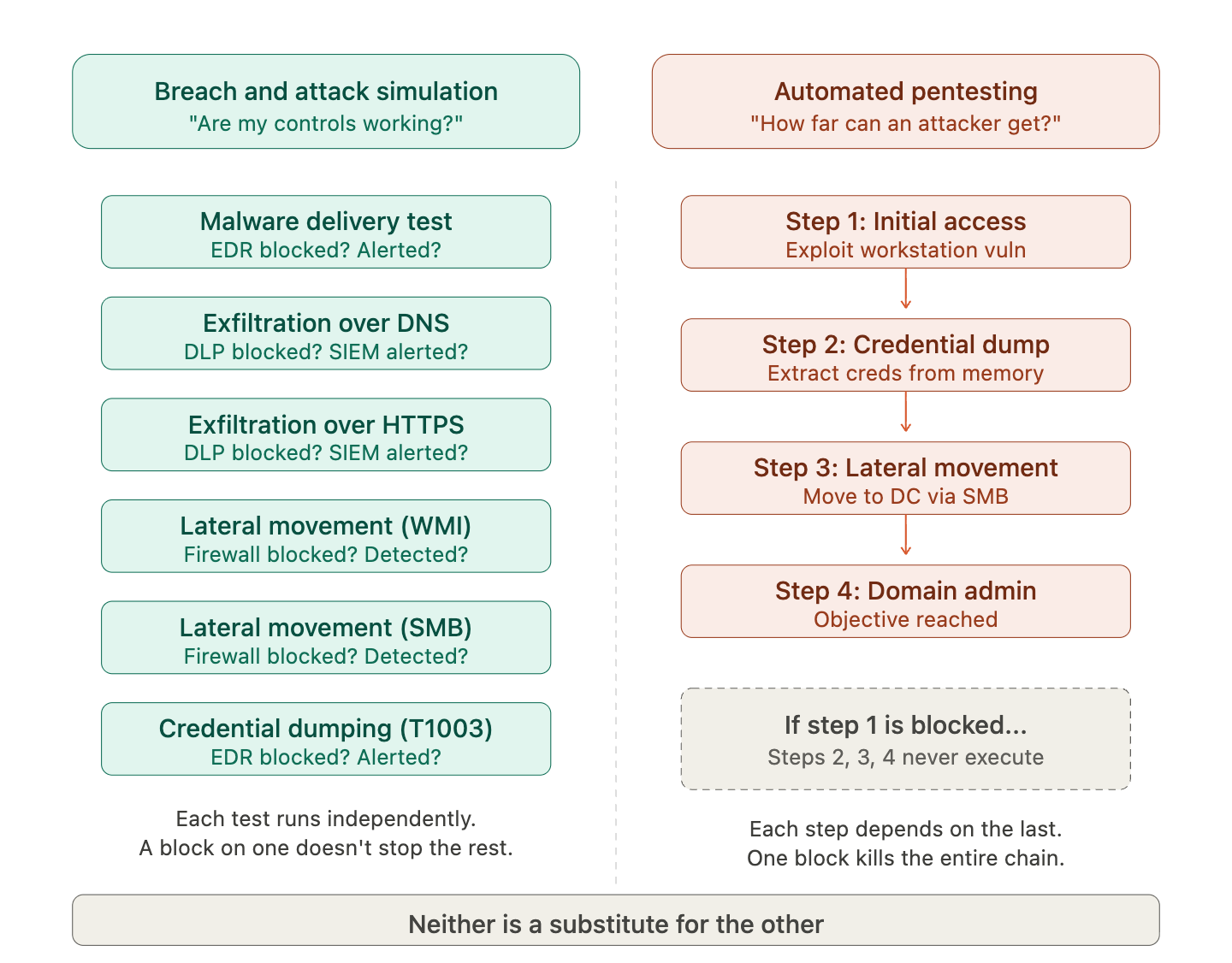
Figure 1. BAS Tests Are Independent. Automated Pentesting Is Directional.
What Does Breach and Attack Simulation (BAS) Validate?
BAS continuously emulates real-world adversarial techniques, malware delivery, lateral movement, data exfiltration, command and control, and measures whether your firewalls, EDR, SIEM rules, WAFs, DLP, and email gateways actually block or alert on them.
Critically, each simulation runs independently. A blocked exfiltration attempt over DNS doesn't prevent the next test from running exfiltration over HTTPS. A failed credential dumping technique doesn't stop the tool from testing 19 other variants. Every technique gets a clean, isolated execution.
BAS asks one question: "Are my controls working as intended against known threats?"
What Does Automated Pentesting Validate?
Automated pentesting takes a directional, adversarial approach.

Figure 2. Automated Pentesting Tools Chain Vulnerabilities Together
It chains real vulnerabilities and misconfigurations together the way an attacker would, exploiting a foothold, dumping credentials, moving laterally, escalating privileges, to prove that a specific path to compromise exists in your environment.
Automated pentesting asks a different question: "How far could an attacker actually get?"
Why Neither Is a Substitute for the Other
One validates your shields. The other maps the routes around them.
Replace BAS with automated pentesting and you know which paths attackers can take, but you no longer know whether your defenses catch them walking those paths. That's not a comprehensive security posture. That's half a validation program with the more visible half labeled "done."
Can Automated Pentesting Validate Your Detection and Response Stack?
A concrete real-life scenario makes the cost of this trade-off tangible. Walk through a Pass-the-Hash attack chain targeting a domain controller.
An automated pentesting tool discovers and exploits the path across four steps:
- it gains a foothold on a workstation,
- extracts credentials from memory,
- moves laterally to the domain controller via SMB using the stolen hash, and
- achieves domain admin access.
The automated pentesting tool validates every step. The attack path is proven. The report looks thorough.
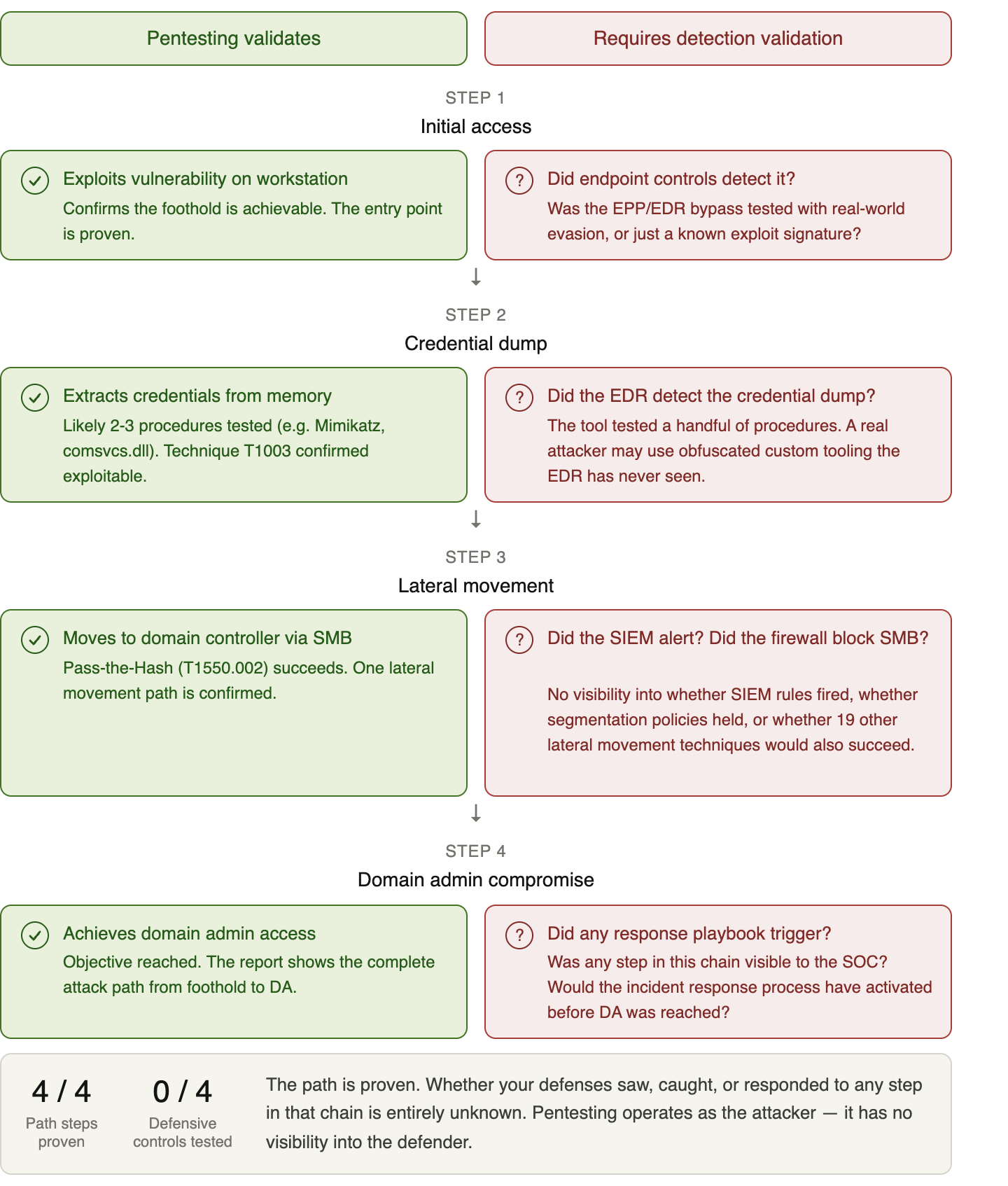
Figure 3. Real-Life Case Study of an Output of an Automated Pentesting Tool
But four critical questions remain unanswered.
- Did the EDR on that workstation detect the credential dump?
- Did the SIEM fire an alert on the lateral movement?
- Did the firewall between network segments block the SMB traffic?
- Did any automated response playbook trigger?
The pentesting tool can't answer any of these. It's operating as the attacker, it has zero visibility into whether the defensive stack saw, caught, or responded to a single step in that chain.
|
If the organization replaced BAS to save budget, nobody would be asking these questions at all. The detection and response stack sits entirely unvalidated. |
This isn't hypothetical. Organizations running dedicated detection validation for the first time frequently discover that a significant portion of their SIEM rules fail to fire as expected, due to log source gaps, parsing errors, schema changes after platform upgrades, and rule logic drift that accumulated unnoticed over months.
No amount of automated pentesting surfaces these blind spots, because pentesting operates on the other side of the wall.
Why Automated Pentesting Misses Data Exfiltration and Control Validation
A second scenario shows the control validation gap from a different angle.
An organization has a DLP solution configured to block sensitive data leaving the network over HTTP, HTTPS, DNS tunneling, and cloud storage uploads. The security team is confident the policies work.
A BAS tool simulates exfiltration across each channel. Results:
- HTTP exfiltration gets blocked correctly.
- But DNS tunneling sails through, the DLP policy was never configured for that channel.
- HTTPS exfiltration gets partially blocked but generates no SIEM alert, meaning even the successful blocks are invisible to the SOC.
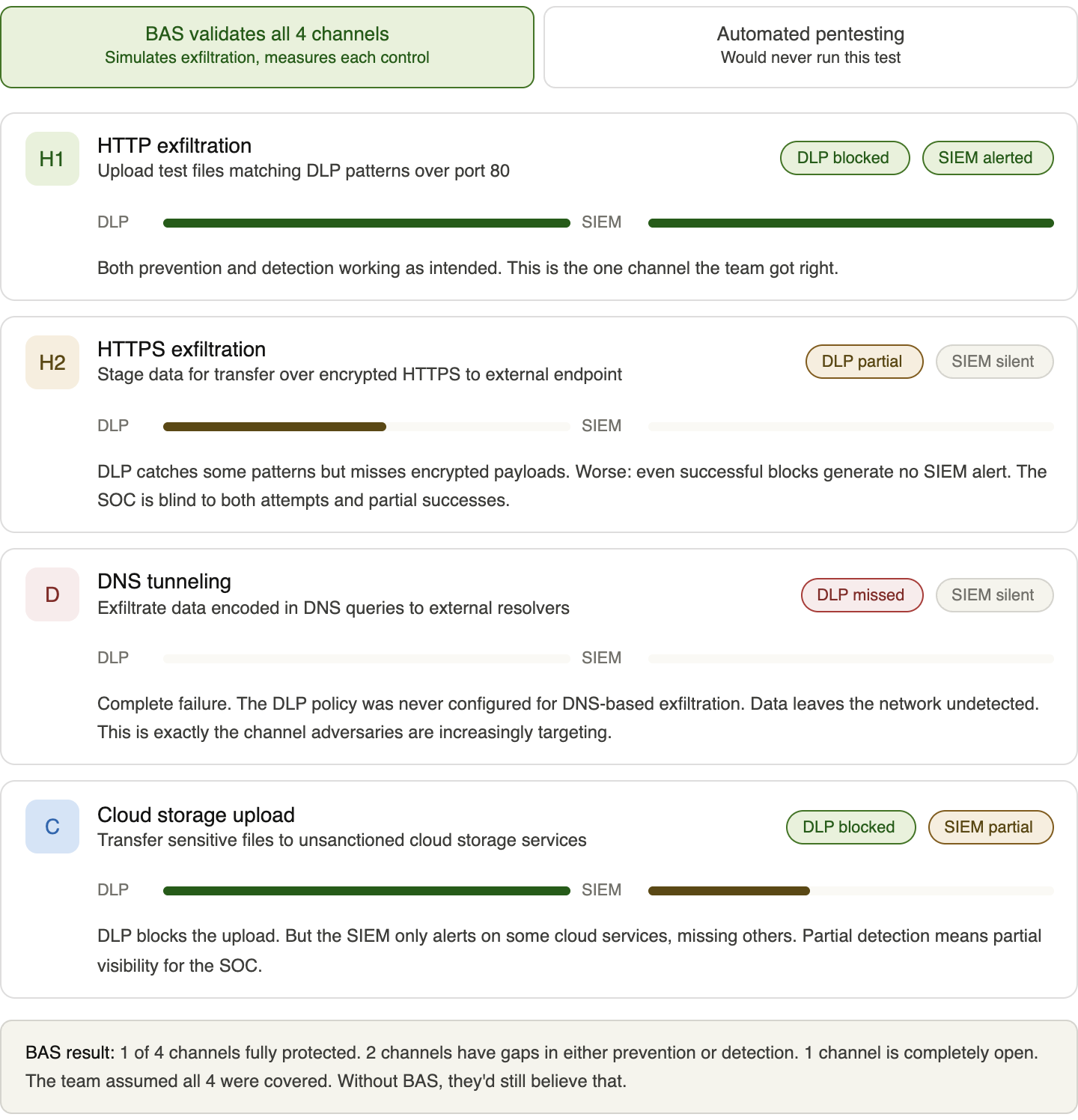
Figure 4. A Real-Life Case Study of What Automated Pentesting Misses
An automated pentesting tool would never run this test. Its job is to exploit vulnerabilities and map paths, not to simulate exfiltration across every channel and measure whether each prevention control and detection rule responds correctly.
Exfiltration, command and control, and defense evasion sit at the stages of the attack lifecycle where security controls have to prove they work, and those stages are structurally outside the scope of automated pentesting.
How Deep Is Automated Pentesting's MITRE ATT&CK Coverage, Really?
Most coverage discussions focus on tactic counts: how many of the 14 ATT&CK columns does automated pentesting touch? That framing undersells the actual gap.
The limitation is architectural and runs three layers deep.
Tactic Concentration
Automated pentesting was designed to find the path of least resistance to an objective. Its coverage clusters around the "getting in and moving" tactics: Initial Access, Execution, Credential Access, Discovery, Privilege Escalation, and Lateral Movement.
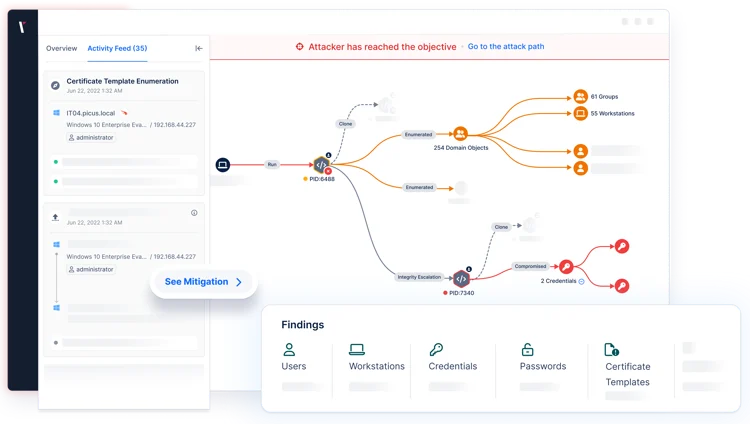
Figure 5. Automated Pentesting Tools Lacks MITRE ATT&CK-based Tactical Concentration
Several entire tactics get little or no attention.
- Defense Evasion is barely tested because advanced evasion techniques require weeks of development by real threat actors, automated tools use standard, predictable mechanisms.
- Persistence is intentionally avoided under a "leave no trace" mandate.
- Exfiltration and Impact are outside scope entirely.
Procedure Depth
A single ATT&CK technique can have dozens, sometimes hundreds, of distinct procedures; the specific commands, tools, and variations real attackers use. Automated pentesting tools typically implement a handful of procedures per technique.
If your EDR blocks those two or three specific procedures, the tool reports the technique as defended. But a slightly different procedure the tool never tested would bypass the same EDR without friction. The technique is "covered" on paper.
In practice, only a sliver of its real-world attack surface has been validated. BAS platforms maintain threat libraries with thousands of procedures mapped across the full ATT&CK matrix, testing each one independently.
Chain Dependency
Automated pentesting evaluates your environment through chained attack paths where each step depends on the previous one.
If the tool gets blocked at Privilege Escalation early in the chain, everything downstream, including 20 Lateral Movement techniques it's capable of testing, never executes.
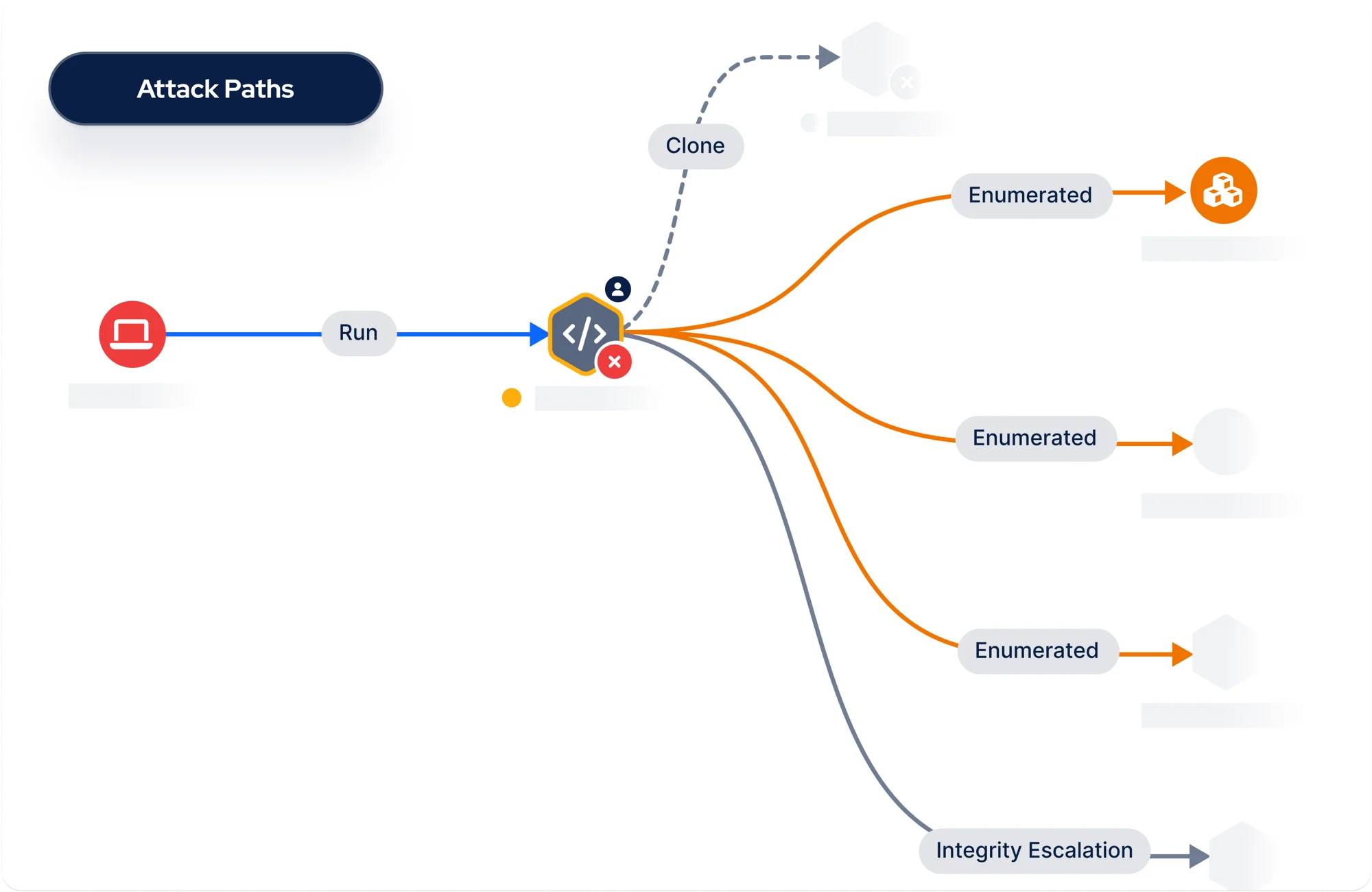
Figure 5. Finding an Attack Path Is Dependent on the Success of Previous Steps
One blocked step near the top creates a cascading blind spot across every technique that depended on it.
BAS doesn't have this problem. Each simulation runs independently regardless of what happened in previous tests.
Does AI-Powered Pentesting Fix the BAS Coverage Gap?
Automated pentesting vendors are returning with autonomous and agentic branding.
Practitioners evaluating renewals should apply a straightforward test: autonomy changes how a tool runs within its existing scope. It doesn't expand that scope.
- If the tool was testing three procedures per technique before, an LLM agent doesn't expand that to 300.
- If the chain-dependent architecture meant a single blocked step left 20 downstream techniques untested, the agentic version still has the same dependency problem.
- If Defense Evasion was intentionally skipped because the tool must leave no trace, autonomy doesn't change that mandate.
Scope gaps are architectural. Procedure gaps are by design. Chain dependencies are structural.
None of them vanish when execution becomes autonomous.
What Gartner's CTEM and AEV Frameworks Say About BAS vs. Pentesting
The "replace everything" narrative runs directly counter to how Gartner defines the validation phase of its Continuous Threat Exposure Management (CTEM) framework.
CTEM validation explicitly requires multiple tools and techniques working together, including BAS, automated pentesting, red teaming, and PTaaS. A single-tool approach contradicts the industry's most referenced framework.
Gartner's Adversarial Exposure Validation (AEV) category reinforces this.
BAS and automated pentesting were merged into one umbrella not because one replaces the other, but because they're complementary capabilities that need to work together. When assessing AEV solutions, Gartner recommends looking for a product that seamlessly integrates both BAS and penetration testing capabilities, and notes that this combination is uncommon among most tools.
What Real-World BAS and Pentesting Data Shows About Defensive Gaps
Real-world numbers from Picus Security's anonymized customer assessments make the case quantitatively.
From the BAS side:
- only 14% of logged adversarial activity actually generates an alert.
- Data exfiltration prevention succeeds just 3% of the time.
- Credential-based access succeeds in 98% of tested environments.
Controls are deployed, but they're failing quietly.
From the automated pentesting side:
- with credential access succeeding 98% of the time, 22% of organizations have an open, unvalidated attack path straight to Domain Admin.
Replace BAS and you lose the first set of numbers. You'll know the path to Domain Admin exists. You won't know that your detection stack would miss the attacker walking it, that your DLP lets exfiltration through untested channels, or that your SIEM rules haven't fired correctly in six months.
That's not a trade-off. That's a blind spot at the exact layer where breaches get caught, or don't.
The Bottom Line: BAS and Automated Pentesting Are Complements, Not Substitutes
The vendors pushing the "replace BAS" narrative are selling a simplification that creates a more dangerous gap than the one it claims to close.
Automated pentesting validates attack paths. BAS validates whether your defenses stop attackers on those paths. They answer different questions using different architectures against different parts of the ATT&CK matrix.
Replacing one with the other doesn't streamline your validation program. It amputates half of it. The strongest posture comes from running both, unified by an intelligence layer that normalizes their findings into a single, prioritized action queue, so you're not just collecting data from two tools, but turning it into one defensible remediation plan.
Your attack surface doesn't care which vendor's logo is on the tool. It only cares whether it's been tested.
Test whether your defenses work, not just whether attack paths exist. Get a Demo.



.png?width=353&height=200&name=Picus-Frost%26sullivan-Awards-preview-april22%20(1).png)


.png?width=353&height=200&name=picus-cyber-fundamentals-6surfaces-validation-preview-april8%20(2).png)
.png?width=353&height=200&name=picus-cyber-fundamentals-6surfaces-validation-preview-april8%20(1).png)