TL:DR;
- Automated pentesting hits a structural ceiling after 3–4 runs — not because your environment is hardened, but because the tool has exhausted a fixed scope it was never designed to leave
- Chain-dependent architecture means one blocked step kills all downstream techniques; a clean run isn't proof of protection, it's a gap in visibility
- Automated pentesting fully covers one of six validation surfaces; detection stack, cloud, identity, and AI guardrails go untested entirely
- Automated pentesting proves the path exists; BAS tests whether the alarm on that path still fires — neither question is optional, and neither tool answers both
- BAS runs thousands of independent, atomic simulations against your actual controls; one blocked test never stops the next, giving you depth automated pentesting architecturally cannot
- An exposure validation layer deduplicates findings across all three tools and re-ranks them by live control performance — a CVSS 9.8 behind a validated control ranks below a CVSS 6.5 with a detection rule that hasn't fired in months
It's a story the security community knows well. You bring in a new automated pentesting solution, and the first run is a revelation. The dashboard lights up with critical findings, lateral movement paths you didn't know existed, and a "gotcha" moment involving a legacy service account. The Red Team feels like they've found a force multiplier. The CISO takes the results to the board: security validation is in place.
Then the honeymoon ends. By the third or fourth execution, new findings dry up. The tool starts reporting the same stale issues, and the once-exciting dashboard becomes another screen delivering noise. Most teams read this as a sign that the environment is hardened, that the tool has done its job.
It hasn't. It hit the POC Cliff.
How Does an Automated Penetration Testing Tool Work?
An automated penetration testing tool simulates cyberattacks against an organization's infrastructure without requiring a human operator to conduct each test manually. These platforms autonomously discover assets, identify weaknesses, and attempt to exploit them, not in isolation, but sequentially, using one compromised foothold to reach the next, the way a real attacker would move through an environment.
What comes out isn't a list of theoretical risks. It's validated attack paths: vulnerabilities that weren't just present but actually exploited during the run, with proof-of-exploitation evidence a scanner cannot produce.
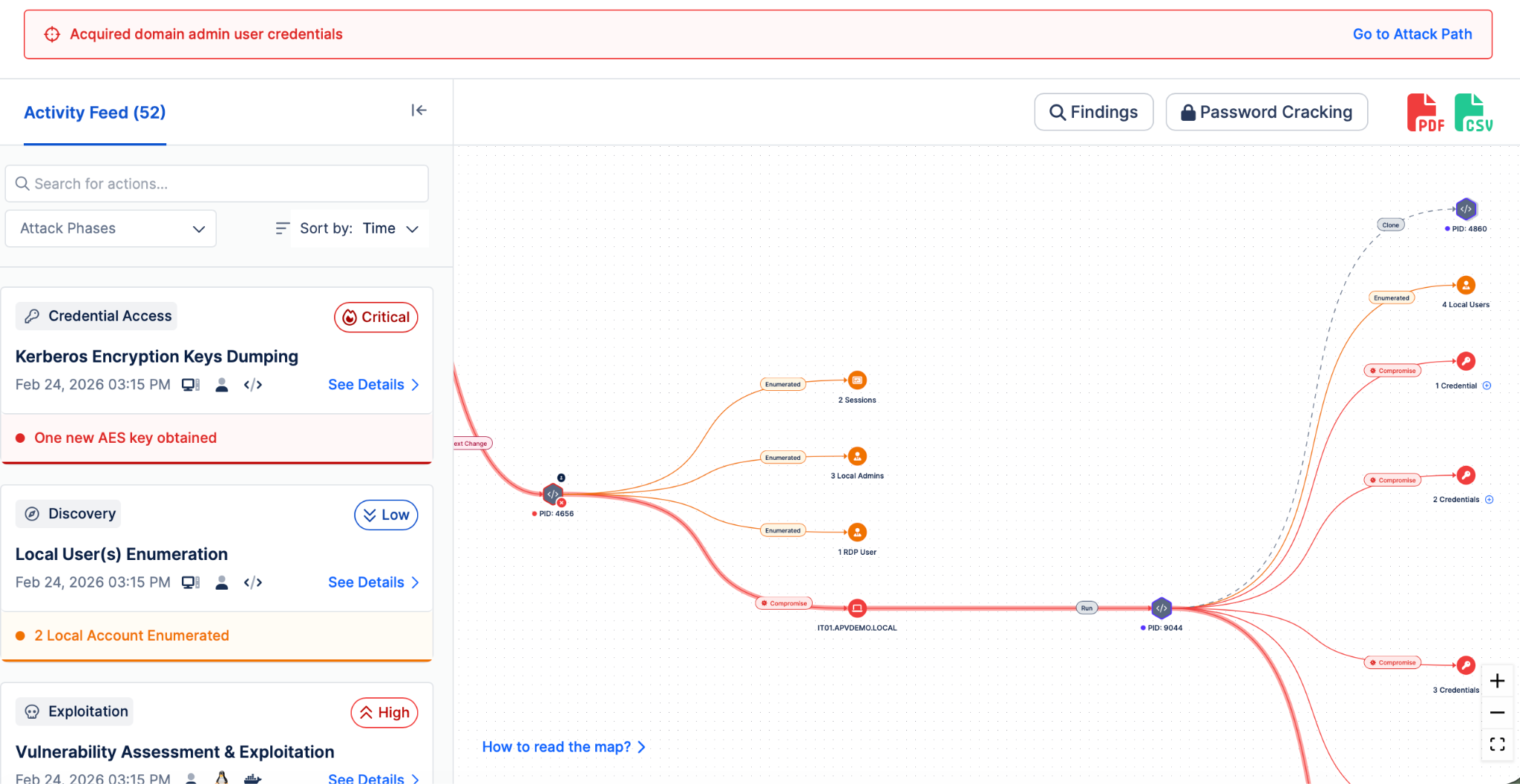
Figure 1. Automated Penetration Testing Works In a Directional Map
That value, however, is bounded by where the tool was deployed. Automated pentesting operates primarily against network infrastructure and application attack paths. Everything else, detection stack, cloud, identity, security control effectiveness, sits outside the chain entirely.
What Is the POC Cliff in Automated Pentesting?
The POC Cliff is the steep drop in new findings volume once an automated pentesting tool has exhausted its fixed scope. It's not a tuning problem. It's not a configuration issue. It's the structural ceiling of a tool working exactly as designed: within a fixed scope, against a deterministic surface, with a payload library that doesn't refresh at the speed of the threat landscape.
The mechanism is straightforward:
- The initial pass finds everything that scope has to offer.
- Subsequent passes yield almost nothing new, not because the tool failed, but because the target surface hasn't changed and the tool has already worked through it.
Point the tool at a different network segment or initial access machine, and new attack paths open up again. The findings decline isn't coverage. It's the illusion of it.
In a 10,000+ person organization, three or four runs from the same entry point haven't exhausted your attack surface. They've mapped one narrow slice of it.
Why Does Automated Pentesting Hit Diminishing Returns?
How does chain-dependent architecture limit coverage?
Automated pentesting chains its steps sequentially.
- Step B depends on Step A.
- Step C depends on Step B.
Once you patch the specific path the tool favors, it's blocked at Step A, and Steps B through Z never execute.
The practical consequence is significant.
The tool may have the capability to test 20 different lateral movement techniques, but if it gets caught at the discovery phase early in the chain, those techniques are never run against your environment. You're left blind to how your internal network would handle them if an attacker managed to bypass the perimeter through means the tool didn't simulate.
One blocked step near the top of the chain creates a cascading blind spot across every technique that depended on it.
Why does a fixed scope produce a fixed ceiling?
Automated pentesting runs against a constrained, deterministic surface. The scope is set before execution: which network segments, which entry points, which target assets. The tool methodically works through that surface and, by design, delivers its best results in the first run.
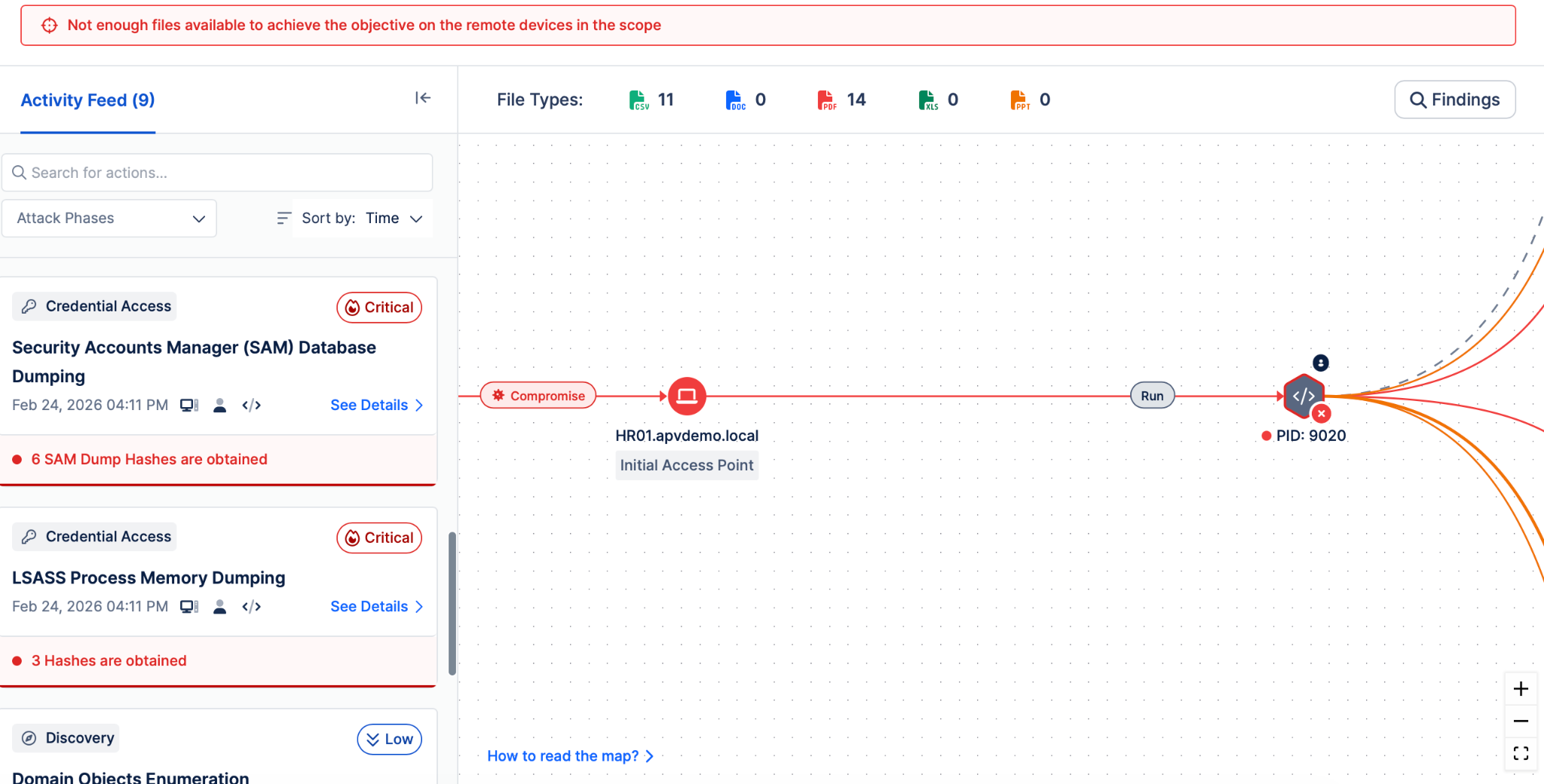
Figure 2. Automated Penetration Testing Tools Start from a Selected Initial Access Point
Within a few cycles, exploitable paths within that scope are exhausted. But that doesn't mean your environment is secure. It means the tool has reached the limits of where it was pointed.
|
The question to ask after run four: what percentage of your actual environment has this tool covered? |
In most deployments, it's a portion of one of six distinct validation surfaces.
How does procedure depth create a false sense of security?
This is the gap most coverage discussions miss entirely. A single MITRE ATT&CK technique can have dozens, sometimes hundreds, of distinct procedures: the specific commands, tools, API calls, and variations that real attackers use to execute that technique.
Automated pentesting tools typically implement a handful of procedures per technique, the ones that are stable, well-known, and safe to run in production.
Take OS Credential Dumping (T1003) as a concrete example.
An automated pentesting tool will likely use two or three specific procedures:
- a modified version of Mimikatz,
- a standard comsvcs.dll dump, or
- a similar well-known method.
If your EDR successfully blocks those specific procedures, the tool reports the technique as defended. The team believes they're protected against credential dumping.
But an advanced threat actor might use a highly obfuscated custom tool, direct system calls, or a novel driver to dump LSASS memory. A slightly different procedure, one that the tool has never tested, would bypass the same EDR without friction.
The technique is "covered" on paper. In practice, only a sliver of its real-world attack surface has been validated.
What Does a Clean Pentesting Run Actually Mean?
Some vendors take the diminishing returns further and market a clean run with zero findings as proof of protection. It isn't.
A no-finding pentest means no exploitable path was found from that entry point, within that scope, at that moment. Your firewall, your SIEM rules, your EDR logic all remain unvalidated. It doesn't tell you whether your detection stack would have caught the attacker walking a path the tool didn't test. It doesn't tell you whether your DLP would block exfiltration over a channel the tool never simulated.
A clean run is a gap in visibility dressed up as confidence.
How Is BAS Architecturally Different From Automated Pentesting?
This is where Breach and Attack Simulation (BAS) draws a hard line. BAS doesn't chain. It runs thousands of independent, atomic simulations. Each technique gets its own clean execution.
- A blocked exfiltration test over DNS doesn't prevent testing exfiltration over HTTPS next.
- A failed lateral movement technique doesn't stop the tool from testing 19 others.
- A blocked credential dumping procedure doesn't mask the fact that dozens of other procedures were never challenged.
Every technique runs independently regardless of what happened in previous tests.
BAS platforms maintain threat libraries with thousands of procedures mapped across the full ATT&CK matrix, continuously updated as new threat intelligence emerges. They test each procedure independently, so a block on one doesn't mask the fact that the rest were never challenged.
The difference isn't just breadth across tactics. It's depth within each technique.
One tests the path. The other tests the shield. The POC Cliff only exists in path-based testing. Independent simulation doesn't have this problem because there's no chain to break.
For more information, visit our blogs on
Does AI-Powered Pentesting Solve the POC Cliff?
Automated pentesting vendors are returning with AI branding, promising that autonomous execution changes the game. Practitioners evaluating renewals should apply a straightforward test: autonomy changes how a tool runs within its existing scope. It doesn't expand that scope.
If the tool was testing three procedures per technique before, an LLM agent doesn't expand that to 300. If the chain-dependent architecture meant a single blocked step left 20 downstream techniques untested, the agentic version still has the same dependency problem. If the tool's payload library wasn't refreshing daily before, adding an LLM doesn't change the update cadence.
The POC Cliff is architectural. It doesn't vanish when execution becomes autonomous. AI is only as good as the data, scope, and procedure library it has to work with.
What Should You Do After Your Findings Plateau?
The declining findings after run three or four isn't a signal to stop. It's a signal that your current tool has reached its structural ceiling and the rest of your attack surface needs a different approach.
Reframe what the tool actually proved
The automated pentesting tool tested infrastructure attack paths from specific entry points within a defined scope. It did that well.
Everything outside that scope, your detection rules, your prevention control effectiveness, your cloud configurations, your identity controls at depth, your AI guardrails, was never tested.
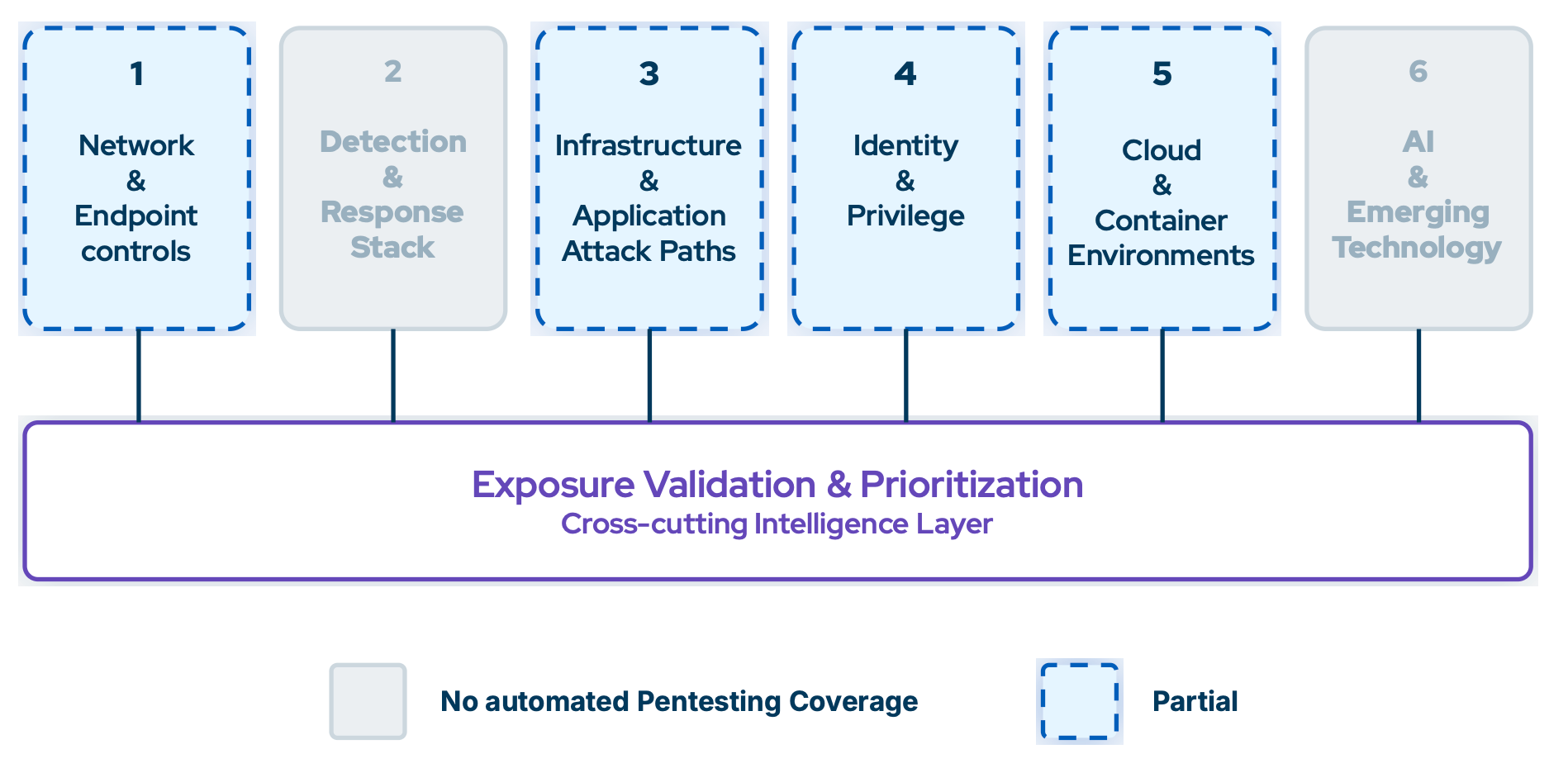
Figure 3. The 6 Attack Surfaces to Validate
Acknowledge what was validated and what was assumed.
Map your real coverage against the full attack surface
Every modern organization has six distinct validation surfaces that require testing.
Automated pentesting covers portions of one, with partial reach into three others. Two surfaces get no coverage at all.
Scoring your own coverage across all six is the starting point for closing the gap. Below is a comprehensive guide for organizations to score their coverage
|
Validation Surface |
What Gets Validated |
What Happens Without It |
Automated Pentesting |
|
Network & Endpoint Controls |
Firewalls, WAF, IPS, DLP, EDR/EPP block and detect the threats they're configured to stop |
Controls fail silently. "Configured" is not "effective" |
Partial |
|
Detection & Response Stack |
SIEM rules, EDR logic, alerting pipelines, and response playbooks work under real attack conditions |
Detection is assumed, not measured. Gaps stay hidden until an actual incident |
✗ No |
|
Infrastructure & Application Attack Paths |
Vulnerabilities chain into exploitable paths from initial access through lateral movement to critical assets |
Unknown routes stay open and available to adversaries |
Partial — infrastructure yes, application coverage varies by vendor |
|
Identity & Privilege |
IAM policies, AD configurations, cloud identity controls, and privilege boundaries resist escalation and credential theft |
Identity gets validated only where an attack path happens to traverse it, never systematically |
Partial |
|
Cloud & Container Environments |
Cloud controls, Kubernetes policies, and IAM configurations prevent misconfiguration, drift, and unauthorized access |
Environments are assumed secure at initial config and never re-validated as they drift |
✗ No |
|
AI & Emerging Technology |
LLM guardrails, AI agents, and tool integrations resist jailbreaks, prompt injection, and adversarial manipulation |
The fastest-growing attack surface in the enterprise goes completely unvalidated |
✗ No |
Elaborate technically: Add defensive validation alongside offensive testing
- BAS provides the continuous, independent control validation that automated pentesting architecturally cannot.
- Together, they answer both questions practitioners need answered: how far can an attacker get, and would your defenses catch them trying?
The two tools test fundamentally different things. Automated pentesting proves an attack path exists. BAS tests whether the control standing in that path actually works.
Your EDR may be deployed on every endpoint. BAS tells you whether the specific credential dumping procedure an attacker would use triggers an alert, or passes through silently because the policy hasn't been enforced since the last configuration push.
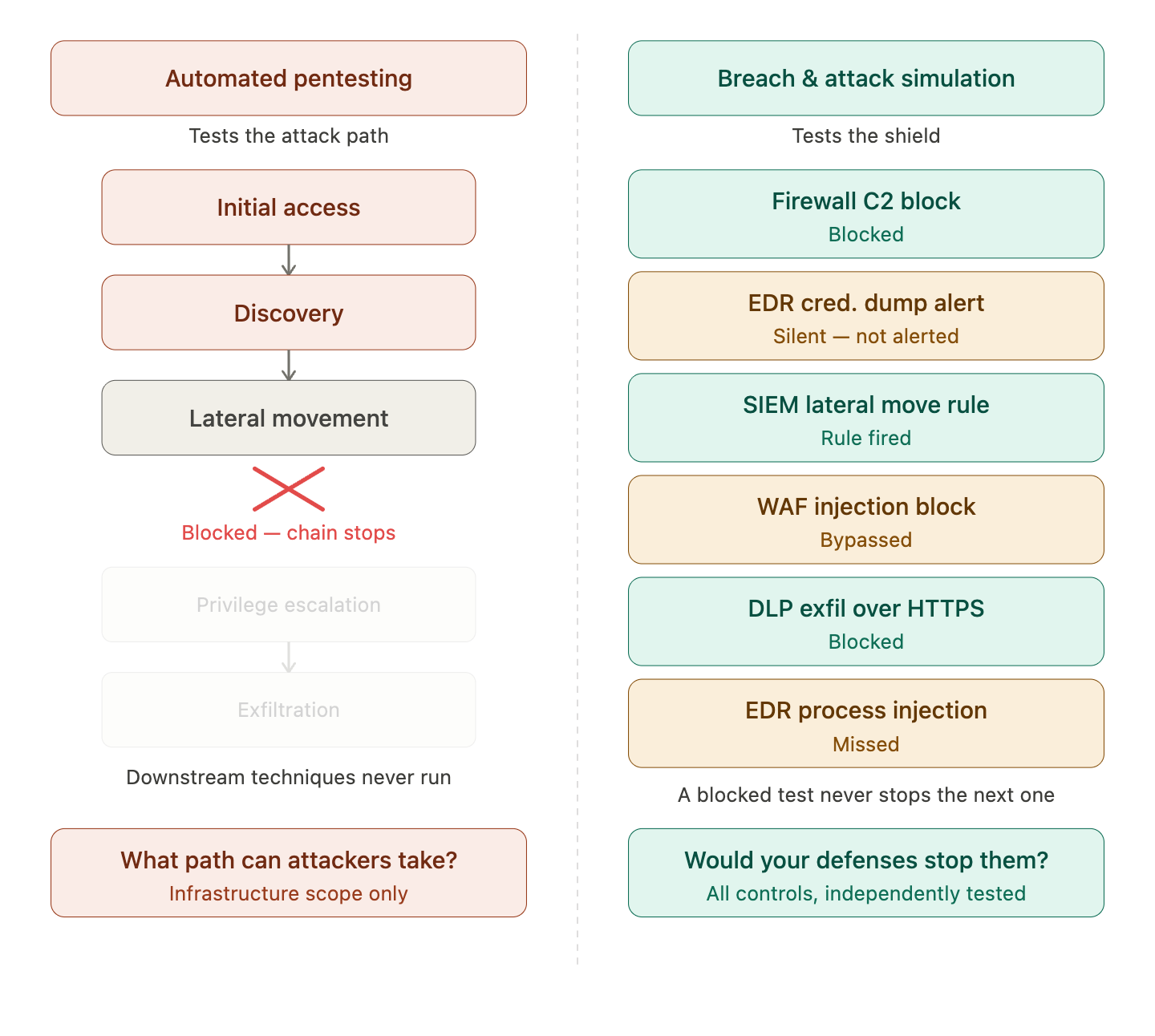 Figure 4. Automated pentesting vs BAS: chain-dependent path testing versus independent control validation
That distinction matters because detection coverage degrades without validation. SIEM rules go stale. EDR policies drift after updates. A detection stack validated six months ago hasn't stayed validated, it's been assumed. BAS replaces that assumption with continuous, independently executed evidence: each technique tested on its own, regardless of what previous tests returned, against the controls as they actually exist today.
The result is that automated pentesting and BAS answer complementary questions no single tool can answer alone. One maps the routes. The other tests whether the alarms on those routes still fire.
Elaborate technically: Unify findings through an intelligence layer
Running both tools without normalizing their outputs creates a different problem: disconnected finding streams with no shared priority.
An exposure validation and prioritization layer ingests findings from both, matches them against live control performance data, and produces a single ranked action queue, turning two data streams into one remediation plan.
Without it, the operational reality looks like this:
- your pentesting tool returns 80 validated exploits,
- your scanner returns 50,000 theoretical CVEs, and
- your BAS platform returns control gap findings across 200 tested techniques.
The same vulnerability may appear in all three;
- once as an exploited path,
- once as a CVSS 9.1 CVE,
- once as a failed prevention control,
with no shared identifier.
The result is three separate queues your team manually reconciles, or doesn't.
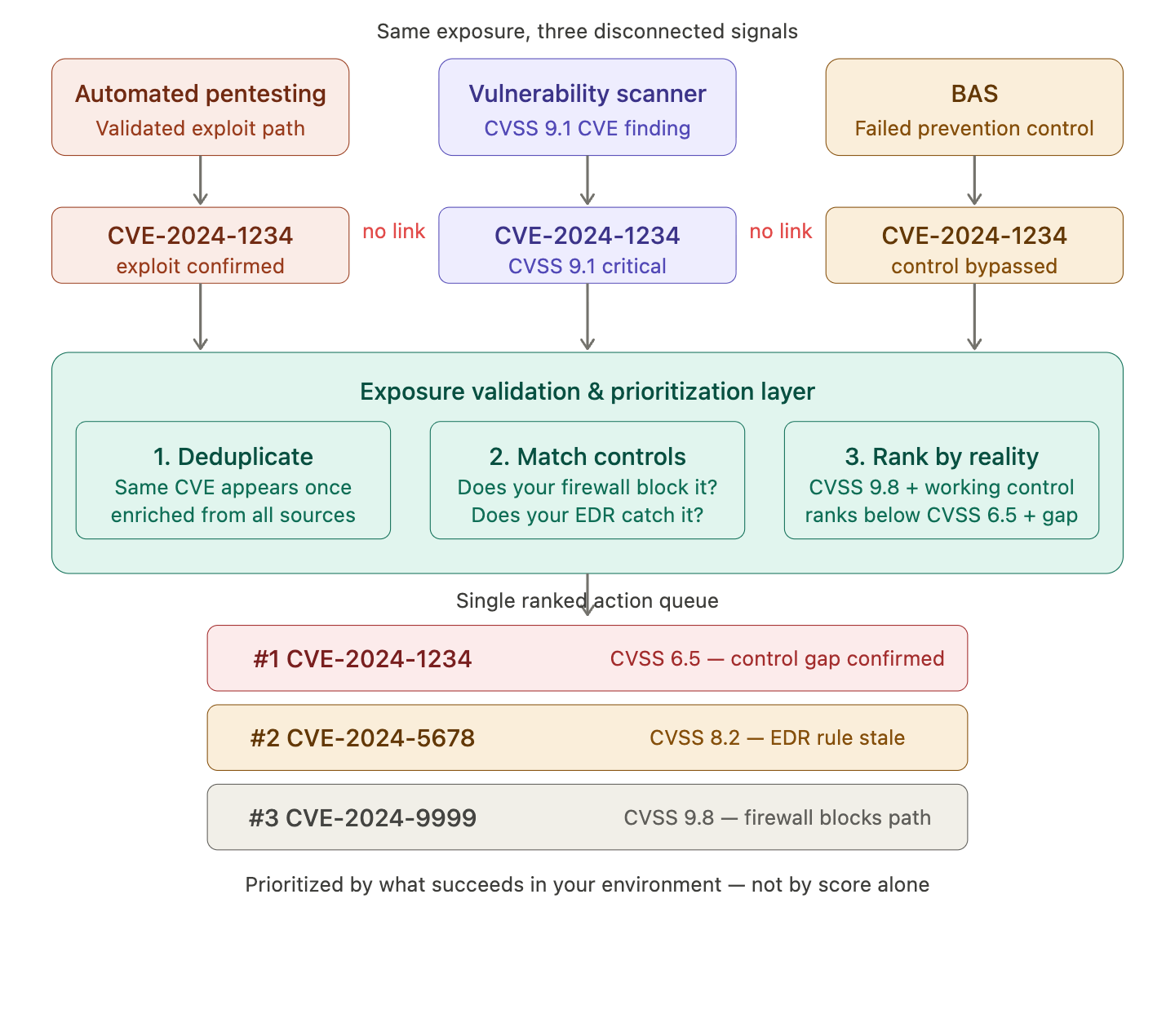 This is where CVSS breaks down.
CVSS scores severity in a vacuum. They don't know whether your firewall blocks the exploit path, whether your EDR catches the technique, or whether a compensating control is already doing its job.
A CVSS 9.8 behind a control your BAS consistently validates is less urgent than a CVSS 6.5 where the detection rule hasn't fired in three months.
The intelligence layer fixes this in three steps.
- First, it deduplicates — the same exposure found by all three tools appears once, enriched with context from each.
- Second, it validates against live control performance: a CVE your firewall reliably blocks gets deprioritized; one with a missing or misconfigured control stays at the top.
- Third, it outputs a single queue ranked by what would actually succeed in your environment today.
The result: thousands of theoretical findings collapse into a short, defensible list of confirmed exploitable exposures. The backlog shrinks because findings are deprioritized by evidence, not abandoned by exhausted teams.
The Bottom Line
The POC Cliff isn't a failure of your automated pentesting tool. It's the structural ceiling of single-surface validation sold as a complete program. The paths your tool proved are real. The problem is everything it never tested. Detection rules. Prevention controls. Cloud configurations. Identity boundaries. AI guardrails. Five of six validation surfaces, still in the dark.
The Picus Platform is built for what comes next. It converges BAS, automated pentesting, and exposure validation into one engine covering all six surfaces with purpose-built depth. The security data fabric ingests findings from Picus and your existing tools. It deduplicates them. It matches every exposure against live control performance. Three disconnected queues become one ranked action list, with vendor-specific fix guidance and automatic re-validation after every remediation.
Picus Platform runs this cycle around the clock. Autonomous AI agents respond to real-time signals. They craft adversary-informed simulations. They validate your defenses. They push prioritized findings into ServiceNow, Jira, and your SOAR playbooks. All within guardrails you define. Full traceability on every action.
Your automated pentesting tool proved the paths. Now validate the shields.


.png?width=353&height=200&name=Picus-Frost%26sullivan-Awards-preview-april22%20(1).png)

.png?width=353&height=200&name=picus-cyber-fundamentals-6surfaces-validation-preview-april8%20(2).png)
.png?width=353&height=200&name=picus-cyber-fundamentals-6surfaces-validation-preview-april8%20(1).png)