The core difference is what each one validates. Breach and attack simulation (BAS) validates whether your prevention and detection controls block and detect known threats. Automated penetration testing validates whether an attacker has an exploitable path through your environment, and how far it reaches. Both execute real techniques against real systems, so the difference is purpose and structure, not whether the attacks are real. In short, BAS tests the defender's wall, automated pentesting maps the attacker's route, and mature programs run both.
How does breach and attack simulation work?
BAS works by safely executing known attack actions, including threat-actor TTPs, malware delivery, lateral movement, data exfiltration, and command-and-control, against your prevention and detection layers to verify they block attacks, or failing that, detect and alert as expected. It reports whether your firewalls, WAFs, SEGs, IPS/IDS, DLP, EDR, and SIEM responded correctly. Because the actions are scoped and safe, it runs continuously in production and gives you a repeatable measure of control effectiveness over time.
How does automated penetration testing work?
Automated penetration testing works from a defined scope and a library of techniques, using a rule-based engine to chain those techniques together, picking the next move from the result of the last one. Each step builds on the previous: exploit a weakness, harvest credentials, move laterally, re-enumerate from the new foothold, escalate privileges. Chaining the techniques this way is what turns isolated weaknesses into a path.
The output is not a control scorecard but a proven attack path, a route from an exposed asset toward something that matters, and the choke points that hold it together. It excels at complex, multi-step paths such as Kerberoasting or privilege escalation through a misconfigured identity system.
Automated pentesting vs BAS at a glance
|
Breach and attack simulation (BAS) |
Automated penetration testing |
|
|
Question it answers |
Do my controls block and detect known threats? |
Is there an exploitable path an attacker could take? |
|
What it validates |
Control effectiveness (EDR, SIEM, firewall, WAF, DLP) |
Exploitability and paths to critical assets |
|
Structure |
Independent, atomic actions |
Chain-dependent path, each step builds on the last |
|
Coverage shape |
Breadth across the full ATT&CK matrix |
Depth along a single route |
|
A blocked step |
Never hides the next; keeps testing the rest |
Can cascade, leaving everything downstream untested |
|
Detection visibility |
Measures whether SIEM and EDR actually fire |
Runs as the attacker; cannot observe the defender |
|
Cadence |
Continuous in production |
High-frequency or on demand |
|
Output |
Control-effectiveness scorecard |
Validated exploit chain and choke points |
Is BAS the same as automated pentesting?
No, and the structural difference is the whole story. BAS runs each action independently, so a blocked procedure A never stops it from testing procedures B through Z, which is how it surfaces gaps across the full ATT&CK matrix. Automated pentesting follows a chain where each step depends on the last, so if it is blocked early, say at privilege escalation, the twenty lateral-movement techniques it could have tested downstream never run.
That dependency is a strength and a blind spot at once. It is exactly what proves a complete path exists and reveals the choke point an attacker relies on, but one blocked step near the top casts a cascading shadow over everything beneath it.
Neither is better: BAS gives you breadth across techniques, pentesting gives you depth along a path.
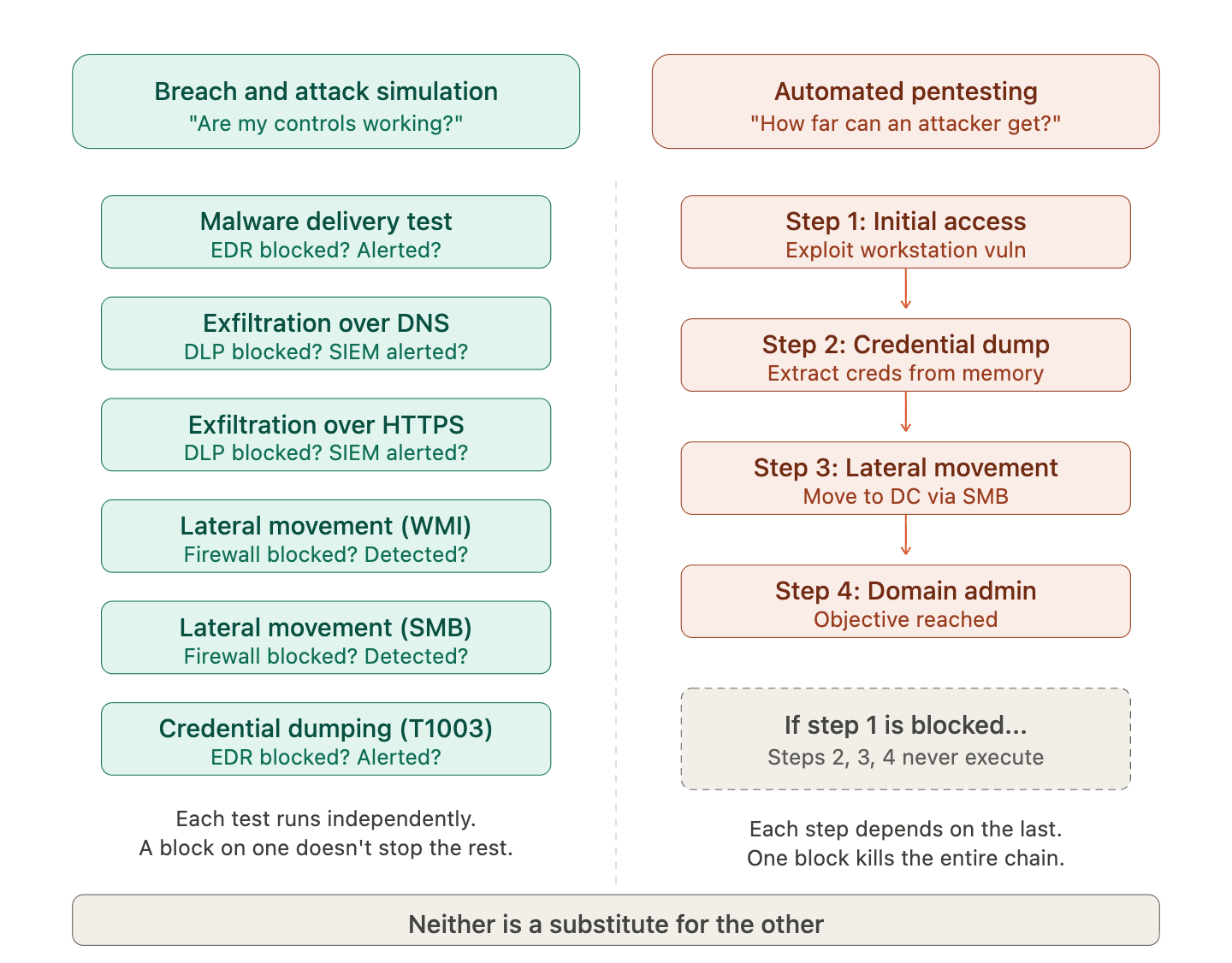
Figure 1. BAS Tests Are Independent. Automated Pentesting Is Directional.
Does automated pentesting test the same techniques as BAS?
Largely the same catalogue, used for opposite ends. Exploitation, credential dumping, lateral movement, and privilege escalation appear in both. The difference is how each one runs them. BAS runs a technique as a standalone, atomic action whose only job is to reveal whether your controls detect and block it, then moves on to the next action independently, whatever the last one did. Automated pentesting runs the same technique as one link in a chain: it dumps a credential in order to reuse it, pivot, and extend the path toward a target. Same technique, one used to measure a control, the other to build a route, which is why comparing technique lists makes the two look interchangeable when they are not.
Can automated pentesting validate your detection and response stack like BAS?
No. Automated pentesting operates as the attacker, so it has no visibility into whether your SIEM fired, your EDR caught the technique, or an alert ever reached an analyst. It proves the path; it cannot observe the defender.
A concrete real-life scenario makes the cost of this trade-off tangible. Walk through a Pass-the-Hash attack chain targeting a domain controller.
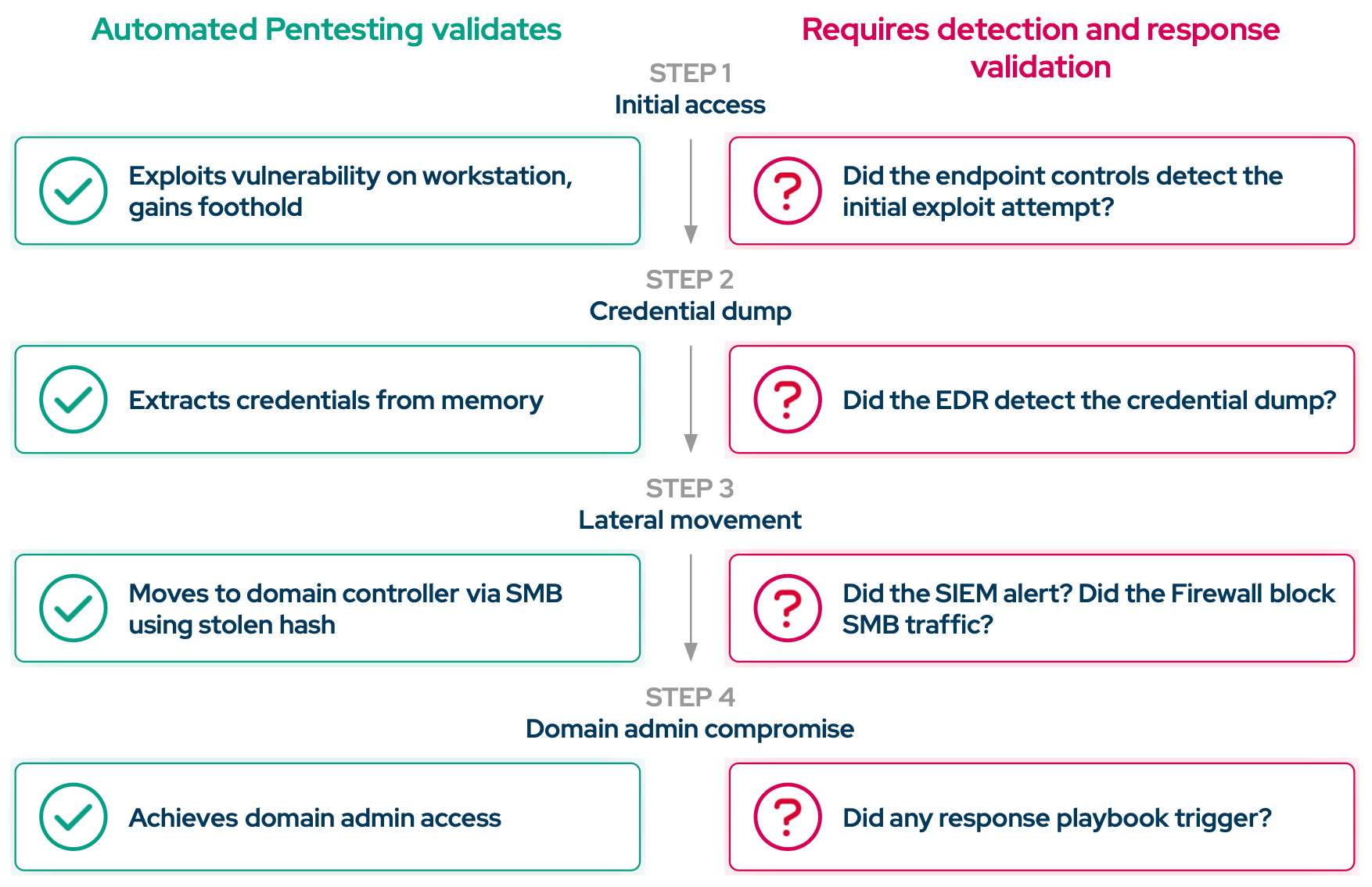
Figure 2. Real-Life Case Study of Pass-the-Hash Attack Technique in an Attack Path Leading to a Domain Admin Account Compromise
An automated pentesting tool discovers and exploits the path across four steps:
- it gains a foothold on a workstation,
- extracts credentials from memory,
- moves laterally to the domain controller via SMB using the stolen hash, and
- achieves domain admin access.
The automated pentesting tool validates every step. The attack path is proven. The report looks thorough. But four critical questions remain unanswered.
- Did the EDR on that workstation detect the credential dump?
- Did the SIEM fire an alert on the lateral movement?
- Did the firewall between network segments block the SMB traffic?
- Did any automated response playbook trigger?
The pentesting tool can't answer any of these. It's operating as the attacker, it has zero visibility into whether the defensive stack saw, caught, or responded to a single step in that chain.
Are BAS findings counted as exploitable vulnerabilities?
No. A BAS finding tells you whether your controls detected or blocked a technique. It does not tell you whether a real exposure is reachable in your environment or chainable into a working attack path. That is a control-effectiveness result, not an exploitability verdict. The reverse holds too: a validated exploit chain proves a path exists but says nothing about whether your controls saw or stopped it. You need both, one to prove the route and the other to prove the defenses, before you can make a defensible decision about the exposure.
Does an automated pentest with no findings mean your environment is secure?
No. A clean pentest means only that no exploitable path was found within scope, where an exploit could safely fire. The restricted, air-gapped, and business-critical assets a live exploit can never touch, and the CVEs with no working exploit, stay unproven either way.
Watch the pattern over successive runs, too. The first pentest is a revelation, but by the third or fourth, new findings dry up and the tool mostly confirms what it already found. That is not growing security, it is the structural ceiling of a tool working a fixed scope against a deterministic surface. Declining findings are the illusion of coverage, not coverage itself.
How much of MITRE ATT&CK does automated pentesting actually cover?
Less than tactic counts suggest, and two layers explain it. Tactic concentration comes first: automated pentesting was built to find the path of least resistance, so its coverage clusters around the getting-in-and-moving tactics, while defense evasion is barely tested, persistence is intentionally avoided under a leave-no-trace mandate, and exfiltration and impact fall outside scope.
Procedure depth is the second. A single technique can have dozens or hundreds of procedures, and automated pentesting typically implements a handful. If your EDR blocks those two or three, the technique looks defended, even though a slightly different procedure it never tried would bypass the same EDR. BAS platforms maintain libraries of thousands of procedures across the full matrix and test each independently.
Can automated pentesting replace BAS?
No. Replacing BAS with automated pentesting is a coverage regression disguised as simplification, because pentesting cannot confirm whether your controls saw or stopped anyone walking the path it proved.
Production data makes the gap concrete. According to the Picus Blue Report 2025, only 14% of logged adversarial activity generates an alert, data-exfiltration prevention succeeds just 3% of the time, and credential-based access succeeds in 98% of tested environments. With credential access succeeding that often, 22% of organizations have an open, unvalidated path straight to domain admin.
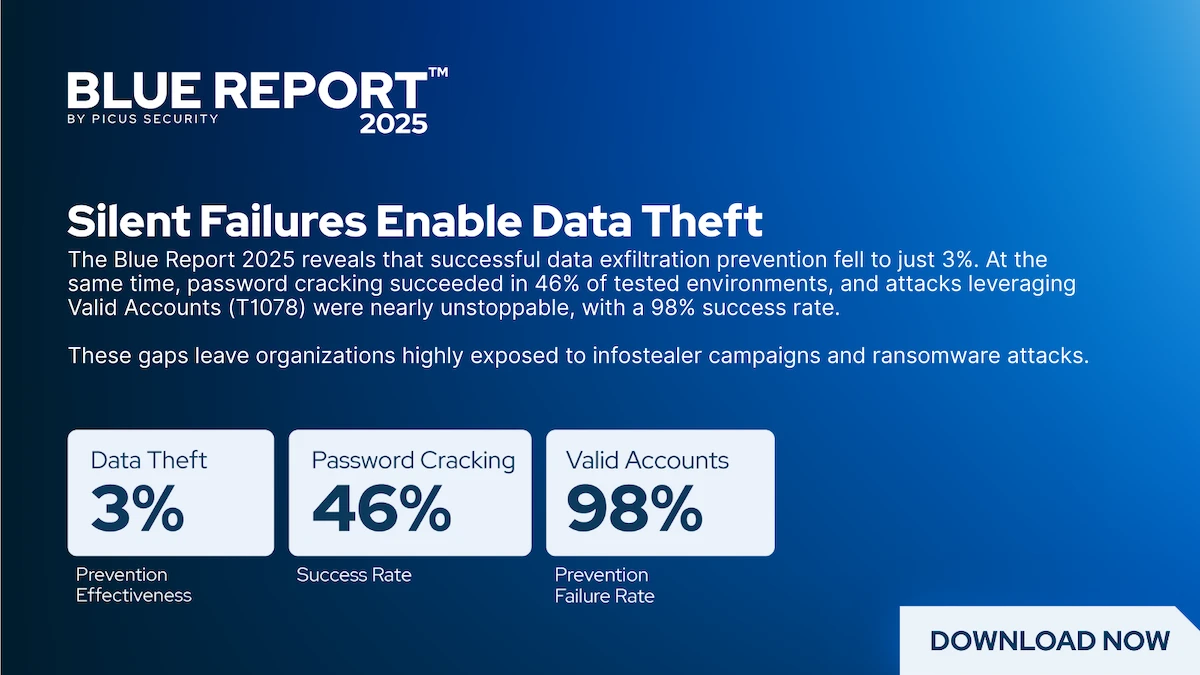
Figure 3. Picus Blue Report 2025 Statistics based on the BAS and Automated Pentesting Usage
BAS shows you why an attacker is not being caught; pentesting shows you where they end up once they slip past. That is why Gartner merged BAS, automated pentesting, and red teaming under Adversarial Exposure Validation (AEV) as complements, not substitutes.
How do BAS and automated pentesting work together in a CTEM program?
They meet in the validation phase of Continuous Threat Exposure Management (CTEM). BAS validates whether controls block and detect, automated pentesting validates whether an exposure is exploitable, and an exposure-prioritization layer fuses both into one ranked queue.
Picture a critical RCE CVE on an internal server. Automated pentesting lands the exploit and escalates to domain admin, proving the route and flagging an over-privileged service account as the choke point, while BAS tests the same behaviours independently and finds the IPS blocks the exploit, the EDR catches two of four credential-dumping variants, and the SIEM rule for lateral movement stays silent. Alone, each is half a picture. Together, a confirmed, exploitable, undetected path lands at the top of the queue, above a "critical" CVE a validated control already blocks.
Which should you deploy first, BAS or automated pentesting?
Start with whichever gap is louder. If you cannot prove your controls work, start with BAS. If you do not know what an attacker could actually reach, start with automated pentesting. Most mature programs end up running both, BAS for continuous, repeatable proof that prevention and detection work at procedure depth, pentesting to map paths to critical assets and validate exposure the moment a new CVE lands.
Does AI-powered or autonomous pentesting remove the need for BAS?
No. Autonomy makes a pentest faster and sharper, not wider. An agent that reasons in real time and scopes itself from a signal, such as a new CVE, changes how the engagement runs, but it still validates the one thing a pentest always has: whether an attacker has an exploitable path. It still operates as the attacker, so it still cannot see whether your SIEM fired or your EDR blocked a step, and it still cannot safely reach the business-critical, restricted, and air-gapped assets a live exploit has to avoid.
Confirming that your controls actually detect and block, and getting a verdict on the assets and CVEs no live exploit can touch, remain separate jobs that autonomy does not absorb. That is why even the strongest autonomous pentest runs alongside control validation, not in place of it.
Can a single converged platform deliver both?
Yes, and that is the model worth building toward. When pentesting and BAS run on the same platform, every finding is scored against the others automatically, instead of being reconciled by hand across two tools and two teams. Finding the exposure was never the hard part; proving the right call, patch, mitigate, monitor, or accept, is the gap a converged platform closes.
Enter Picus Autonomous Penetration Testing
Picus Autonomous Penetration Testing chains real exploits across your network, endpoints, and Active Directory to prove which exposures are genuinely exploitable and how far an attacker could reach, ordered by blast radius rather than a severity score, run continuously and safely with guardrails you control, so the picture stays current.
But live exploitation can only run where an exploit exists and can fire safely.
- Picus Exposure Validation covers the rest: for business-critical, restricted, and air-gapped assets, for CVEs with no working exploit, and on day one of disclosure, it maps a CVE to the techniques its exploitation requires and validates them against your real controls, without firing a live exploit.
- And Picus Breach and Attack Simulation continuously tests what your EDR, SIEM, firewall, WAF, and DLP actually block and detect against the newest attacker techniques, then supplies the fixes and re-validates that the gap closed.
Together they run as one loop across attack surfaces, exposures, and controls: validate, decide, fix, re-validate. Findings from all three converge into a single exploitability verdict, matched against your live control performance, so a confirmed, exploitable, undetected path rises to the top while a "critical" CVE a validated control already blocks drops down.
The outcomes track the KPIs Gartner tells programs to measure:
- 2x control effectiveness within three months,
- an 89% reduction in MTTR on emerging threats, and
- 92% fewer SLA violations on high and critical vulnerabilities.
See not just where an attacker could get in, but whether your defenses would ever catch them. Get your free demo and validate your full exposure on one platform.


.png?width=353&height=200&name=picus-APT-cost-july21%20(1).png)
.png?width=353&height=200&name=picus-APT-vs-Red-Teaming-july20%20(1).png)