Automated pentesting is the live-execution engine of CTEM’s Validation stage. It launches real attacks against reachable assets and chains them into attack paths, from exploitation and credential theft to lateral movement and privilege escalation. This proves which prioritized exposures attackers can actually reach and compromise.
However, automated pentesting typically covers only the 10% to 15% of an environment where live exploits can be executed safely. It provides limited or no validation for business-critical, restricted, or air-gapped systems, CVEs without working exploits, and day-one disclosures. That is why adversarial exposure validation, or AEV, combines automated pentesting with breach and attack simulation. A complete CTEM program also adds exposure validation to cover the remaining gaps and run the entire Validation stage as one continuous loop.
What is continuous threat exposure management (CTEM)?
Continuous Threat Exposure Management (CTEM) is a continuous program for finding, prioritizing, and reducing the exposure that matters, on an ongoing basis rather than in an annual scramble. It is not a product but a five-stage cycle Gartner's framework defines as:
- Scoping: decide which parts of the business and attack surface matter.
- Discovery: inventory assets, vulnerabilities, and exposures across that scope.
- Prioritization: rank what to deal with first, using threat intelligence and attacker context.
- Validation: prove whether prioritized exposures are actually exploitable and whether controls stop them, removing nonexploitable issues from the queue.
- Mobilization: route the work to the right owners and fix it.
Gartner’s research treats adversarial exposure validation as a mandatory capability in CTEM. That category deserves a definition of its own before we place automated pentesting inside it.
How does adversarial exposure validation (AEV) relate to CTEM?
Adversarial Exposure Validation (AEV) is the engine that operationalizes CTEM's Validation stage. It is not a rival framework to CTEM but the discipline that makes that one stage actually run, turning "validate" from a box on a diagram into consistent, continuous, and automated evidence of whether an attack is feasible in your environment.
AEV confirms how attack techniques would exploit your exposures and circumvent your prevention and detection controls, by running attack scenarios and measuring the outcome. So rather than assuming a scanner-flagged vulnerability is dangerous, it proves whether the exploit would succeed against your controls, then resolves each exposure into a clear, evidence-backed decision.
Which validation techniques does Gartner’s AEV converge?
As Gartner frames it, AEV converges two validation techniques, each answering a different question about an exposure:
- Automated (or autonomous) penetration testing: is this exposure exploitable on a reachable asset? Live execution fires real attacks and chains them into attack paths, the strongest proof there is on the slice it can safely reach.
- Breach and attack simulation: do your controls actually detect and block the techniques behind each exposure? Continuous control testing keeps every decision defensible as the environment changes.
Between them these two cover the reachable slice and the controls, but not the assets a live exploit can never touch. Closing that gap takes a third technique, exposure validation, which the following sections come to.
So the map is: CTEM is the program, Validation is the stage, AEV is the discipline that runs the stage, and automated pentesting is one of its two techniques.
Where does automated pentesting fit in a CTEM program?
Automated pentesting is the live-execution technique inside AEV, and it feeds the CTEM stages on either side of Validation. Upstream, it takes the severity-ranked list Prioritization produces and proves which of those exposures are genuinely exploitable, so the program keys on actively exploitable exposures and attack paths rather than scores. Downstream, Mobilization receives evidence-backed findings with proof of compromise attached, so remediation starts from certainty rather than assumption.
What it delivers is the strongest evidence there is on the assets it can reach: a real exploit chain, executed safely in your environment, producing proof of compromise ordered by blast radius rather than another ranked list. That evidence removes nonexploitable issues from the analyst queue, sends remediation effort where it changes the outcome, and, when a fix ships, re-validates the exact path to confirm the gap is closed, which is what keeps the Validation stage honest over time.
Gartner is explicit that the validation step needs a mix of techniques, penetration testing, breach and attack simulation, and attack path mapping, so automated pentesting is one input to the stage, not the whole of it.
What are the limitations of automated pentesting in a CTEM program?
The core limitation of automated pentesting in CTEM is reach: it stops at the edge of what a live exploit can safely fire, which in a typical enterprise is around 10 to 15% of the exposure picture. Live exploitation can only run where it is safe to run.
- Business-critical, restricted, and air-gapped systems are off-limits;
- CVEs with no working exploit cannot be executed at all; and
- on day one of disclosure, no exploit exists yet.
A Validation stage built only on live execution goes silent on the other 85 to 90%. This is also the gap AEV as commonly framed, breach and attack simulation plus automated or autonomous pentesting, inherits.
How to solve the limitations of automated pentesting in the CTEM validation step?
Truly validating the whole environment requires a third technique: control-aware inference, which maps a CVE to the techniques its exploitation requires and validates those against your actual controls, no live exploit fired. That is what extends AEV from the reachable slice to the entire estate, and it is the heart of a complete strategy.
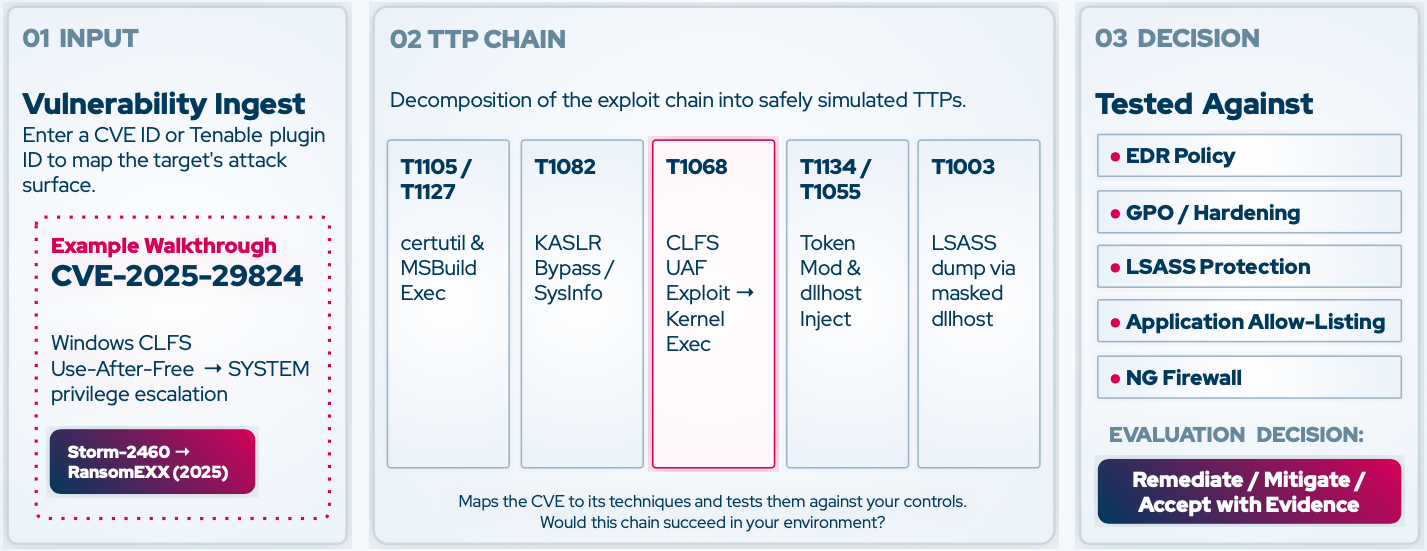
Figure 1. Exposure Validation via TTP-Chaining
For more information, read the following article.
How do you build a complete exposure validation strategy beyond automated pentesting?
A complete strategy separates two purpose-built layers and integrates them.
- Assessment (the Exposure Assessment Platform layer) handles Discovery and breadth: it inventories exposures across the estate.
- Validation (the Exposure Validation layer) proves which of those exposures are genuinely exploitable and ranks them by validated risk. Assessment prioritizes, validation proves, and the resulting exploitability evidence re-ranks the backlog and keeps it current through re-validation.
Inside the validation layer, three validation techniques cover the full stage between them:
- automated pentesting on the reachable slice,
- exposure validation everywhere a live exploit cannot go, and
- breach and attack simulation on the controls in between.
Run in isolation, each answers a fragment. Run together, they turn the CTEM Validation stage into a continuous loop: validate, decide, fix, re-validate.
When should you use automated pentesting vs BAS vs exposure validation?
Use this to match the validation method to the need. The pattern is deliberate: no single column wins every row.
|
Your need |
Automated pentesting |
Breach and attack simulation |
Exposure validation |
|
Prove exploitability on reachable assets |
Best fit (live exploit chain) |
Partial (tests techniques, not the full chain) |
Yes (control inference) |
|
Get an answer for restricted, air-gapped, or business-critical assets |
Cannot safely reach |
Complementary |
Best fit (no live exploit) |
|
Validate a CVE with no working exploit |
Cannot execute |
Partial |
Best fit |
|
Get an answer on day one of disclosure |
Not until an exploit exists |
Partial |
Best fit, immediately |
|
Prove what your EDR, SIEM, and firewall block and detect |
Not its job |
Best fit |
Feeds it |
|
Keep the decision defensible as the environment changes |
Point-in-time unless re-run frequently |
Best fit (continuous) |
Yes |
The takeaway is the strategy itself: the Validation stage of CTEM is not a single-tool decision. It needs live exploitation where that is safe, control-aware inference everywhere else, and continuous control validation to keep decisions defensible, all working as one loop.
How Picus runs the entire CTEM Validation stage as one loop
Finding the exposure was never the hard part. Proving the right call, Patch, Mitigate, Monitor, or Accept, is the gap, and in a CTEM program that gap is the entire Validation stage.
Picus is built to own it. Point tools each answer a fragment: scan, or simulate, or pentest. Picus converges all three validation techniques into one continuous loop.
- Picus Autonomous Penetration Testing fires real exploit chains against reachable assets for the strongest proof there is.
- Picus Exposure Validation covers the 85 to 90% that live exploitation cannot safely touch, proving exploitability without a live exploit, including on day one of disclosure.
- Picus Breach and Attack Simulation keeps every decision defensible as the environment changes. That loop, not any single tool inside it, is the moat.
It fits CTEM by design.
Picus does not duplicate Discovery: it is open by design, ingesting assets, vulnerabilities, and business context from scanners like Tenable, Wiz, and Snyk, plus your existing pentest reports, then re-ranking the backlog by validated exploitability for the Prioritization stage. For Mobilization, it pushes findings into Jira or ServiceNow with evidence attached across 75+ integrations, and closes a finding only when re-validation proves the chain is broken.
On recognition, Picus holds a 95% recommendation rate, 4.9 on G2, and 4.8 on Gartner Peer Insights as a 2025 Customers' Choice, plus the #1 Leader spot on Frost Radar for Automated Security Validation.
The outcomes follow:
- control effectiveness roughly doubling within three months,
- an 89% reduction in MTTR, and
- 92% fewer SLA violations on high and critical vulnerabilities.
Automated pentesting is a necessary part of CTEM's Validation stage. Picus is how you run the whole stage, across the whole environment, as one loop. Get your free demo to see the Validation stage run end to end.