
What Is the GLBA Safeguards Rule?
The GLBA Safeguards Rule (16 CFR Part 314) is the U.S. federal regulation that requires financial institutions to protect their customers' personal financial information. It is the data-security component of the Gramm-Leach-Bliley Act (GLBA) and applies to every covered financial institution.
The rule requires each institution to develop, implement, and maintain a comprehensive written information security program built on administrative, technical, and physical safeguards scaled to the institution's size, complexity, and the sensitivity of the customer information it handles.
GLBA has two data rules that are easy to confuse. The Privacy Rule governs how institutions disclose their information-sharing practices; the Safeguards Rule governs how they actually protect that data. For security and compliance leaders in banking, financial services, and insurance (BFSI), the Safeguards Rule is the operative obligation - it defines what they must build, maintain, and prove.
What Did the 2023 Update to the Safeguards Rule for GLBA Compliance Change?
The 2023 update replaced the Safeguards Rule's flexible, principles-based approach with prescriptive, technical requirements. For nearly two decades, the rule told institutions to maintain a security program but left the specific controls to their discretion. The FTC's 2021 amendment ended that - and most of its provisions became enforceable on 9 June 2023, spelling out exactly what a security program must include:
- A written risk assessment identifying internal and external threats to customer information
- Encryption of customer information in transit and at rest
- Multi-factor authentication for anyone accessing customer information
- Secure development practices for in-house and externally developed applications
- A written incident response plan
- Regular testing of safeguard effectiveness - through penetration testing and vulnerability assessments, or continuous monitoring
That last requirement carries the most operational weight: institutions must prove their safeguards actually work on an ongoing basis, not just stand them up once.
A separate 2023 amendment added a breach-notification duty, effective 13 May 2024. Covered institutions must now notify the FTC of any security event involving the unauthorized acquisition of unencrypted customer information affecting 500 or more consumers - as soon as possible, and no later than 30 days after discovery.
Who Must Comply With GLBA, and Which Rule Applies?
GLBA applies to far more than banks, and the data-security rule an institution must follow depends on its regulator. This is a distinction that matters for any BFSI institution. Four regimes implement the same statute:
- the FTC Safeguards Rule (16 CFR Part 314),
- the federal banking agencies' Interagency Guidelines,
- SEC Regulation S-P, and
- state insurance laws based on the NAIC model.
All four trace back to GLBA Section 501(b).
What businesses are covered by GLBA?
GLBA defines a "financial institution" far more broadly than a bank. Covered businesses include mortgage lenders and brokers, payday and consumer lenders, auto dealers that arrange financing, tax preparers, finance companies, fintechs, investment firms, and higher-education institutions that handle Title IV funds. If a business is significantly engaged in a financial activity, GLBA's data-security obligations apply. However, which rule applies depends on the regulator.
Which GLBA rule applies to non-bank financial institutions?
Non-bank financial institutions are governed by the FTC Safeguards Rule (16 CFR Part 314), the most prescriptive of the GLBA data-security regimes and the focus of this guide.
Does the FTC Safeguards Rule apply to banks and credit unions?
No. Banks, credit unions, and other depository institutions are not subject to the FTC Safeguards Rule. They are governed by the Interagency Guidelines Establishing Information Security Standards, issued under GLBA Section 501(b) by the OCC, FDIC, Federal Reserve, and NCUA. The underlying objectives are the same; the implementing text, examination procedures, and enforcement mechanisms differ.
Which GLBA rule applies to broker-dealers and investment advisers?
SEC-regulated broker-dealers, investment advisers, and investment companies comply with Regulation S-P, also adopted under GLBA authority. The SEC's 2024 amendments to Regulation S-P added an incident-response program requirement and customer breach-notification requirements, with compliance for larger entities beginning in December 2025.
Which GLBA rule applies to insurers?
Insurers are supervised by state insurance regulators, most of which have adopted data-security laws modeled on the NAIC Insurance Data Security Model Law - itself derived from the New York DFS cybersecurity regulation.
Are the GLBA data-security requirements the same across all regulators?
The specific rule text, examinations, and enforcement mechanisms differ, but all of these regimes trace back to the same GLBA Section 501(b) objectives: securing the confidentiality, integrity, and availability of customer information, and protecting against anticipated threats. Because the underlying obligation is identical, the validation approach this guide describes applies across the full BFSI landscape, even where the specific rule text varies.
A note on scope and currency (June 2026)
This guide is built on the FTC Safeguards Rule, which is in force in its amended form; no later amendment has displaced the requirements described here. Where an institution is a bank, a broker-dealer, or an insurer, the parallel obligations under the Interagency Guidelines, Regulation S-P, or state insurance law should be read alongside it. Penalty figures and inflation-adjusted civil penalty amounts should be confirmed against current FTC and statutory sources before relying on them.
Why does GLBA require proof that security controls work, not just documentation?
The GLBA Safeguards Rule requires financial institutions to prove their security controls actually work, not just document that controls exist. Two provisions make this explicit. Section 314.4(d) requires institutions to regularly test or monitor whether their safeguards detect and withstand attacks. Section 314.4(g) requires them to adjust the program based on what that testing reveals.
Documentation, deployed tools, and point-in-time assessments prove a control was put in place. They do not prove it still works. Detection rules decay, access permissions drift, network segmentation weakens after changes, and new attack techniques emerge that existing defenses were never tested against. When effectiveness is assumed instead of proven, GLBA compliance breaks down at the worst possible moment: when an examiner, auditor, or attacker tests it.
This is the gap Picus Platform closes. By validating security controls in real time against real adversary behavior, Picus Platform turns detection and prevention outcomes into operational, audit-ready evidence. Financial institutions can meet the Safeguards Rule's effectiveness requirements with proof, not assumption.
How Picus Supports Key GLBA Safeguards Rule Requirements for Financial Institutions
The following sections map specific Safeguards Rule requirements (16 CFR Part 314) to the Picus Platform's validation capabilities. Each section identifies the regulatory requirement, explains what it demands from financial institutions, and demonstrates how continuous security validation supports compliance with defensible, audit-ready evidence.
- Section 314.4(d): Testing and Monitoring the Effectiveness of Safeguards
- Section 314.4(b): Risk Assessment
- Section 314.4(c)(1) & (c)(5): Access Controls and Multi-Factor Authentication
- Section 314.4(c)(4) & (c)(8): Secure Development, Monitoring, and Logging
- Section 314.4(h) and (j): Incident Response and Breach Notification
- Section 314.4(g): Evaluating and Adjusting the Information Security Program
- Section 314.4(i): Qualified Individual and Board Reporting
- Enforcement, Penalties, and the Parallel BFSI Regimes
GLBA Safeguards Rule Section 314.4(d): Testing and Monitoring the Effectiveness of Safeguards
|
"Regularly test or otherwise monitor the effectiveness of the safeguards' key controls, systems, and procedures, including those to detect actual and attempted attacks on, or intrusions into, information systems. … For information systems, the monitoring and testing shall include continuous monitoring or periodic penetration testing and vulnerability assessments." (16 CFR 314.4(d)) |
Explanation of the provision
This is the most consequential provision in the Safeguards Rule for security validation, and it is unusually specific about method. Section 314.4(d) does not merely ask institutions to have safeguards; it requires them to prove those safeguards work - specifically including the controls meant to detect actual and attempted attacks. The rule then names the acceptable methods: continuous monitoring, or, effective continuous monitoring, annual penetration testing plus vulnerability assessments at least every six months and whenever there are material changes to operations or business arrangements.
In other words, the Safeguards Rule makes testing the effectiveness of detection and prevention controls a binding obligation, and it treats continuous monitoring as the preferred path. Few regulations align so precisely with what Breach and Attack Simulation and Autonomous Penetration Testing were built to do.
How does Picus support the GLBA Safeguards Rule Section 314.4(d)?
GLBA Safeguards Rule Section 314.4(d) asks a hard question: can the institution prove its key controls actually work, and keep proving it as the environment changes? A once-a-year penetration test answers that for a day.
The Picus Platform answers it continuously, from three angles.
- First, through Breach and Attack Simulation (BAS) capability, the Picus Platform tests your integrated prevention and detection stack (EDR, SIEM, firewall, WAFs, IPS/IDS, SEG, segmentation) against the newest attacker techniques and measures what is blocked, what is detected, and what slips through; where a control falls short, the platform provides vendor-specific fixes and re-validates that the gap is closed.
- Second, Picus Autonomous Penetration Testing chains real exposures across hosts, identities, and misconfigurations to show which vulnerabilities are actually exploitable in the institution's environment and what an attacker could reach by chaining them – mapping the routes toward crown jewels such as core banking and payment systems, so teams prioritize remediation by real exploitation risk, not severity scores.
- Third, across the wider backlog the platform turns thousands of findings into a defensible decision for each one, validated against the institution's own environment and business context, so teams concentrate on what truly threatens banking, payments, and customer-facing systems and can safely deprioritize the theoretical noise
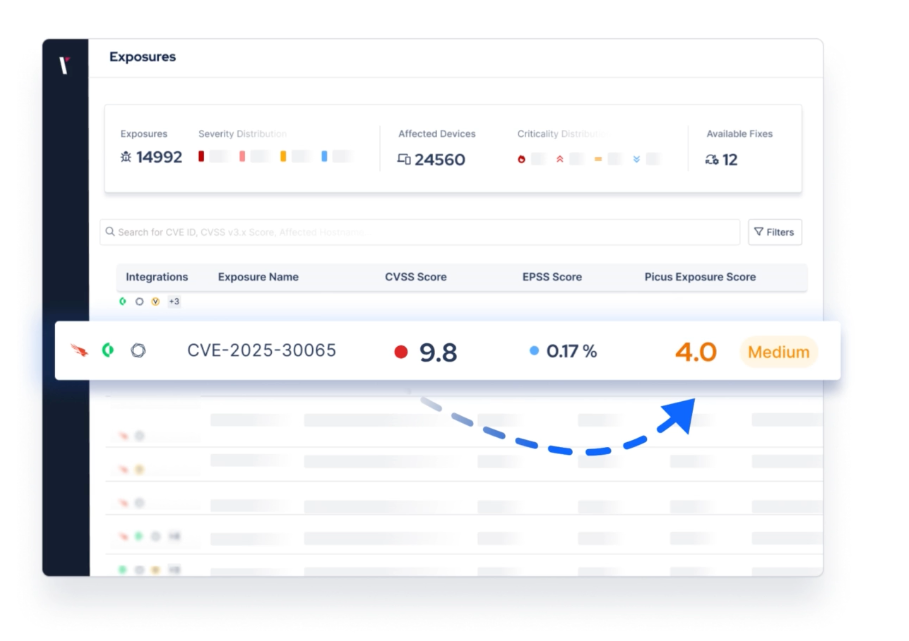
Figure 1. Picus Platform prioritizes vulnerabilities and exposures based your own environment and business context
Together these run as one loop (validate, decide, fix, re-validate) turning §314.4(d) from a calendar obligation into living, examiner-ready evidence.
When an examiner or the board asks the institution to demonstrate effectiveness, the Picus Platform produces time-stamped results: what was tested, what held, what was exploitable, and how each exposure was resolved.
GLBA Safeguards Rule Section 314.4(b): Risk Assessment
|
"Base your information security program on a risk assessment that identifies reasonably foreseeable internal and external risks to the security, confidentiality, and integrity of customer information … and assesses the sufficiency of any safeguards in place to control these risks." (16 CFR 314.4(b)) |
Explanation of the provision
Section 314.4(b) requires the entire information security program to rest on a written risk assessment that identifies foreseeable threats, evaluates the confidentiality, integrity, and availability of information systems, and (critically) assesses whether the safeguards already in place are sufficient to control those risks. The rule requires criteria for evaluating and categorizing risks and periodic reassessment as conditions change.
How Picus supports this requirement
A risk assessment is only as reliable as its assumptions. Theoretical severity ratings and configuration reviews tell an institution what could go wrong in principle; they do not tell it what is actually exploitable in its specific environment, or whether the safeguards it already operates are genuinely sufficient – the precise question Section 314.4(b) poses.
Picus Platform grounds the risk assessment in validated reality. By continuously testing whether identified risks are exploitable against live controls, Picus lets institutions assess the sufficiency of existing safeguards with evidence rather than estimation, and assign risk scores using the Picus Score based on validated exploitability rather than static severity alone. This produces a risk assessment that reflects operational reality, satisfies the rule's requirement to evaluate the adequacy of existing controls, and gives the Qualified Individual a defensible basis for deciding which risks are mitigated and which are accepted.
GLBA Safeguards Rule Section 314.4(c)(1) & (c)(5): Access Controls and Multi-Factor Authentication
|
"Implementing and periodically reviewing access controls … to authenticate and permit access only to authorized users … and limit authorized users' access only to customer information that they need …" (16 CFR 314.4(c)(1)) "Implement multi-factor authentication for any individual accessing any information system, unless your Qualified Individual has approved in writing the use of reasonably equivalent or more secure access controls." (16 CFR 314.4(c)(5)) |
Explanation of the provision
Section 314.4(c)(1) requires technical and, as appropriate, physical access controls enforcing least privilege, and Section 314.4(c)(5) mandates multi-factor authentication for any individual accessing any information system. These are among the most frequently exploited weaknesses in BFSI breaches – not because the controls are absent, but because they drift, are misconfigured, or are quietly bypassable.
How does Picus support GLBA Safeguards Rule Section 314.4(c)(1) & (c)(5)?
How Picus supports this requirement §314.4(c)(1) and (c)(5) require restricting access to authorized users and enforcing MFA. Configuring those controls is one thing; proving they stop a real attacker is another. Picus tests them the way an adversary would.
Through autonomous pentesting capability, the Picus Platform actively attempts credential dumping, privilege escalation, and the abuse of IAM and Active Directory configurations against the institution's live environment, and shows whether access restrictions and multi-factor authentication actually prevent unauthorized access, or whether they can be bypassed.
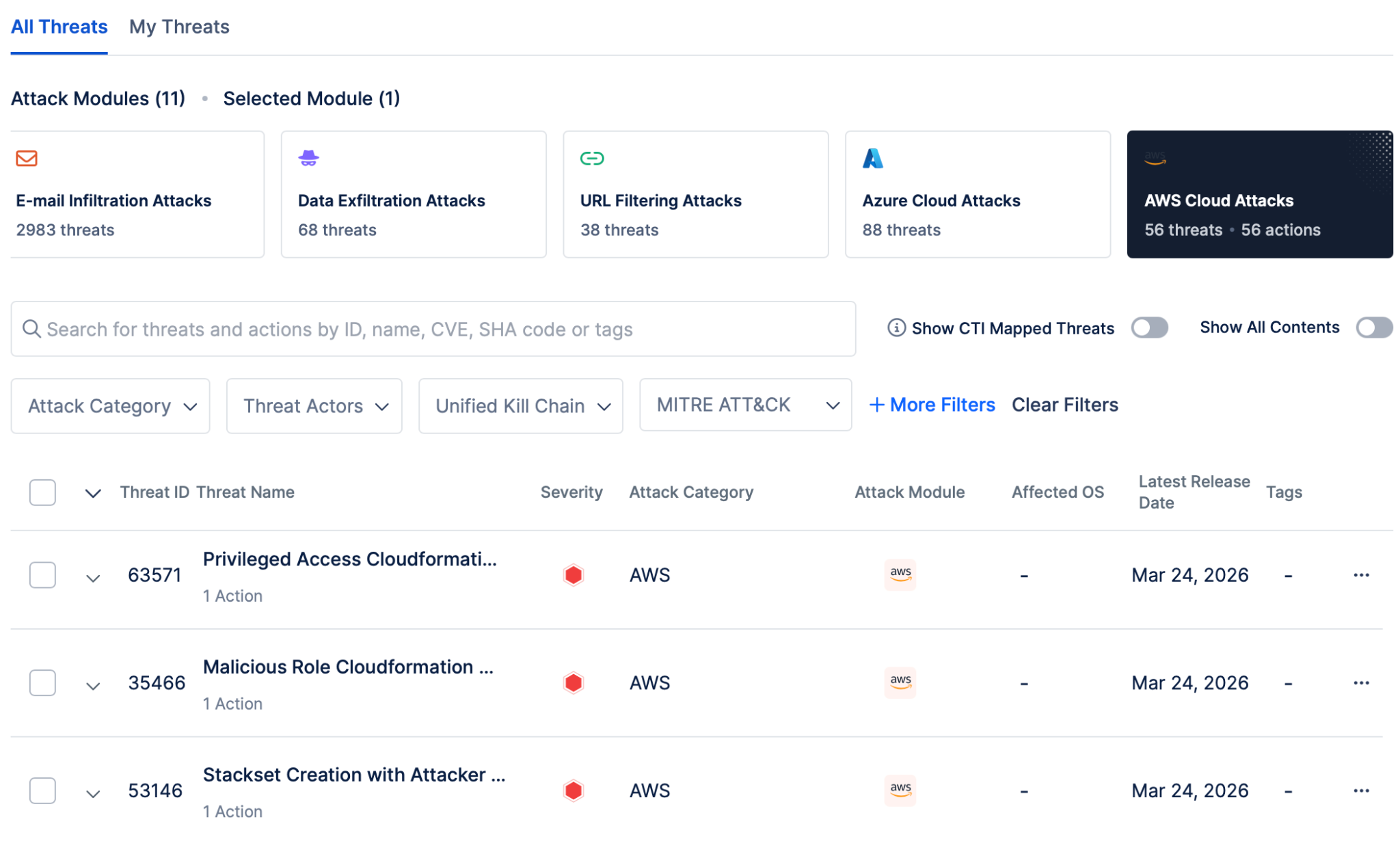
Figure 1. Picus Platform can simulate cloud-based attacks for Azure, AWS, and GCP.
In the cloud, breach and attack simulation capability extends this coverage. Picus runs discrete attacker actions across AWS, Azure, and GCP, for example IAM role access escalation or Malicious Role Cloudformation Update. Each action is mapped to MITRE ATT&CK, and Picus measures whether the institution's controls detect and prevent it.
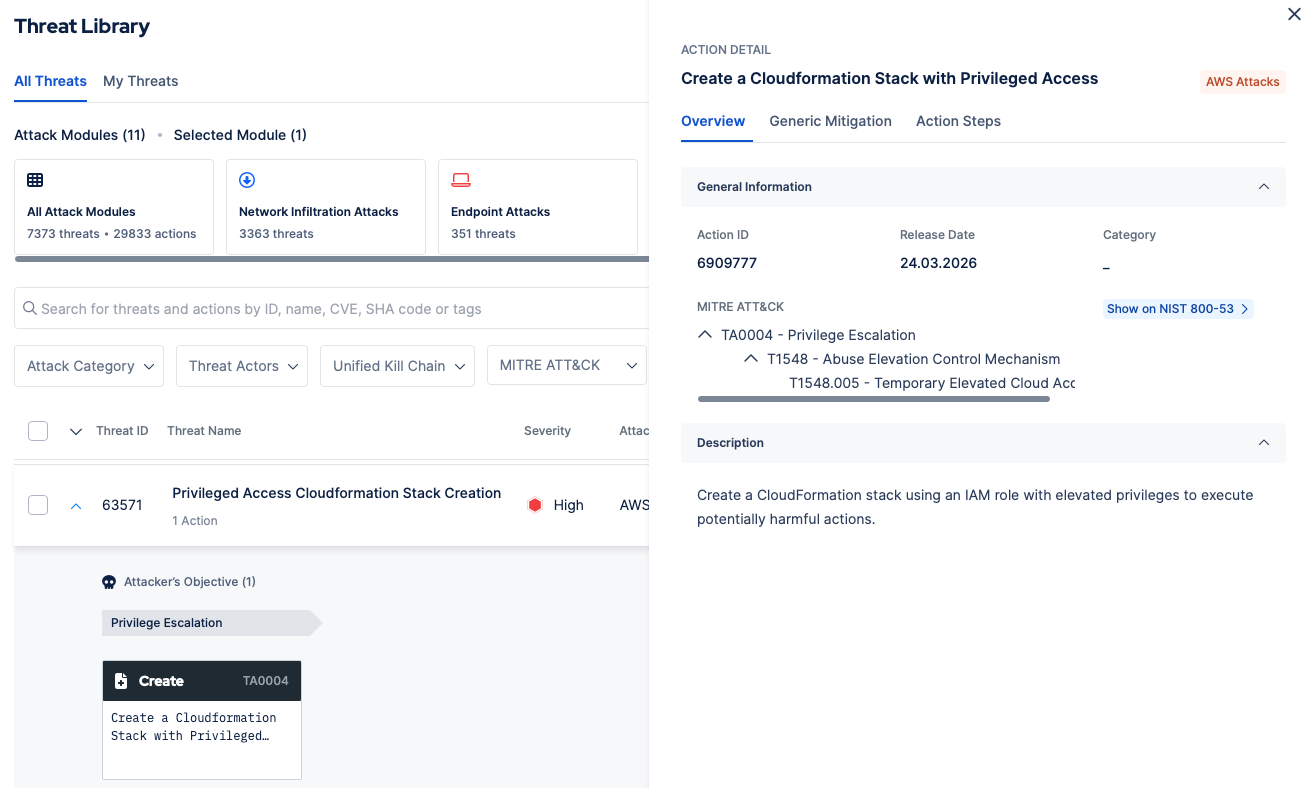
Figure 2. Cloud-based attack TTPs with privileged access
The result is evidence of whether the controls required by (c)(1) and (c)(5) hold under real-world conditions. It pinpoints exactly where authentication or privilege enforcement breaks down, with vendor-specific guidance to close each gap and re-validation to prove it stayed closed.
Because this testing runs continuously, it also supports the rule's call to periodically review access controls, catching drift and misconfiguration between formal reviews. In this way, Picus validates that the access controls and MFA an institution implements under (c)(1) and (c)(5) actually hold under attack, complementing the deployment and entitlement reviews the rule also requires rather than replacing them.
GLBA Safeguards Rule Section 314.4(c)(4) & (c)(8): Secure Development, Monitoring, and Logging
|
"Adopt secure development practices for in-house developed applications … and procedures for evaluating, assessing, or testing the security of externally developed applications …" (16 CFR 314.4(c)(4)) Institutions must also implement procedures to monitor and log the activity of authorized users and detect unauthorized access to, or tampering with, customer information. (16 CFR 314.4(c)(8)) |
Explanation of the provision
Section 314.4(c)(4) requires secure development practices for in-house applications and security testing of externally developed applications that touch customer information, while Section 314.4(c)(8) requires institutions to monitor and log authorized-user activity and detect unauthorized access or tampering. Together, they cover the application-and-detection surface where many real intrusions play out.
How does Picus support GLBA Safeguards Rule Section 314.4(c)(4) & (c)(8)?
Picus provides empirical validation across this attack surface rather than relying on architecture diagrams or one-off reports. The Picus Platform safely executes real attack techniques, including exploitation attempts, lateral movement, command-and-control communication, and data exfiltration, against your network, email, endpoint, web application, and data-layer controls. This verifies whether the controls protecting application and transaction systems actually hold, and whether network segmentation prevents unauthorized east-west movement between trust zones.
For 314.4(c)(4), this means Picus tests whether the applications that handle customer information, and the controls around them, withstand the techniques attackers actually use. It also operationalizes findings from existing application-security tools, turning them into validated, prioritized actions. Picus complements the institution's secure-development and application-testing program; it does not replace the secure-coding practices the rule also requires.
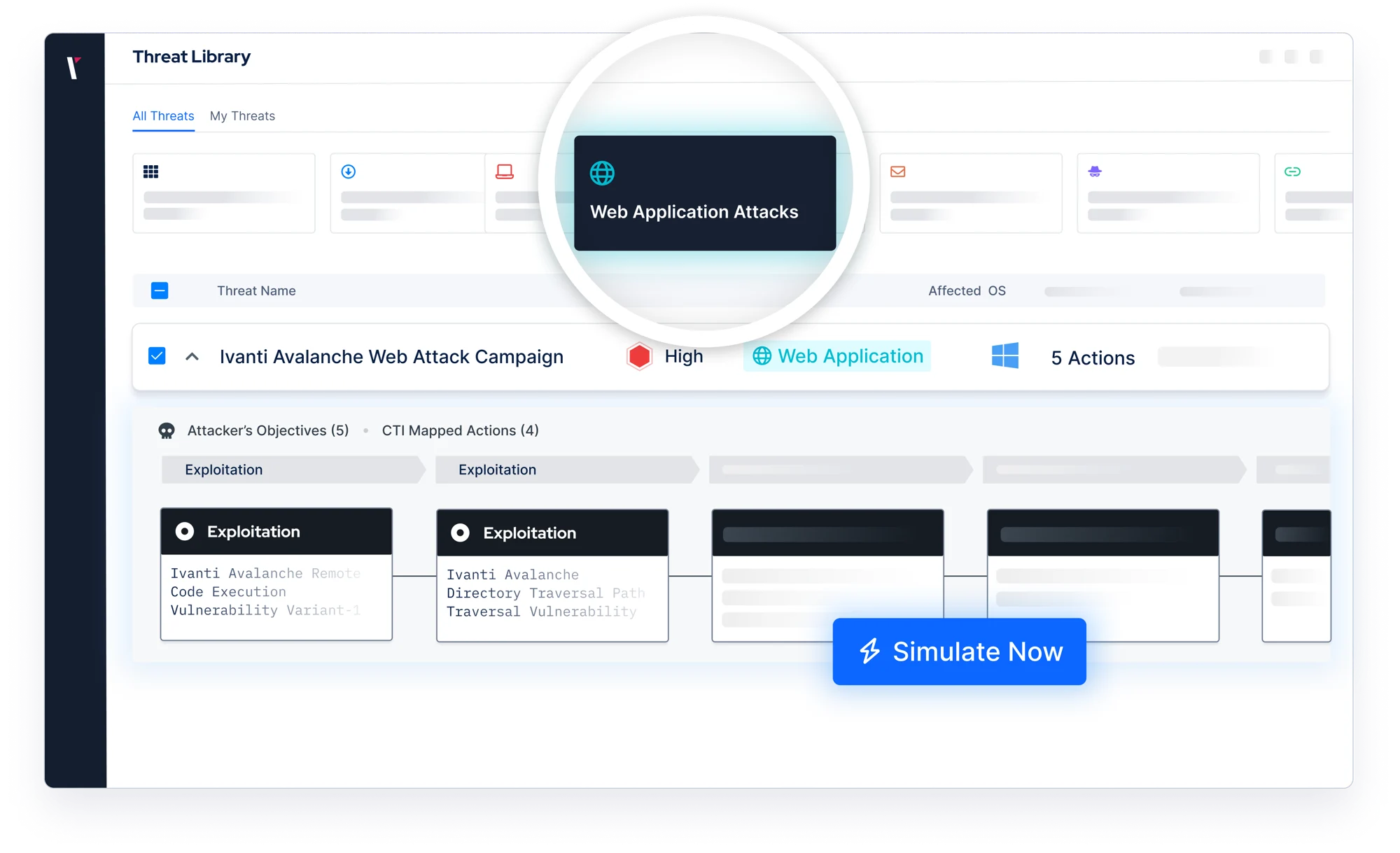
Figure 3. Running real-life adversarial TTPs against web-application security controls
For the monitoring and logging duty in 314.4(c)(8), the platform shows whether the relevant log sources are ingested in time, whether log data has enough granularity to identify malicious events, which adversary techniques generate log entries and trigger alerts, and which behaviors are missed because of visibility gaps. This confirms that the institution's logging genuinely supports detection of unauthorized access and tampering, and it surfaces exactly which additional log sources or configurations are needed to close the gaps. Once a gap is closed, Picus re-runs the same techniques to confirm the activity is now logged and alerted.
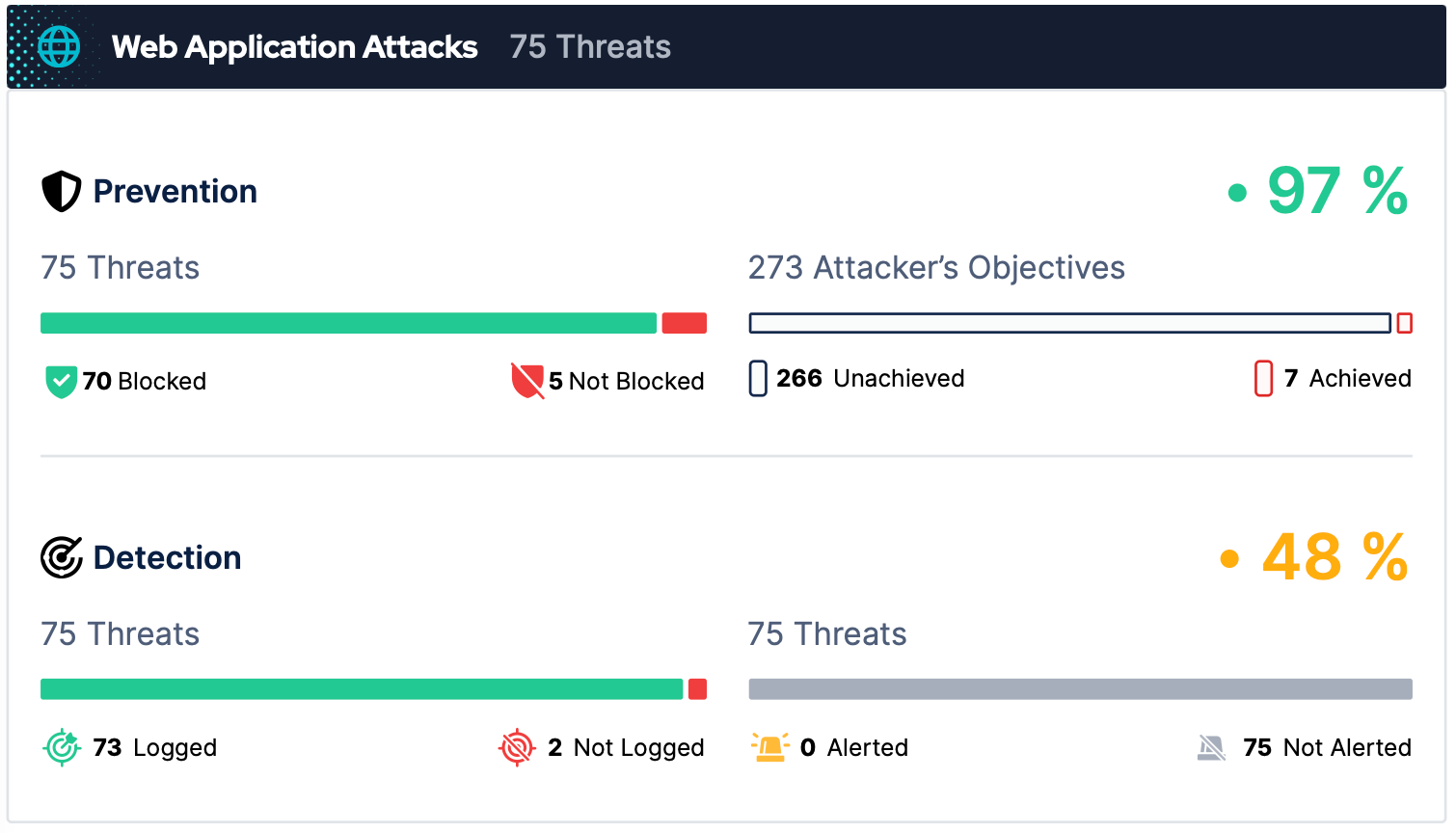
Figure 4. Analyzing simulation results, which threats were blocked, if not, detected and logged
Where detection is missing, Picus also supplies ready-to-deploy detection content in vendor-specific formats and open-source Sigma, so teams can close SIEM and EDR gaps without building rules from scratch. Each rule carries the context that makes it usable: log source, severity, the related MITRE ATT&CK techniques, and the steps required to detect the activity.
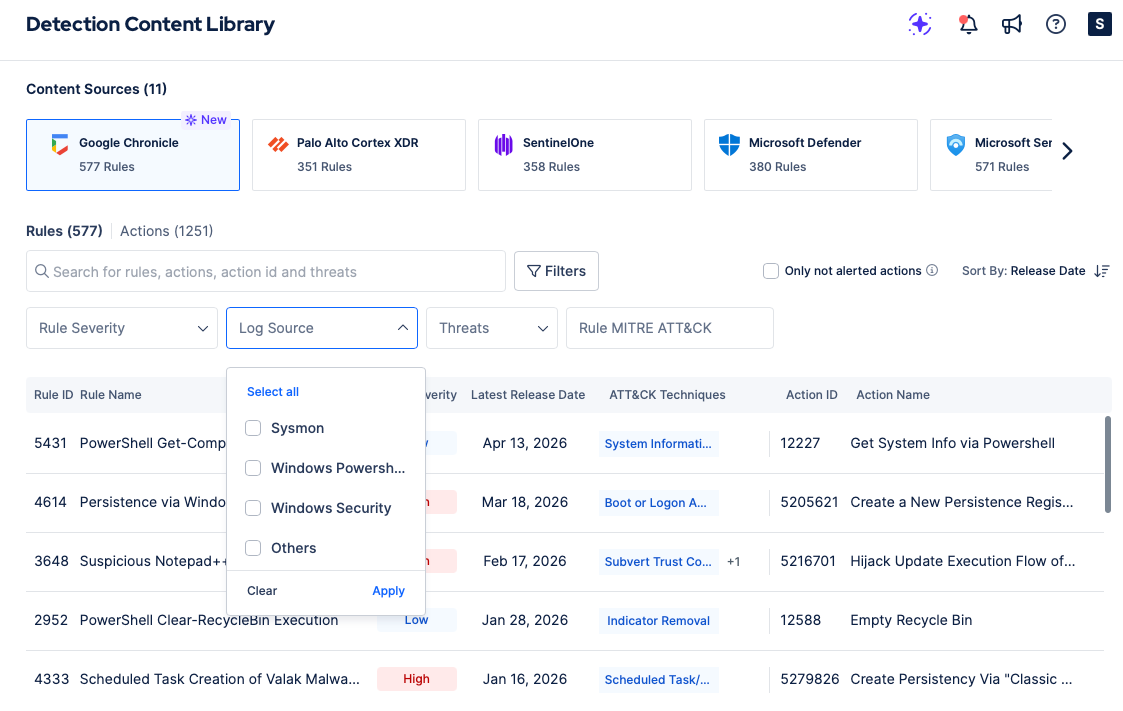
Figure 5. Picus detection content library
GLBA Safeguards Rule Section 314.4(h) and (j): Incident Response and Breach Notification
|
"Establish a written incident response plan designed to promptly respond to, and recover from, any security event materially affecting the confidentiality, integrity, or availability of customer information …" (16 CFR 314.4(h)) |
Explanation of the provision
Section 314.4(h) requires a written incident response plan covering the goals of the response, internal processes, roles and responsibilities, communication and information sharing, remediation, documentation, and post-incident revision. This connects directly to the Safeguards Rule's breach-notification duty: institutions must notify the FTC of a security event involving the unauthorized acquisition of unencrypted customer information affecting 500 or more consumers, as soon as possible and no later than 30 days after discovery. An incident response plan and a notification clock are only as good as the institution's ability to detect the event that starts them.
How does Picus support GLBA Safeguards Rule Section 314.4(h) and (j)?
Picus continuously exercises the detection, alerting, escalation, and containment workflows that underpin an institution's incident response capacity. Through production-safe adversary-emulated scenarios, Picus validates whether security events are detected, whether alerts have sufficient fidelity for investigation, whether escalation paths function as designed, and where visibility gaps exist.
This matters acutely for breach notification. An institution cannot notify within 30 days of an event it has never detected, and it cannot characterize the scope of unauthorized acquisition without the telemetry to do so. By validating that the detection layer actually produces the signal the notification duty depends on, Picus helps institutions ensure their incident response plan is operationally effective, and their notification obligations are met on time – not just documented. The resulting evidence also feeds post-incident reviews, ensuring response procedures improve on the basis of tested control performance.
GLBA Safeguards Rule Section 314.4(g): Evaluating and Adjusting the Information Security Program
|
"Evaluate and adjust your information security program in light of the results of the testing and monitoring required by paragraph (d) of this section; any material changes to your operations or business arrangements; the results of risk assessments …" (16 CFR 314.4(g)) |
Explanation of the provision
Section 314.4(g) closes the loop. It requires institutions to actually act on what their testing and monitoring reveal — to evaluate and adjust the security program in light of test results, material changes, and risk assessments. A program that tests its controls but never adapts to the findings does not satisfy this provision.
How does Picus support GLBA Safeguards Rule Section 314.4(g)?
Because Picus validates controls continuously and maps every result to MITRE ATT&CK, the institution always has current evidence of what is working, what has degraded, and what needs to change – the exact inputs Section 314.4(g) requires the program to respond to. When Picus identifies a control failure, the Picus Mitigation Library provides vendor-specific and vendor-neutral remediation guidance, giving teams concrete steps rather than generic advice; after a fix is applied, the same scenario can be re-executed to confirm the gap is closed.
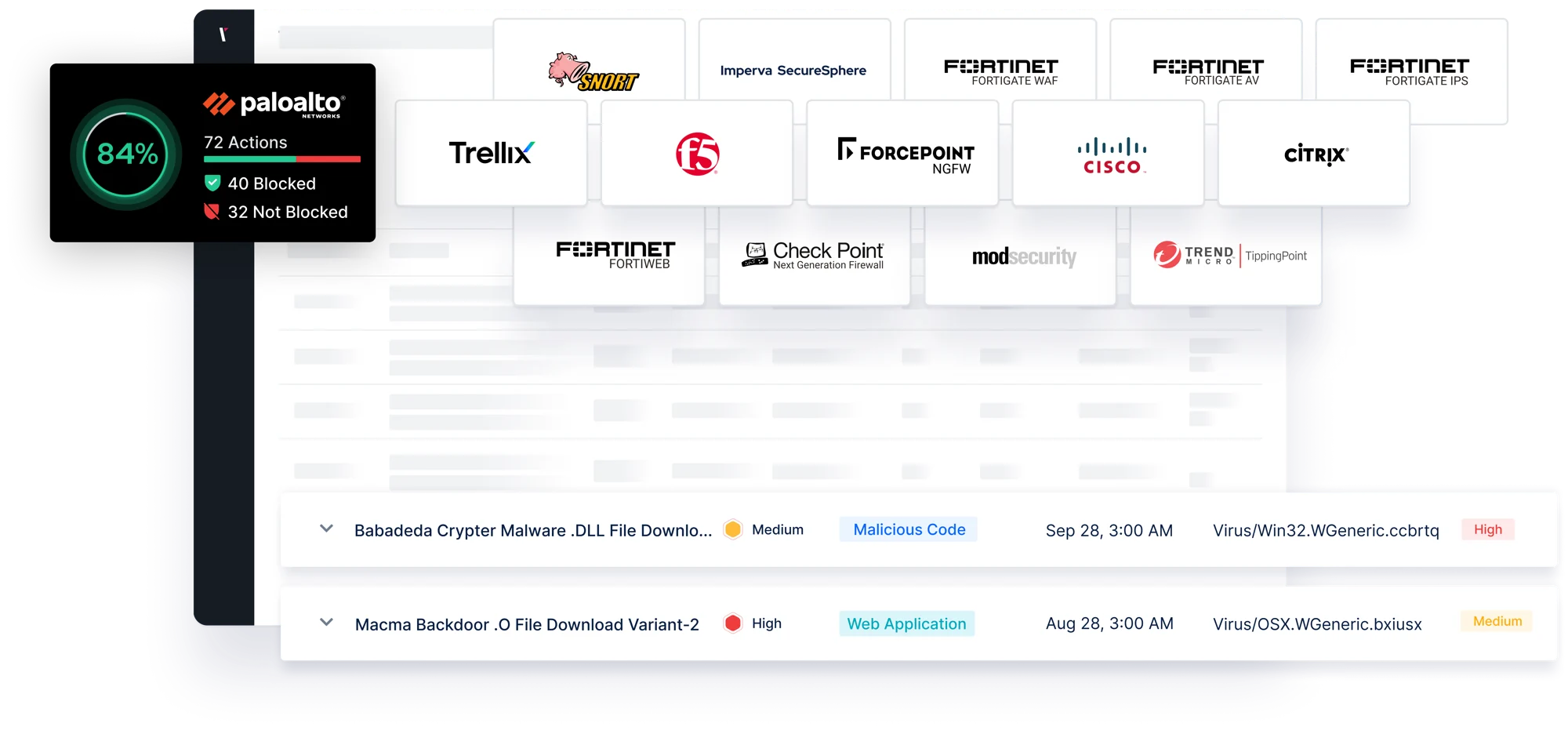
Figure 6. Picus Mitigation Library provides vendor-based prevention suggestions
This turns "evaluate and adjust" from a periodic governance ritual into a measurable, evidence-backed improvement cycle: detect the validated weakness, remediate with targeted guidance, and prove the adjustment worked.
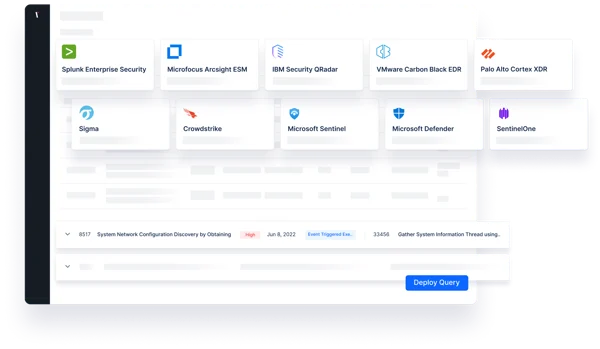
Figure 6. Picus Mitigation Library provides vendor-based & vendor-neutral detection suggestions
GLBA Safeguards Rule Section 314.4(i): Qualified Individual and Board Reporting
|
"Require your Qualified Individual to report in writing, regularly and at least annually, to your board of directors or equivalent governing body … on the overall status of the information security program and your compliance with this part …" (16 CFR 314.4(i)) |
Explanation of the provision
Section 314.4(i) elevates information security to the governance level. The designated Qualified Individual must report in writing, at least annually, to the board or equivalent body on the status of the program, material risks, results of testing, security events, and recommendations for change. This makes board-level oversight a regulatory requirement, not a discretionary practice.
How Picus supports this requirement
Effective board reporting requires something a governing body can actually understand and act on. Picus turns control performance into board-level evidence: continuously updated prevention and detection scores, trend lines showing whether posture is improving or degrading over time, and clear identification of unresolved gaps and the status of their remediation. This gives the Qualified Individual an objective, defensible basis for the annual report. Section 314.4(i) requires demonstrating to the board that the program's effectiveness is grounded in tested reality rather than narrative assurance, and that the institution can substantiate its compliance posture if an examiner asks.
Enforcement, Penalties, and the Parallel BFSI Regimes
Who enforces the GLBA Safeguards Rule, and what are the penalties?
The Federal Trade Commission (FTC) enforces the GLBA Safeguards Rule, and enforcement activity has increased since the amended rule took effect. Violations can draw civil penalties exceeding $50,000 per violation, an amount adjusted annually for inflation. GLBA also creates broader exposure, including potential personal liability for officers and directors and, for certain fraudulent-access (pretexting) violations, criminal penalties.
Banks, broker-dealers, and insurers face parallel enforcement from their own regulators:
- Federal banking agencies examine against the Interagency Guidelines Establishing Information Security Standards.
- The SEC enforces Regulation S-P.
- State insurance regulators enforce their own data-security laws.
Across all of these regimes, two things escalate exposure: providing inaccurate information about security measures and failing to remediate identified deficiencies.
How does continuous validation help across examinations, audits, and board reporting?
It turns security validation from a compliance cost into a supervisory and governance asset. Whichever regulator an institution answers to, the underlying expectation is the same: demonstrate that controls work, not merely that they exist.
Picus provides continuously generated, time-stamped, MITRE ATT&CK-mapped validation evidence. Detailed reporting shows what was tested, what was blocked, what was detected and logged, and what was not, in a form that supports regulator examinations, internal and independent audits, and board reporting alike.
Because the evidence is produced continuously rather than only at assessment time, institutions stay audit-ready throughout the year. When a regulator makes a short-notice request, the institution can respond with current data instead of stale, point-in-time results.
Making GLBA Compliance Resilient with Validation
The modern Safeguards Rule was written to ensure that the controls protecting customer financial information work in practice, not just on paper. The rule says so in its own text: institutions must test the effectiveness of their safeguards, including the controls that detect attacks, and adjust their programs in light of what those tests reveal. For BFSI institutions, this is not a documentation exercise. It is a standing obligation to prove, continuously, that defenses hold.
Picus helps banking, financial services, and insurance institutions move from periodic, assumption-based compliance to continuous, evidence-based assurance. By validating control effectiveness against real attack behavior, Picus turns the Safeguards Rule from a point-in-time checkpoint into a living, defensible security posture, backed by evidence that supports examinations and audits by the FTC, the federal banking agencies, the SEC, and state insurance regulators, as well as internal and independent auditors, not just at assessment time but throughout the year.
Get your free demo and see how Picus helps BFSI institutions support their GLBA.
References
- Gramm-Leach-Bliley Act, 15 U.S.C. § 6801 et seq. — in particular Section 501(b).
- FTC Safeguards Rule, 16 CFR Part 314 — in particular §§ 314.3 (objectives), 314.4 (required elements of the information security program), 314.5 (effective dates), and 314.6 (exemptions for institutions maintaining customer information on fewer than 5,000 consumers); 2021 amendment effective 9 June 2023; breach-notification amendment effective 13 May 2024.
- Interagency Guidelines Establishing Information Security Standards (OCC, FDIC, Federal Reserve, NCUA) — for banks and credit unions, under GLBA Section 501(b).
- SEC Regulation S-P (17 CFR Part 248) — for broker-dealers, investment advisers, and investment companies; 2024 amendments adding incident-response and customer breach-notification requirements.
- FFIEC IT Examination Handbook — supervisory guidance for examinations of banking organizations.
This guide reflects the regulatory position as of June 2026. The FTC Safeguards Rule is in force in its amended form; institutions that are banks, broker-dealers, or insurers should read the parallel obligations under the Interagency Guidelines, Regulation S-P, or applicable state insurance law alongside it. Penalty and inflation-adjusted civil-penalty figures should be confirmed against current FTC and statutory sources before publication.



.png?width=353&height=200&name=picus-threat-research-openAI-rubygems-preview-sept15%20(1).png)


.png?width=353&height=200&name=Picus-G2-Awards-fifth-preview-aug26_(1).png)