Chain-dependent architecture is the structural design principle behind automated penetration testing: every step of a run depends on the success of the step before it. Step B does not execute unless Step A succeeds. Step C does not execute unless Step B succeeds. The tool moves forward by building each new action on the working result of the last, the same way a real adversary operates inside a network.
This is not a side effect of how automated pentesting tools are built. It is the defining architectural property of the category. A tool that does not chain is not penetration testing. It is parallel scanning with extra steps.
How Does Chain Dependency Work in Automated Penetration Testing Software?
Each step in automated penetration testing software depends on the success of the one before it. The tool evaluates your environment as a directional sequence, not a set of independent checks. Every successful action expands what the next step can reach, and a failed step leaves everything downstream untested in that run.
From the initial foothold, the tool attempts an action. When it succeeds, the result becomes the input to the next decision: a captured credential opens a new identity, a compromised host opens a new pivot point, a discovered service opens a new exploit attempt. Each successful step expands what is reachable for the next.
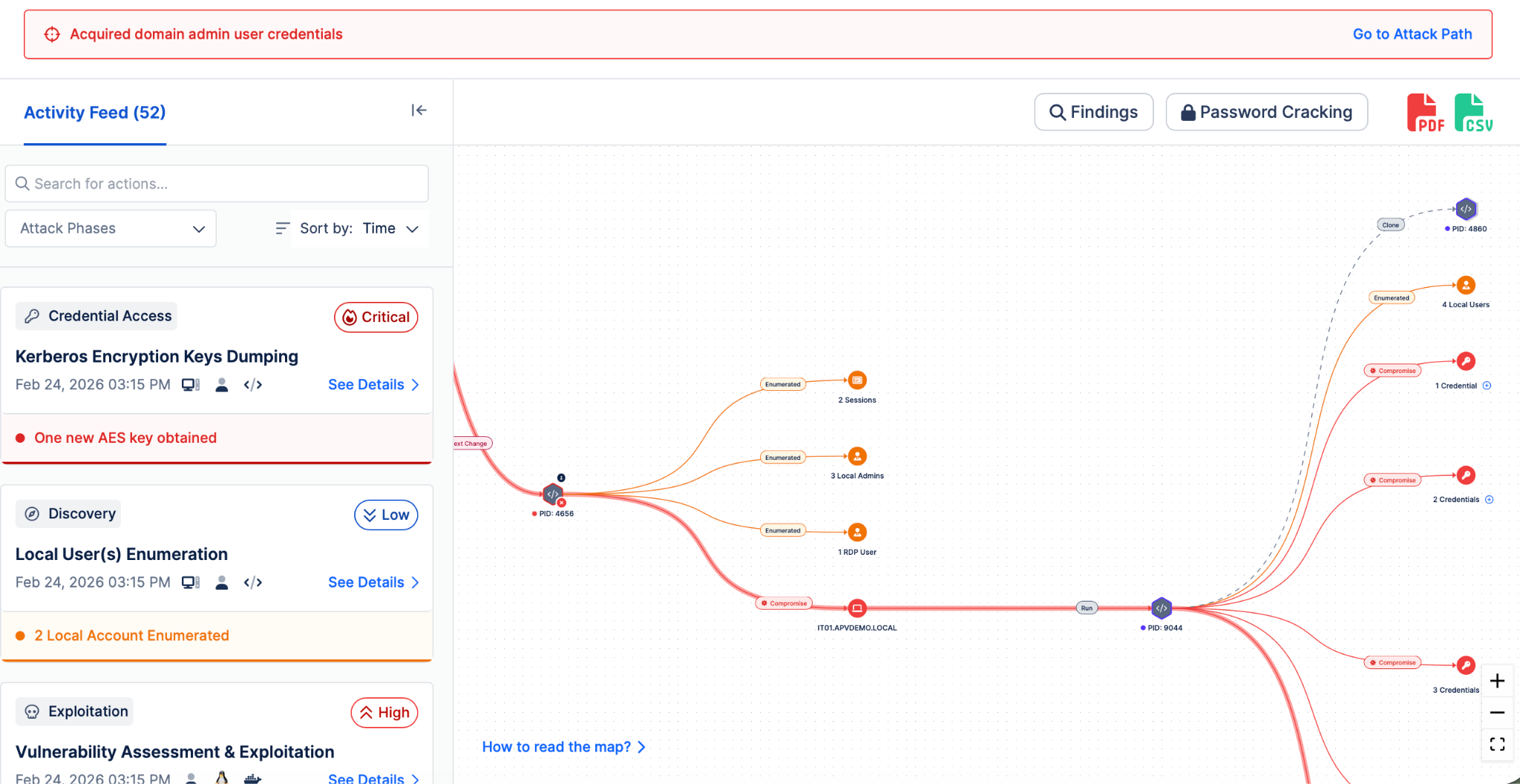
Figure 1. Automated penetration testing works in a directional map.
When a step fails, the chain on that branch terminates. The tool may try alternative branches if any exist within scope, but every technique that depended on the failed step is untested in that run. Not skipped, not deferred. Untested.
This is what makes automated pentesting fundamentally different from a vulnerability scanner. A scanner tests every signature against every asset in parallel, so a missed check on Asset A does not affect Asset B. An automated pentest is the opposite: a missed step on Host A can determine whether Hosts B, C, and D ever get tested at all.
Why Is Chain Dependency a Strength in Automated Pentesting?
Chain dependency is what allows automated pentesting to produce validated attack paths instead of inventories of disconnected findings. Because each step is contingent on the previous one, the output is not "here are 50,000 things that may be wrong." It is "here is the route an attacker would actually take to get from foothold to objective, with proof at every link."
This is also what makes attack-path output operationally valuable. A defender does not have to guess which findings combine into real risk. The chain has already done that work. Breaking any link breaks every dependent step downstream, which means a single well-chosen remediation can collapse dozens of paths at once.
What Are the Limitations of Chain Dependency in Automated Pentesting?
The same property that makes the output realistic also creates a coverage ceiling that no amount of additional features can eliminate.
If the tool gets blocked early in the chain, everything downstream goes untested in that run. A tool may be capable of testing twenty lateral movement techniques, but if it was caught at the discovery phase, those twenty techniques never executed. The defender is left blind to how the internal network would handle them.
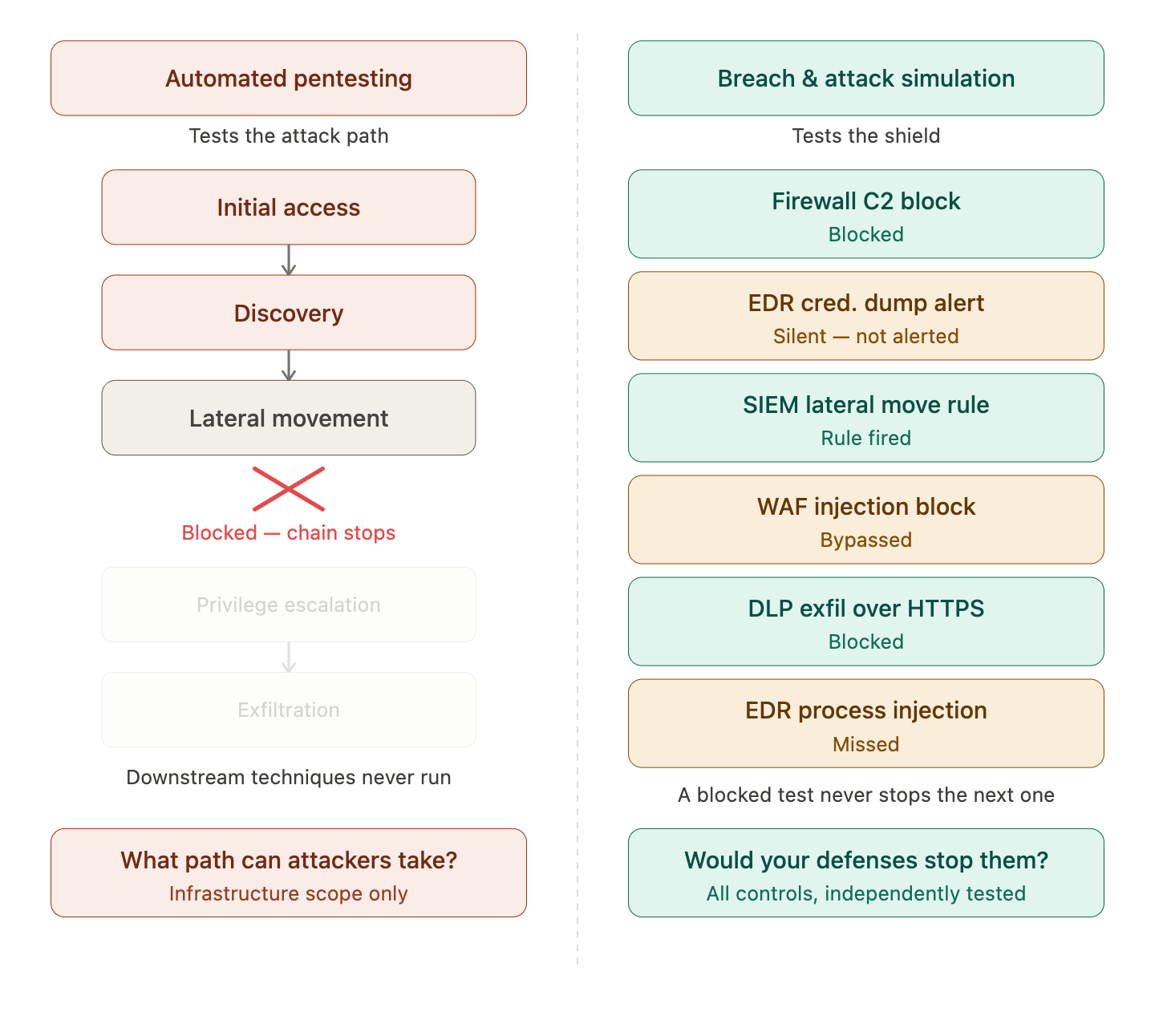 Figure 2. Automated pentesting vs BAS: chain-dependent path testing versus independent control validation
The practical consequences are significant:
- Coverage skews toward early-stage tactics. Initial access and credential access tend to receive deep testing across runs. Lateral movement, privilege escalation deeper in the chain, and objective-stage tactics receive thinner testing because they only run when their predecessors succeed.
- A single hardened control creates a cascading blind spot. Mitigating one weakness can stop the tool from reaching the rest of the techniques that depended on it, which is good for security but means those downstream techniques are no longer being validated either.
- Multiple runs from multiple footholds are required for real coverage. Because a single chain only exercises a single route, comprehensive validation requires running the tool from multiple initial access points across the environment. One run is one slice of the picture.
How Does Autonomous Penetration Testing Overcome the Limits of Chain Dependency?
Autonomous penetration testing overcomes the limits of chain dependency by reasoning about each step in real time and self-scoping to specific targets. It does not remove the chain, which is structural, but it raises the coverage ceiling that caps a rule-based tool: an autonomous engine pushes further along chains a rule-based tool would abandon, and validates exposures a rule-based run could never reach in the first place.
- The chain still exists, but it dead-ends less often. A rule-based tool stops when its encoded options for a step run out, leaving everything downstream untested. An autonomous engine reasons about why the step failed and reroutes, or writes a custom exploit, so a single chain reaches further before it terminates. The "blocked early, untested downstream" ceiling gets higher.
- Deep-stage tactics get tested directly. Automated coverage thins toward lateral movement, privilege escalation, and objective-stage tactics, because they only run when their predecessors succeed. An autonomous pentesting platform runs self-scopes, so it can be pointed straight at a deep asset or CVE and prove exploitability there, without needing a successful chain to arrive first.
- Targeted validation no longer needs the whole chain. In a chain-dependent automated run, reaching a specific vulnerability meant chaining to it from the foothold, and if an upstream step was blocked, it never got tested. Self-scoping lets you pinpoint and validate a single exposure without one long route to reach it. You still run from multiple footholds to map full paths, but you no longer depend on a successful chain just to answer "is this exploitable here?"
The architecture is unchanged. The advantage is reach: autonomous reasoning and self-scoping push the same chain-dependent model past the coverage ceiling that caps a rule-based tool, which is why it produces more complete validation from the same starting position.
For more in-depth comparison of automated vs autonomous pentesting, read this blog.
Enter Picus Autonomous Penetration Testing
Chain dependency is what makes attack paths real, and also what caps their coverage. Picus Autonomous Penetration Testing works that tension from both sides. Its agents reason through each step in real time, so when one is blocked they reroute or write a custom exploit instead of dead-ending the branch and leaving everything downstream untested. And because each run self-scopes from a signal, you can point it straight at a single asset or CVE and prove exploitability there, without chaining all the way to it from a distant foothold.
The output is a validated route to crown jewels like Domain Admin, with the choke points that hold it together pinpointed to fix. It layers on your automated baseline, no rip-and-replace, turning each new signal into a run that feeds one prioritized queue ranked by reachable paths and choke points, not raw CVSS. Every action is auditable, with control from full oversight to full autonomy.
See it run a live attack path in your own environment. Request your free demo.